Thousands of utility customers across Hawaii were without power across Sunday afternoon after Hurricane Lala brushed the Big Island before being downgraded to a tropical storm.
Some 183,123 customers across Hawaii were without power as of 3:30 p.m. HT, according to poweroutage.us.
State officials received reports of at least 100 homes damaged, Hawaii Governor Josh Green said on Sunday.
Scores of roads across several Hawaiian islands were closed after torrential rains from Tropical Storm Lala triggered flash flooding and landslides and downed trees as it passed just south of the archipelago from Aug. 15 through Aug. 16.
The Hawaii Department of Transportation reported closures on the Big Island’s Routes 11, 19, 190, 250, and 270 due to flooding, downed trees, washed out embankments, or other debris.
Roads to the international airports in Kona and Hilo, as well as the harbors in Hilo and Kawaihae remained open, and both ports reopened on Sunday at 8:30 a.m.
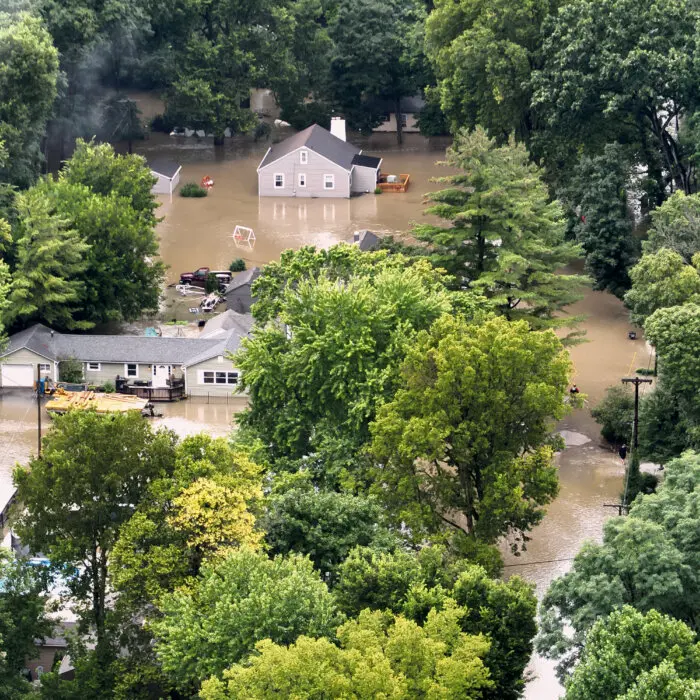
On Maui and Molokai, power outages Sunday morning were disrupting traffic movement, and several highways were constricted or blocked by landslides, downed trees, and rockslides. The Hana Highway in East Maui was reported to only be open to local traffic.
Kahului International Aiport was reported open.
Several highway and road closures were also reported on Oahu, including parts of the H-1 highway and several roads around Kamehameha. Most reports cited downed trees. Honolulu Harbor was still closed, and Daniel K. Inouye International was operating under constrained conditions, with only two of its four runways open.
Tropical storm warnings across the Big Island of Hawaii were discontinued as of 8 a.m. local time on Aug. 16, as the eye of Lala continued its journey west, past Honolulu. But locals across the archipelago were not free and clear just yet.
By 11 a.m. Hawaii time, Lala was 140 miles west of Honolulu with sustained winds still reaching 65 miles per hour and winds and rains affecting Maui, Oahu, and Kaui. The Big Island received upward of 30 to 40 inches of rain, which triggered devastating flash flooding in some areas. The National Hurricane Center stated that it still expected the Big Island to receive another 1 to 3 inches throughout the day.
The island of Maui continued to suffer intense levels of wind and rain. Gusts exceeded 40 mph across the island, and rainfall rates remained about an inch per hour. The National Weather Service maintained a flash flood warning for not just Maui, but Molokai and Lanai as well.
The entire island of Oahu, which hosts the state’s capital of Honolulu, was also under a flash flood warning. The island was predicted to get about six inches of rain.
“Doppler radar indicated moderate to heavy rain over Oahu,” the National Weather Service office in Honolulu announced. “Rain was falling at a rate of 1 to 1.5 inches per hour. Flash flooding is ongoing or expected to begin shortly.”
Footage of what that flash flooding could look like was shared across social media, showing Rainbow Falls raging along the Wailuku River near the town of Hilo, on the Big Island, as the torrential rain deposited over the past two days rushes back to the ocean.
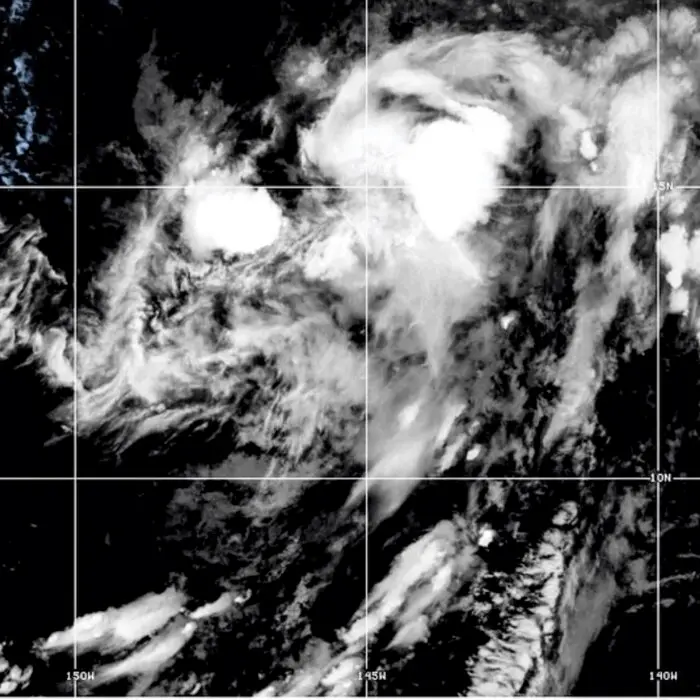
The islands began to feel the storm’s effects at about 3 p.m. local time on Aug. 15, which became increasingly intense as Lala reached hurricane strength. Its center remained just 30 miles offshore, with the National Hurricane Center reporting that the eyewall was brushing the southern end of the Big Island at about 5 p.m. Hawaii Time.
As Lala’s eye remained south of land, its storm bands covered the islands. Maximum sustained winds reached 80 mph and extended 45 miles out from the storm’s center. Areas closer to sea level, or only a few hundred feet high in elevation, recorded sustained winds mostly at or just under the hurricane marker, 73 mph, but at higher altitude, conditions were far worse.
“Tropical storm conditions continue across portions of the Big Island of Hawaii and Maui County, with the strongest winds occurring in areas of higher terrain,” the National Hurricane Center stated. “Tropical storm conditions will spread across Oahu this morning and Kauai County later today. Wind speeds atop mountains and on the windward and leeward slopes are often up to 30 percent stronger than the near-surface winds indicated in this advisory, and in some elevated locations could be even greater.”
The Big Island’s most dominant volcano, Mauna Kea, recorded winds reaching 119 mph.
During the night, interactions with the Big Island and its big volcanoes slowed the storm down and weakened it to a tropical storm. By 5 a.m. local time on Aug. 16, tropical storm-force winds stretched out 140 miles from the storm’s center.
Those conditions were expected to affect the island of Kauai on Aug. 16.
“The center of the storm is forecast to pass south of Kauai County today and move south of the easternmost Northwestern Hawaiian Islands early this week,” the National Hurricane Center stated.
Rainfall across the Big Island was forecast to be in excess of 35 inches. Maui was expected to get up to a foot of rain on the eastern side and up to eight inches on the western side.
Those rains overwhelmed rivers and thundered down the mountainous terrain, triggering flash floods in the middle of the night that swept away entire homes, according to one meteorologist.
Hawaii’s Department of Emergency Management announced flash flood warnings for the islands of Maui, Molokai, Lanai, Oahu, Kauai, Niihau, and Kaho‘olawe in the early hours of Aug. 16, local time.
The National Hurricane Center warned residents that post-storm conditions were still incredibly dangerous and that anybody looking to travel, including those going back home from a shelter or evacuation spot, should take extreme caution to avoid downed power lines and standing water. Residents looking to use a generator were also advised to keep the machinery at a safe distance from the house.
As of Aug. 15, one person has been confirmed dead as a result of the storms. According to Hawaii Gov. Josh Green, a man died in a car accident around the South Point of the Big Island. Search and rescue teams have been dispatched in response to reports of flash floods.
Looking ahead, the eye of Tropical Storm Lala is expected to remain offshore, which means that Hurricane Iniki will remain the last hurricane to officially make landfall on Hawaii, touching down on Kauai in 1992.