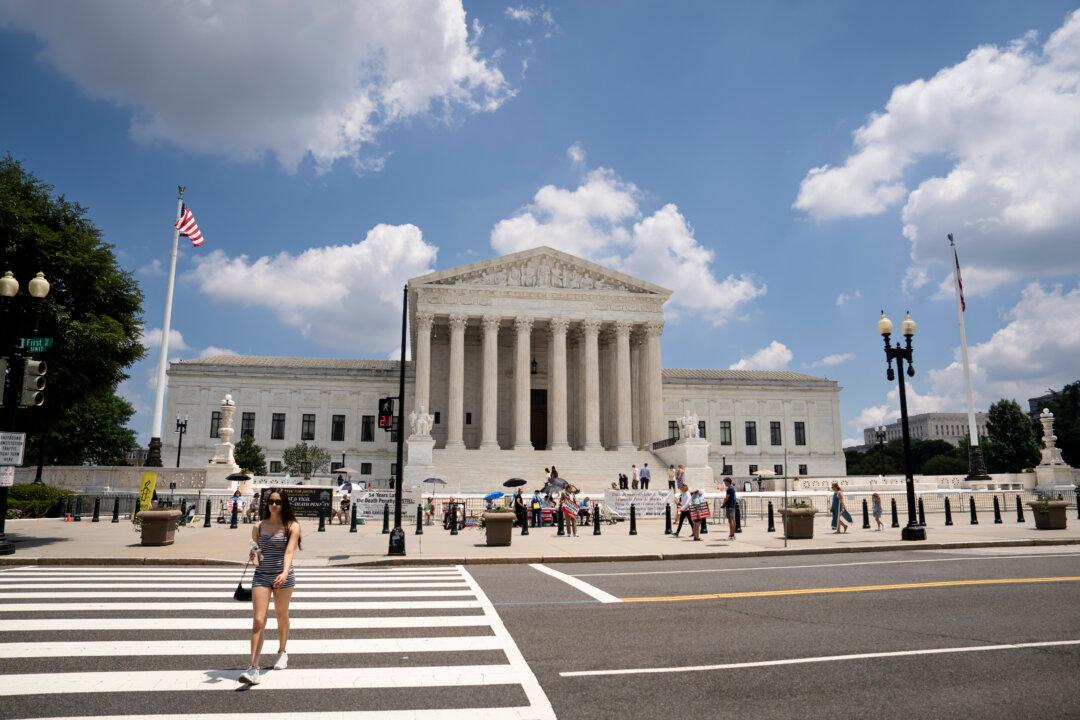
Another one of President Donald Trump’s high-profile firings is headed to the Supreme Court on Jan. 21, when the justices are expected to review how much Congress can protect members of the Federal Reserve from removal.
Trump fired Federal Reserve Board of Governors member Lisa Cook in August 2025 over allegations of mortgage fraud. In a letter to Cook, Trump cited a provision of the Federal Reserve Act of 1913 that allows him to fire members “for cause.”
Mortgage Fraud Allegations
On Aug. 15, the Federal Housing Finance Agency issued a criminal referral suggesting that Cook made false statements on one of her mortgage agreements—specifically misrepresenting one of her properties as her primary residence.After Cook sued, a federal judge in Washington reinstated her. In a more tentative order, the judge said that Trump probably didn’t have a valid cause for firing Cook.
Trump has asked the Supreme Court to lift this block while litigation continues in lower courts. Typically, these types of appeals, which come on the emergency docket, are decided without oral argument. In this case, however, the Supreme Court deferred its decision until it heard arguments.
Reinstating Officials
Separate from Congress’s phrasing, the power of judges to reinstate fired officials is also under scrutiny in both Cook’s case and another case that was heard in December 2025.For months, lower court judges have been reversing Trump’s firings of high-level bureaucrats. In response, the Trump administration argued that doing so was overstepping judicial authority and that the more appropriate remedy to illegal firings was back pay.
The Supreme Court is expected to address that issue in Trump v. Slaughter, which focused on the president’s ability to fire members of the Federal Trade Commission.
It’s unclear how they will rule, and they didn’t focus much on the issue during oral argument on Dec. 8, 2025. But in its emergency docket decisions, the Supreme Court has indicated some sympathy for Trump’s position.
The lower court in Washington said that Cook had a property interest in her position and that Trump failed to provide the necessary due process before removing her. Specifically, the judge said that Trump needed to provide some kind of notice and hearing for Cook.
Federal Reserve Independence
What also makes Cook’s case unique, and what may give her an edge over other federal officials, is how the Supreme Court views the Federal Reserve’s independence.Last year, a majority of the justices temporarily allowed Trump to remove the heads of two labor boards who had tried to compare their agencies to the Federal Reserve. Allowing Trump’s firings, which overrode similar laws restricting removals, would effectively call into question the independence of the Federal Reserve.
Allowing Trump to fire Cook, they said, “would sound the death knell for the central-bank independence that has helped make the United States’ economy the strongest in the world.”
“Article II allows the President to determine what process to follow when removing executive officers, and courts cause irreparable harm to the separation of powers when they wrongly usurp that authority,” the Justice Department said in its brief.