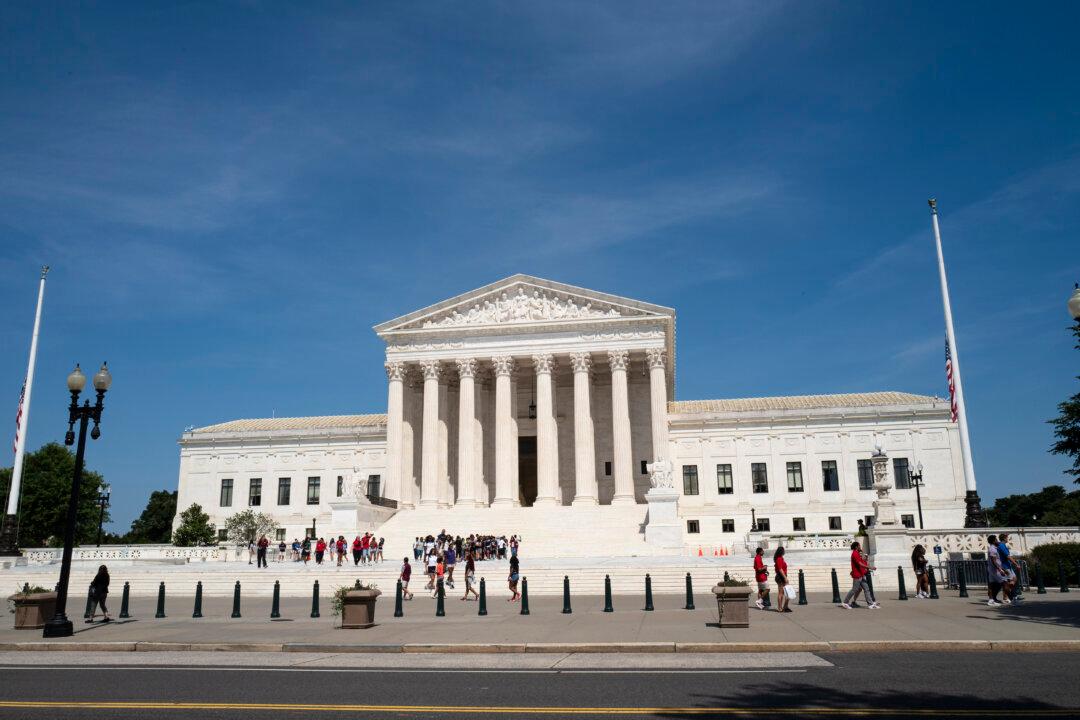
The U.S. Supreme Court has agreed to consider whether search warrants that collect the location history of cellphone users near crime scenes are constitutional.
If cellphone users want to access certain services, their phones have to be set to continuously transmit their exact locations to service providers. A so-called geofence warrant, which is growing in popularity with law enforcement agencies, allows police to seek location data on every person who was present at a specific location over a certain period of time.
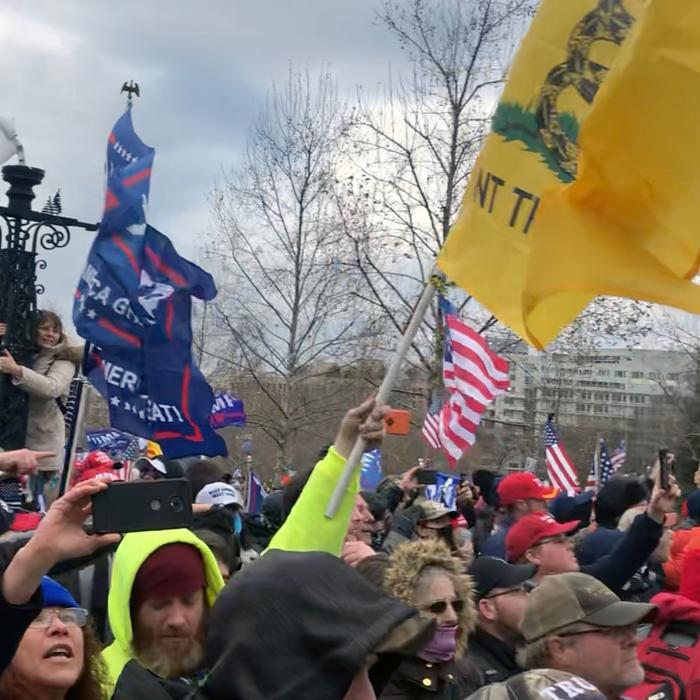
Geofence warrants were used to investigate the Jan. 6, 2021, security breach at the U.S. Capitol. The location data obtained from wireless service providers led to charges against some of those involved. Some judges allowed the warrants, while others ruled that they violated the Fourth Amendment’s guarantee against unreasonable search and seizure.
Google provided a list, and then, without seeking a new warrant, law enforcement sought information about where certain devices were over a longer, two-hour period. Google complied, and then law enforcement, again without seeking a new warrant, asked for “de-anonymized subscriber information for three devices.” Google again complied, and it was revealed that one of the devices belonged to Okello Chatrie, the petitioner in this case. Chatrie was eventually convicted of armed robbery based on the data obtained under the geofence warrant, the summary states.
Chatrie entered a guilty plea and was sentenced to almost 12 years of incarceration. His attorneys had argued that the geofence warrant violated his privacy because it allowed investigators to gather the location history of people who were near the Call Federal Credit Union in Midlothian, Virginia, even though there was no evidence of any connection to the robbery. Prosecutors countered that Chatrie had no expectation of privacy because he opted into Google’s location history services of his own free will.
The district court also found that the subsequent requests for information, which were not supported by a warrant, “improperly provided law enforcement and Google with unbridled discretion to decide which accounts will be subject to further intrusions” and that these failed to satisfy the particularity requirement, the petition reads.
The court also did not accept the prosecutors’ argument that Chatrie abandoned his Fourth Amendment rights by letting Google access his location history. It found that under the Supreme Court’s ruling in Carpenter v. United States (2018), a cellphone user cannot give up his Fourth Amendment protections covering years of location information merely by opting into location collection services, according to the petition.
The petition states that even though the district court said geofence warrants “intrude into the private lives of many Americans who may never have a chance to contest the incursion,” it declined to suppress the evidence by invoking the good-faith exception to the exclusionary rule. That exception allows courts to accept evidence procured through an unconstitutional search or seizure if law enforcement officers had a reasonable belief that they were acting lawfully.
Chatrie presented a conditional guilty plea in which he reserved his right to appeal the denial of the evidence suppression motion.
A divided panel of the U.S. Court of Appeals for the Fourth Circuit affirmed. Writing for the majority, Circuit Judges Julius Richardson and J. Harvie Wilkinson III said no search had taken place because Chatrie voluntarily gave Google access to his data. Dissenting, Circuit Judge James Wynn said that under Carpenter, the geofence warrant led to a search covered by the Fourth Amendment.
The full Fourth Circuit reheard the case and affirmed the panel, but the court was divided 7–7 on whether a search covered by the Fourth Amendment had taken place. Of the seven judges who found that there was a search within the meaning of the Fourth Amendment, six said the location evidence should not be excluded.
The petition said other courts are similarly divided on how the Fourth Amendment applies to geofence warrants, and urged the Supreme Court to take up the case to clarify the law.
The U.S. Department of Justice had urged the Supreme Court not to accept the case.
The brief said the Fourth Circuit was correct to affirm the lower court’s denial of the suppression motion because the use of the geofence warrant did not violate the Fourth Amendment. In general, individuals do not enjoy a reasonable expectation of privacy in data disclosed to a third party and then handed over to the government, Sauer said.
Chatrie voluntarily provided Google with his location history, and by doing that, he relinquished any privacy right he might have had in that information, the brief states.
The Supreme Court has yet to schedule an oral argument in the case.