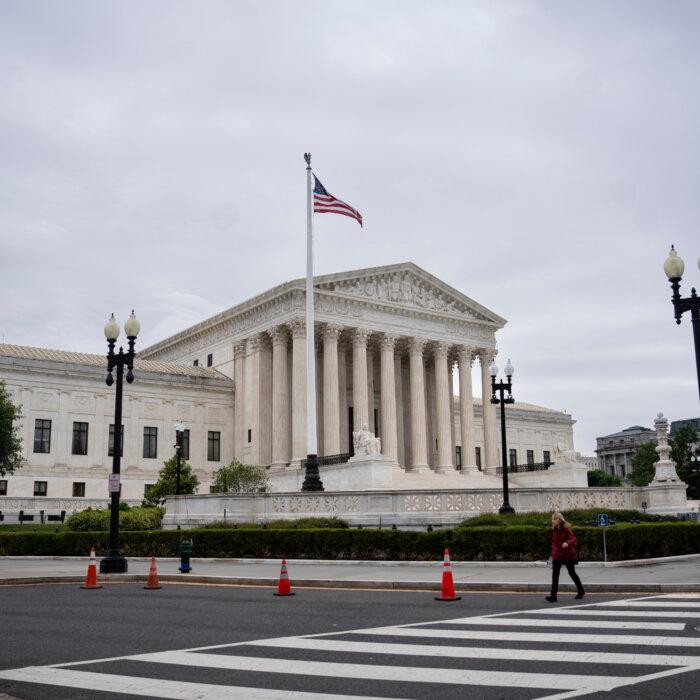
The U.S. Supreme Court on June 11 ruled 6–3 that private parties are not allowed to sue to enforce the federal Investment Company Act.
In this case, the high court sided with asset managers and investment funds and reversed a lower court ruling that allowed the respondent hedge fund, Saba Capital Master Fund, to sue under the statute to void fund bylaws that limited the voting power of activist shareholders.
Earlier in the case, a federal district court followed a U.S. Court of Appeals for the Second Circuit precedent and found that Section 47(b) of the Investment Company Act created an implied right of action to sue to rescind a contract and gave Saba Capital summary judgment.
The Second Circuit summarily affirmed the district court. The ruling created a split with other federal courts of appeals.
Barrett said the Investment Company Act (ICA) does not authorize private parties to sue to rescind bylaws or contractual terms.
“In sum, nothing in the text or structure of the ICA indicates that Congress authorizes private parties to enforce virtually every provision in the statute,” she said.
The Investment Company Act makes the Securities and Exchange Commission its primary enforcer and specifically allows shareholders and those who issue securities to enforce two of its provisions, she said.
“Congress, not the Judiciary, decides who may enforce the law,” Barrett said.
The high court reversed the Second Circuit.
Justices Clarence Thomas, Samuel Alito, Neil Gorsuch, and Brett Kavanaugh, along with Chief Justice John Roberts, joined the opinion.
Justices Ketanji Brown Jackson, Elena Kagan, and Sonia Sotomayor dissented.
In Jackson’s dissent, which was joined by Sotomayor in full and by Kagan in part, she said the Supreme Court’s majority misread ICA.
Jackson said that because she agrees that “Congress, not the Judiciary, decides who may enforce the law,” the courts should “consult all reliable indicia of Congress’s intent when interpreting its statutes.”
If the Supreme Court had done so, it would have seen that Congress amended Section 47(b) “in reliance on a prior decision of ours that had interpreted the original text to contain an implied private right of action for rescission.”
The court would also have looked at legislative records that “unequivocally expressed Congress’s ‘wish’ that the statute continue to be interpreted to allow private suits, notwithstanding this Court’s increasing penchant for refusing to recognize implied rights of action,” Jackson said.
The justice said the majority had sidestepped evidence of Congress’s actual intent and instead drew inferences about its objectives, and assumed “for itself the prerogative to foreclose contract-rescission suits that Congress intended to authorize.