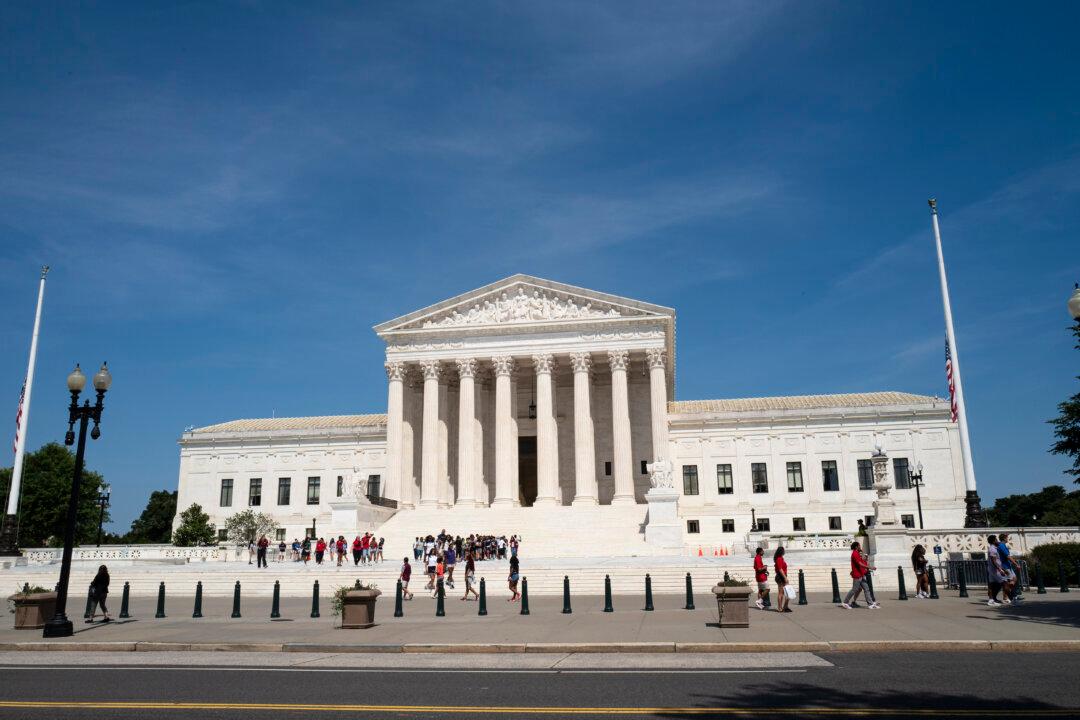
The Trump administration has apparently missed the July 27 deadline for filing a petition seeking a rehearing in the birthright citizenship case after the justices struck down an executive order limiting birthright citizenship.
As of early evening on July 28, the Supreme Court’s electronic docket for Trump v. Barbara did not indicate that a rehearing petition or an extension of time request had been filed by the federal government.
The last entry on the docket referenced the court’s written opinion in the case that was made public on June 30.
Under Supreme Court Rule 44, the filing deadline was 25 days after the opinion was issued, which was July 25. Because that was a Saturday, the deadline shifted to the next court business day, which was July 27, a Monday.
It was unclear at publication time why the government missed the filing deadline.
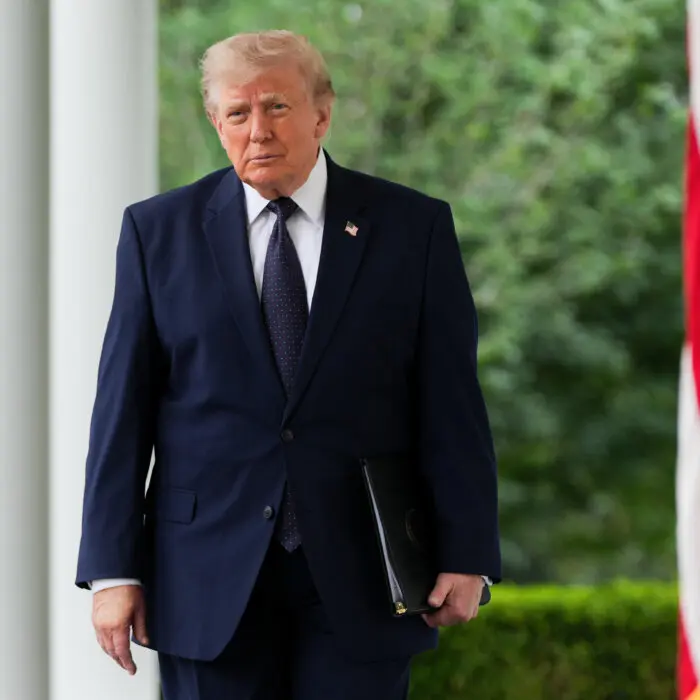
In a July 8 post on Truth Social, he said he would “be asking for a Rehearing by the United States Supreme Court, IMMEDIATELY.”
“This miscarriage of justice will destroy America if they don’t change their absolutely insane decision,” the president added.
Chief Justice John Roberts wrote the majority opinion, saying that, “A child born on American soil and subject to American law was made an American citizen.”
Roberts said that children born in the United States to parents who are unlawfully or only temporarily present in the country are U.S. citizens from birth because they are “subject to the jurisdiction” of the United States within the meaning of the 14th Amendment’s Citizenship Clause.
Although Justice Brett Kavanaugh agreed with the majority’s decision to invalidate the executive order, he said that the Constitution itself did not compel that result.
Kavanaugh relied on a longstanding rule of statutory interpretation known as constitutional avoidance.
It holds that if a statute can be reasonably interpreted in a way that avoids raising a serious constitutional question, the court should adopt that interpretation instead of deciding the constitutional issue.
Kavanaugh said the executive order should be invalidated because it violates a provision of the Immigration and Nationality Act whose language mirrors the Citizenship Clause.
Congress is free under the 14th Amendment to “enact new legislation establishing exceptions to birthright citizenship for children born to foreign citizens unlawfully or temporarily in the country. But Congress has not yet done so,” he said.
Citing Kavanaugh’s analysis, days after the ruling, Rep. John McGuire (R-Va.) introduced the proposed Birthright Citizenship Clarification Act.
The bill would amend the Immigration and Nationality Act to exclude from birthright citizenship “persons born in the United States to foreign citizens unlawfully or temporarily present in the United States.”
Rehearing petitions are almost never granted by the nation’s highest court.
There is only one known modern example in which the court granted rehearing and reversed itself in a previously argued case. In Reid v. Covert, the court ruled in June 1956 that Clarice Covert, a civilian accused of murdering her U.S. Air Force sergeant husband at an American airbase in England, could be tried by U.S. military court-martial.
The Supreme Court reheard the case in February 1957 and in June of that year held Covert could not be tried by court-martial in a capital case in peacetime.
The court found civilians abroad retain a constitutional right to be tried in a U.S. civilian court.
Legal experts say the rehearing petition was always a long shot.
William and Mary law professor Jonathan Adler said in a post on X that the government didn’t file the rehearing petition “because it was absolutely pointless to do it.”
David Super, a professor at Georgetown University Law Center, speculated that a White House lawyer may have misinterpreted Rule 44.
He told The Epoch Times the failure to file for rehearing was “further evidence of how this administration has sidelined the Justice Department from its traditional role as chief legal adviser of the Executive Branch.”
Attorneys in the office of U.S. Solicitor General D. John Sauer, which is part of the Department of Justice, would already know that “a petition for rehearing would be wildly unlikely to be granted,” Super said.
Officials might also have believed they were unable to “make the required certification that the petition is made in good faith and not for purposes of delay because they have nothing significant to say that the Solicitor General himself did not say during oral argument,” he said.
The Epoch Times asked the Supreme Court’s public information office if a rehearing petition had been filed or received by the court.
A spokesperson replied, saying: “For your guidance, we will let you know if and when a petition for rehearing has been filed and docketed.”
The Epoch Times also reached out repeatedly to the White House and the Department of Justice for comment.
No replies were received by publication time.