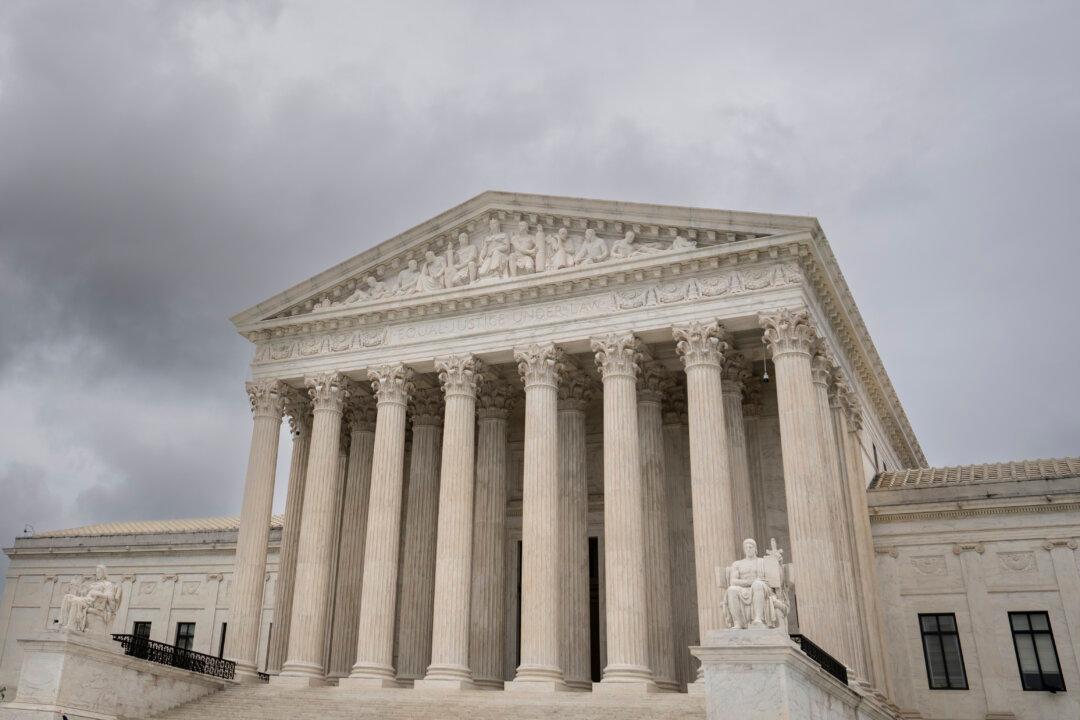
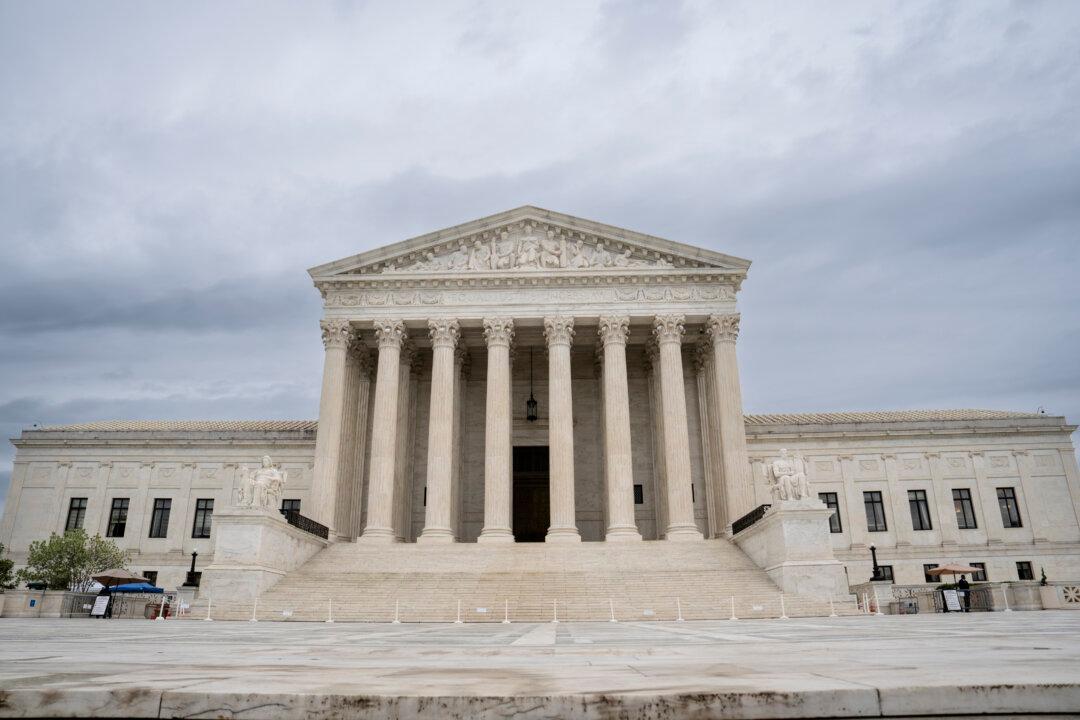
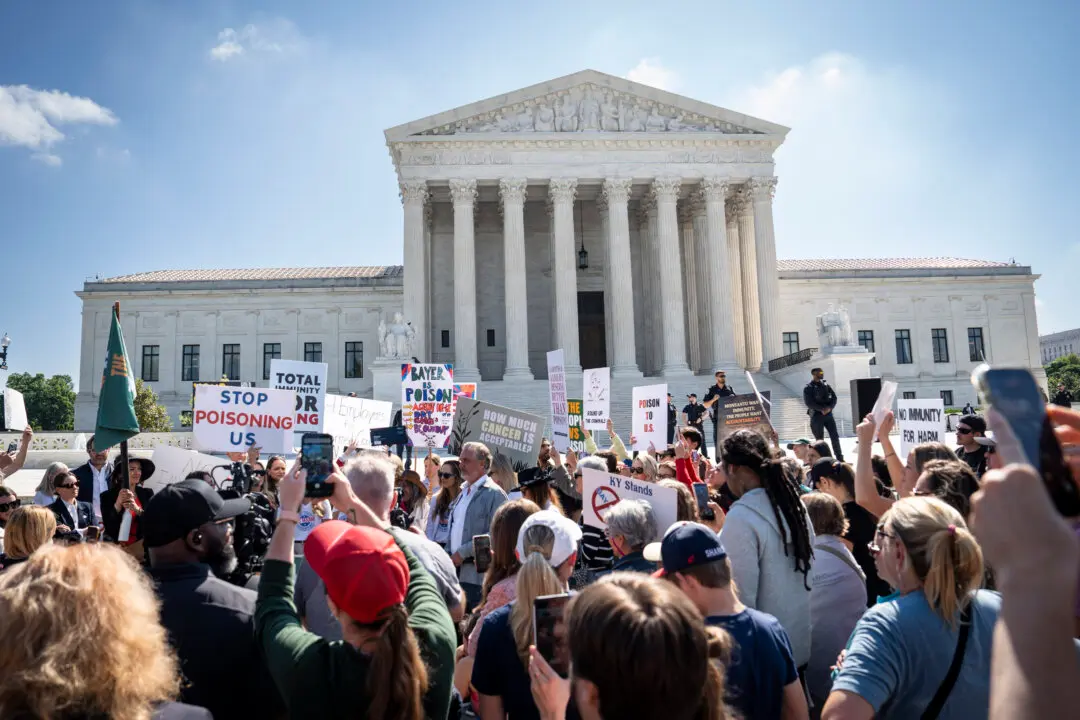
The Supreme Court ruled on June 29 that President Donald Trump acted within his authority when he fired a member of the Federal Trade Commission, marking a significant win for his view of executive power.
In a 6–3 decision, the court’s majority overruled a landmark precedent limiting the president’s power to fire federal officials.
The case, Trump v. Slaughter, focused on FTC Commissioner Rebecca Slaughter’s argument that Trump violated federal law when he removed her last year.
More specifically, she said his removal was not based on neglect or one of the other reasons Congress said could be used as a basis to fire a commissioner.
She also pointed to a landmark Supreme Court decision known as Humphrey’s Executor v. United States.
In that case, the Supreme Court said that former President Franklin Delano Roosevelt wrongly fired another commissioner. It also disagreed that Roosevelt’s authority under Article II of the Constitution allowed him to override Congress’s limits on firings.
“If anything more is left of Humphrey’s, we overrule it,” said Chief Justice John Roberts, who wrote the majority opinion. “Humphrey’s has for decades been a result in search of a rationale.”
He added that Congress’s limits on the president’s firing power had violated the nation’s separation of powers.
“In its present form, the FTC enforces and administers some 80 statutes, which cover almost every facet of our Nation’s economy,” he said. The agency’s tasks, he said, were “the very essence” of the execution of law, which is “precisely the President’s constitutional role.”
Justice Sonia Sotomayor penned a dissent joined by Justices Ketanji Brown Jackson and Elena Kagan.
“Today, the Court discards that democratic regime in favor of one that distorts the structure of Government to fit the majority’s theory of unitary, total executive control,” she said. “The result is a President who emerges with far greater power than ever before.”
Trump celebrated the ruling as a “BIG WIN” in a post to TruthSocial. “It is such an Honor to be the sitting President who won this Historic and Unprecedented Ruling, one of the most important ever given with respect to Presidential Powers,” he said.
The decision was one of the most consequential of the Supreme Court’s 2025–26 term and followed a series of legal challenges to Trump’s ability to fire the heads of so-called independent agencies.
Courts had cited Humphrey’s Executor in blocking Trump’s firings, arguing that the agencies exercised a form “quasi-legislative” or “quasi-judicial power.”
In 1935, the Supreme Court said those powers allowed Congress to limit the president’s ability to fire members of those agencies. Since then, however, the court under Roberts has shown skepticism of the reasoning in Humphrey’s Executor but didn’t completely overturn it.
Roberts criticized Humphrey’s Executor on June 29 but also clarified that the court’s decision was limited to the FTC and that other agency heads may receive greater protection.
“All we do today is recognize what has been clear for a century—that those who fall within the President’s ‘general administrative control’ must be removable by the President at will,” he said. He was quoting a decision known as Myers v. United States, which said the president could fire certain officials at will.
Roberts’ opinion came on the same day as the Supreme Court blocked Trump’s firing of Federal Reserve Governor Lisa Cook. In that case, Trump v. Cook, he disputed the idea that the president should be able to fire Cook at will.
That, his majority opinion said, was “out of step with the statute Congress enacted and our Nation’s tradition of central banking protected from political interference.”
This is a developing news story and will be updated.