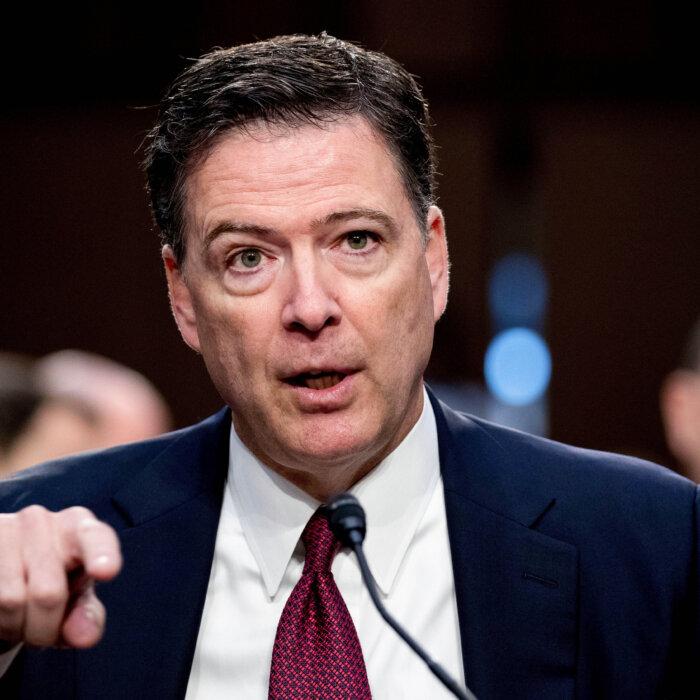
A federal judge is expected to hear arguments on Nov. 19 over whether to dismiss the Justice Department’s allegations that former FBI Director James Comey lied to Congress about authorizing leaks to the media.
Comey’s attorneys have argued the indictment brought against him on Sept. 25 was flawed in multiple ways, including that it was vindictive and unconstitutional. Filed on Oct. 20, his motion focused on President Donald Trump’s years-long criticism of Comey and the timing of his indictment.
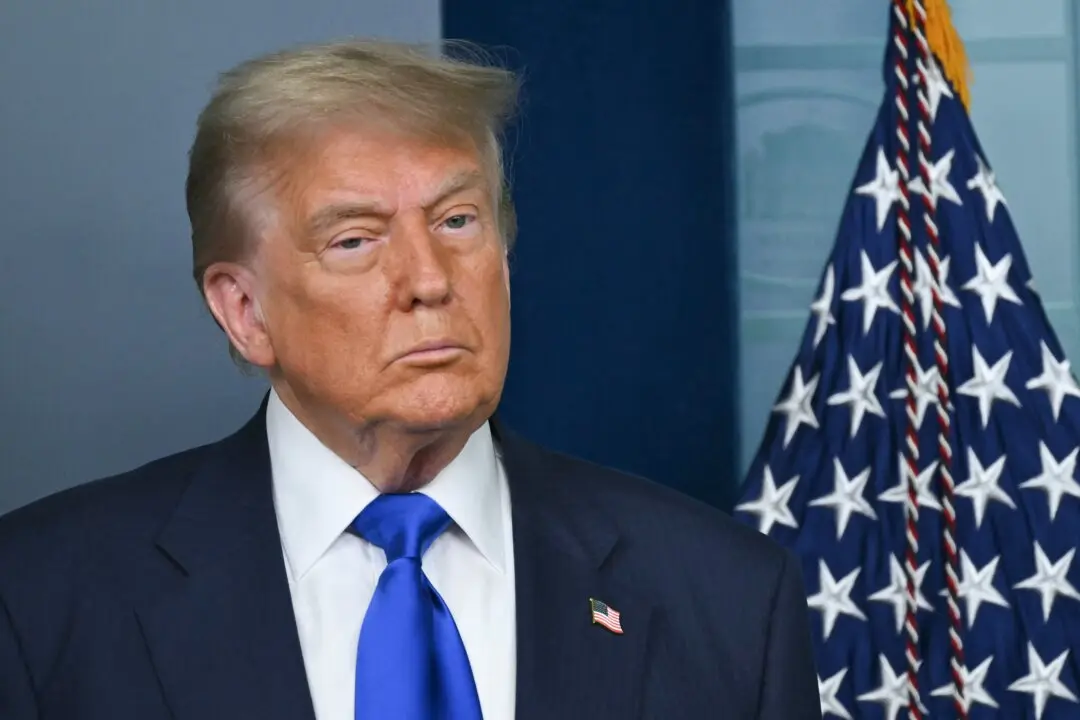
“Pam: I have reviewed over 30 statements and posts saying that, essentially, ‘same old story as last time, all talk, no action. Nothing is being done. What about Comey, [U.S. Sen.] Adam ‘Shifty’ Schiff, [New York Attorney General] Leticia [James]??? They’re all guilty as hell, but nothing is going to be done,’” Trump said. “JUSTICE MUST BE SERVED, NOW!!!”
The president’s post came shortly after former Interim U.S. Attorney Erik Siebert departed the U.S. Attorney’s Office for the Eastern District of Virginia.
Less than two days later, Bondi appointed Lindsey Halligan, a White House adviser, to serve in Siebert’s place. Comey was charged with an indictment that Halligan signed on Sept. 25.

“President Trump’s ... 11th-hour appointment of a political ally for the express purpose of prosecuting a longtime critic, accompanied by a social media post pushing the DOJ to indict—is decisive evidence that the government would not have prosecuted Mr. Comey but for his ‘expression of ideas’ that President Trump disliked,” one of Comey’s motions read. “That sequence of public events provides more than enough evidence for this court to conclude that President Trump’s animus was the but-for cause of the government’s decision to prosecute Mr. Comey.”
The Justice Department said Comey lacked direct evidence of a vindictive prosecution and that the public had a strong interest in the prosecution.
In reference to the president’s social media posts, the department said none of them showed him expressing an interest in penalizing Comey for exercising his right to free speech by criticizing Trump.
Outside of Trump’s motives, the Justice Department’s conduct in bringing the indictment could hamper the prosecution as well. In recent weeks, judges have made comments casting doubt on grand jury proceedings and the government’s investigation into Comey.
During a hearing on Nov. 13, U.S. District Judge Cameron McGowan Currie doubted that Attorney General Pam Bondi could have approved the indictment because there was a gap in records for the grand jury proceedings. The hearing focused on Comey’s and James’s motion to dismiss the indictments against them based on the idea that Halligan, who was the only prosecutor to sign the indictment, was illegally appointed.
She said a gap in the transcript reflected when both she and the court reporter left the room.
That period, she said, “consisted solely of the grand jury’s private deliberations, during which no prosecutor, court reporter, or other person may be present pursuant to Rule 6(d) of the Federal Rules of Criminal Procedure.”
“There are no missing minutes, contrary to the suggestion raised by the court,” Halligan added.
“Indeed, the government believes the Magistrate Judge may have misinterpreted some facts he found when issuing the latest order to release the grand jury materials to the defendant,” the DOJ said.