XENIA, Ohio—Josh and Aubrey Steinbronn recently drove 1,000 miles to meet Ruthie, a 2 1/2-year-old golden retriever.
For the Steinbronns, it marked the next stage of a journey that paired their 3-year-old daughter, Hannah, with a seizure-alert dog they believe will give comfort to them and their daughter.
Hannah has a rare gene mutation. There are about 100 people in the world who have the mutation and 30 in the United States. Hannah started having seizures at 6 months old, Aubrey Steinbronn told The Epoch Times.
“We couldn’t leave the room without worrying if she would have one,“ she said. ”We’ve lived in constant fear of something happening since the seizures started.”
Seeking “peace of mind,” the Steinbronns found 4 Paws for Ability, a nonprofit organization founded in 1988 in southwest Ohio.
Jennifer Lutes, executive director of the nonprofit, said 4 Paws places about 120 service dogs per year with families across the country and internationally.


Most of the dogs are Labs and golden retrievers, and some are goldendoodles.
Although some of the dogs are paired with veterans with post-traumatic stress disorder and mobility conditions, most are placed with children.
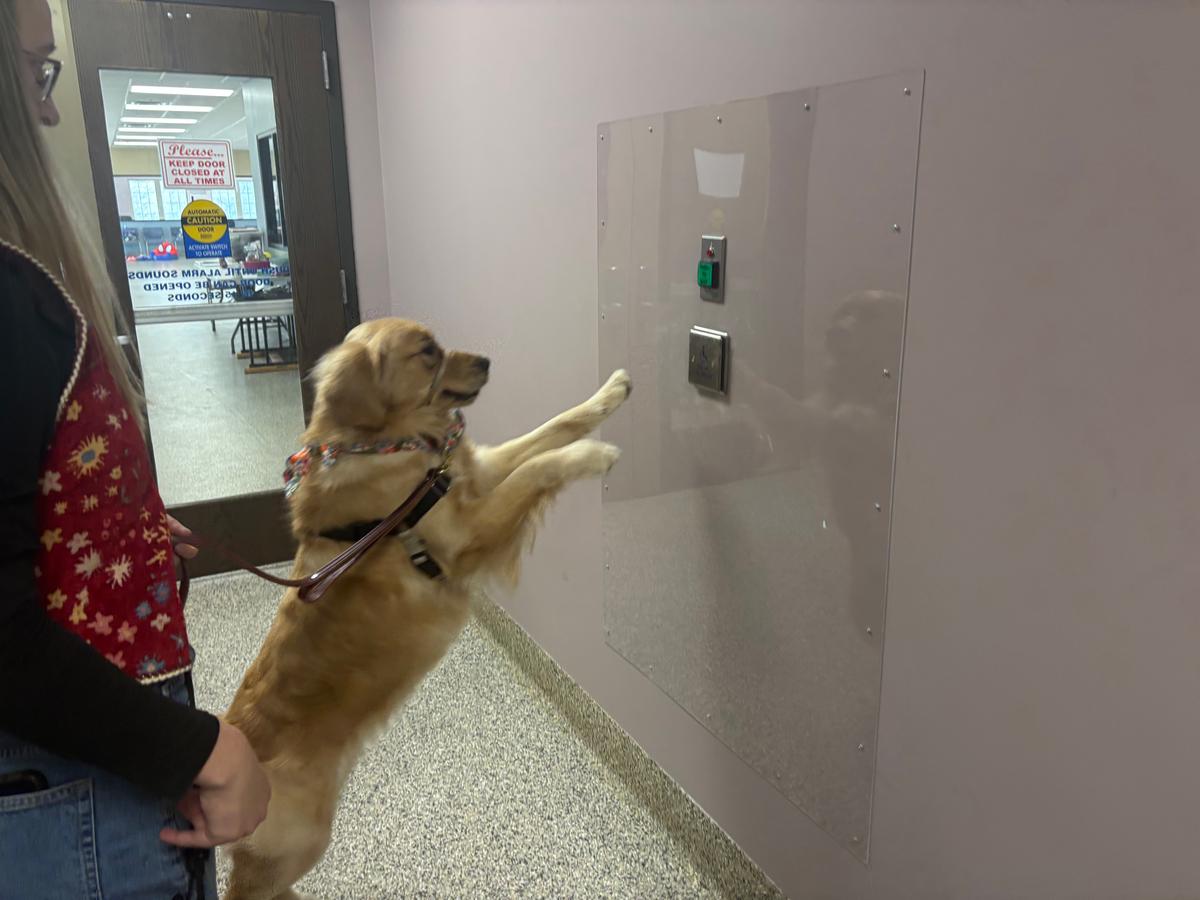
Depending on needs and training path, they could be detecting seizures before they happen, opening doors and retrieving items for a veteran unable to walk, or tracking the trail of a child with autism who wanders away from a safe, monitored environment, Lutes said.
About $40,000 is invested in each 4 Paws service dog, which takes two years to breed, raise, and train, according to Lutes.
Families pay half that fee through fundraising while 4 Paws covers the rest, funded by private and corporate donations.
About 200 children are currently on the waitlist.
The organization works with the parents to get recorded videos of the child’s routine, which gives the organization an understanding of what type of dog is best based on the dog’s personality and the tasks that need to be performed.
Once they have fulfilled the fundraising requirement, families await placement of the service dog, a process that can take up to two years.
Puppies begin an enrichment program when they are 3 days old.
“They start being evaluated for their potential to be a service dog,“ Lutes said. ”We look at personality, and natural instincts towards different tasks, for example.”
Volunteers at the facility help take care of the dogs, foster them, and train them. Each 4 Paws dog has multiple evaluations over time to determine what type of work it may eventually provide.
Service dogs are about 18 months to 2 years old when they are paired with a family.
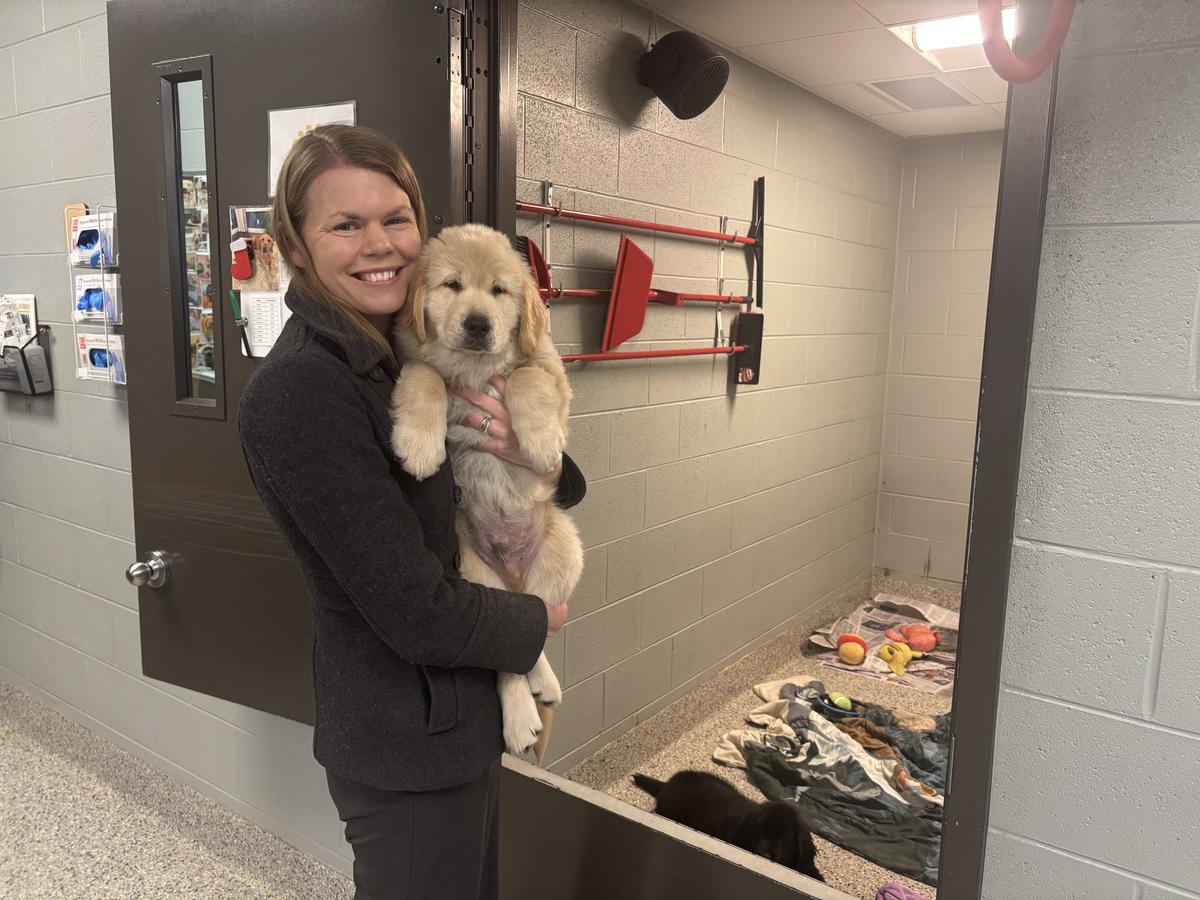
“When they’re placed as a service dog, they will work with that family for their entire life, and then when they retire, they live as a pet with that family,” Lutes said.
Not every dog in the program graduates to service dog status; about half are adopted as pets for either behavioral or medical reasons. They are called the “Fabulous Flunkies.”
The placement training class is a 10-day program at the 4 Paws facility in Xenia, Ohio, where families meet their service dog for the first time. After graduation, the organization offers ongoing support through the first year.
The Steinbronns’ dog, Ruthie, was determined by 4 Paws to be best suited as a seizure-alert dog, and she demonstrated her aptitude during the training placement class with the family.
“She recognized right away that Hannah was her person,” Aubrey Steinbronn said. “She pre-alerted to one of Hannah’s seizures. She aggressively sniffed Hannah letting us know that this child’s about to have a seizure.”
Molly, a 4 Paws senior trainer who gave only her first name, was matched with Ruthie about six months ago.
“When a child has a seizure, they actually have a scent, and that scent stays on clothing,“ Molly said. ”When Hannah would have a seizure, Josh and Aubrey would mail us the shirt, and we would teach Ruthie to recognize the scent.”
The Steinbronns told The Epoch Times that they were especially drawn to 4 Paws because the organization trains dogs to be part of three-unit teams, which means that the partner who is receiving the dog does not have to be the handler of the dog.
“Ruthie is Hannah’s partner, but her parents are the ones handling Ruthie out in public,” Lutes said.
The Steinbronns have two older children: Adeline, 6, and Jack, 8. They are hopeful that Ruthie will provide “an extra layer of protection” so they can sleep through the night and know that Hannah is safe.
Cyndi Swafford understands what the Steinbronns are feeling. She and her husband, Jesse Swafford, are raising seven children. Brandon Swafford, now 19, has developmental delays and an intellectual disability, she said, so when he was a child, the family sought the assistance of a service dog.
“At the time, we were really struggling with emotional regulation and significant language barriers,“ Cyndi Swafford said. ”Brandon was nonverbal, and we often felt we had a hard time reaching him. He would also walk off at times.”
The Swaffords learned about 4 Paws; completed the lengthy application, approval, and fundraising process; and were eventually matched with Sophia, a white Labrador retriever.
Cyndi Swafford said she credits Sophia with helping her son “find his words.”
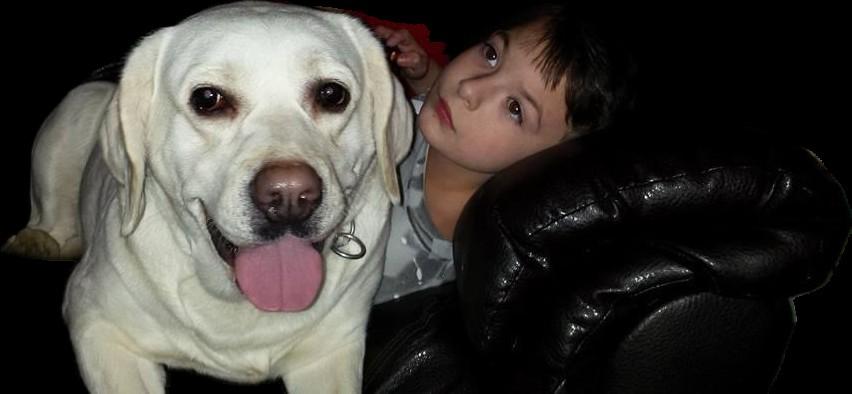
“I remember that when he was having a hard time, we would find him curled up with her and he would whisper into her ear,” she said.
“When we took her out into the community and people would want to interact with her, we would rely on Brandon to give them permission, or not. If he was up for that, he would welcome people to pet her and interact with her. And if he wasn’t, he would say no. He was super proud of his girl.”
She said Sophia was her son’s “coparent.”
“She filled in where I couldn’t, and spoke a language to him that I didn’t have,” Cyndi Swafford said. “She had an understanding for him that I couldn’t sometimes, and so there was comfort in that for me. She could soothe him when I wasn’t able.”
Three years ago, when she was 13, Sophia developed an aggressive form of cancer and died. Brandon Swafford still grieves the loss.
“It has been a tough transition at times because they were so bonded,“ Cyndi Swafford said. ”She provided a lot of comfort, so it was really hard for a while when he didn’t have that anymore.”
She said her son sleeps with a blanket that bears an image of him and Sophia.
“She’s definitely still a source of strength for him, a source of calm and peace when he needs it,” Cyndi Swafford said. “He will tell us when he’s had a dream of Sophia, and those are particularly good days for him.”
Cyndi Swafford is a mental health counselor for a private practice. In her profession, and as a parent of a special-needs child, she sees the benefit a service dog provides to a child.
“Anything that you can do to help ease the burden of whatever makes these kids feel different, or whatever creates a barrier for them, is a positive,” she said. “Sophia eased the barrier of communication for Brandon. She was something that drew people to him in a way that allowed him social interaction he didn’t get a lot of before because people didn’t understand him.”
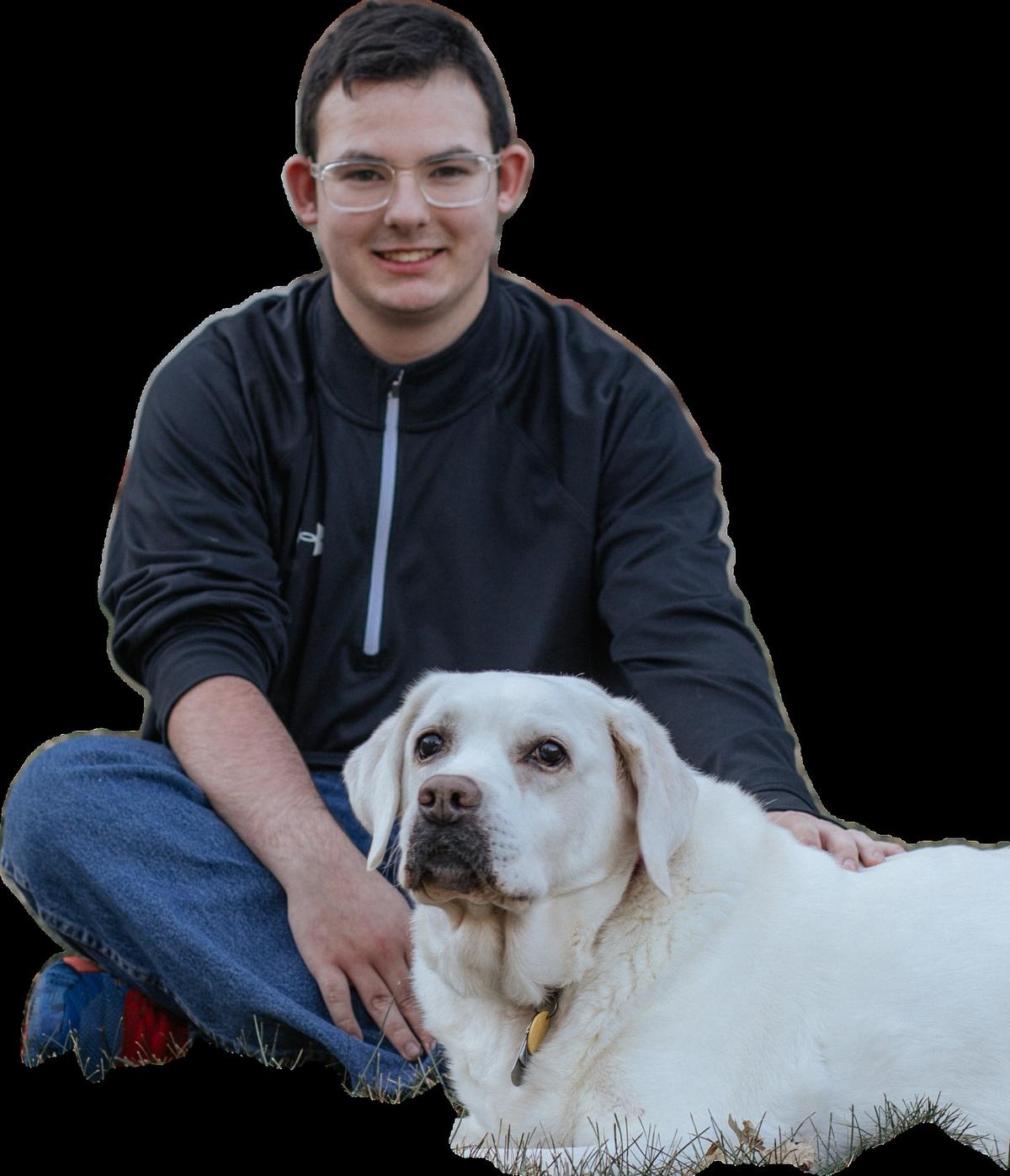
The working life of a 4 Paws service dog ranges from eight to 10 years, depending on the role it performs and how physically strenuous that role is, Lutes said. The dog remains with the family upon retirement, and some families get a successor service dog.
When parents reach out to 4 Paws, they are looking for how to support their children and give them the best chance at a full and rewarding life, she said.
“Seizure-alert dogs, for example, are trained to recognize the scent of the seizure and then to bark as an alert for our program to then alert a parent to respond to that seizure and administer meds or clear airways or take the child to the hospital,” Lutes said.
But it is not just the tasks they work with.
“Children are in critical developmental years, and the child that previously was isolated and didn’t have many friends—and other kids didn’t know how to interact with them—suddenly they have a best friend to grow up with,“ Lutes said. ”It changes their life.”