
As the government shutdown approaches its eighth day, senators are weighing in on the White House’s new threats to refuse to back pay furloughed federal workers, increasing the pressure on Democrats to find a way out of the shutdown.
On Oct. 7, The Epoch Times confirmed that the White House Office of Management and the Budget (OMB) has drafted a legal memorandum which calls into question whether “non-essential” federal employees who are furloughed and do not work during the shutdown are entitled to back pay.
With the government shutdown approaching the end of its seventh day, President Donald Trump has sought to ramp up pressure on Democratic senators to pass Republicans’ government funding bill by threatening mass layoffs of a portion of federal employees.
Adding to that pressure, essential federal employees who have not been furloughed and continue to work could also see their pay interrupted until the government is funded.
Now, the White House is suggesting that federal workers who are furloughed during a shutdown could go unpaid for the period of the shutdown.
A government shutdown occurs when Congress fails to pass one or more of 12 mandatory spending bills by a funding deadline. During government shutdowns, only workers considered essential to government functions continue working, while others are furloughed until the government is funded again.

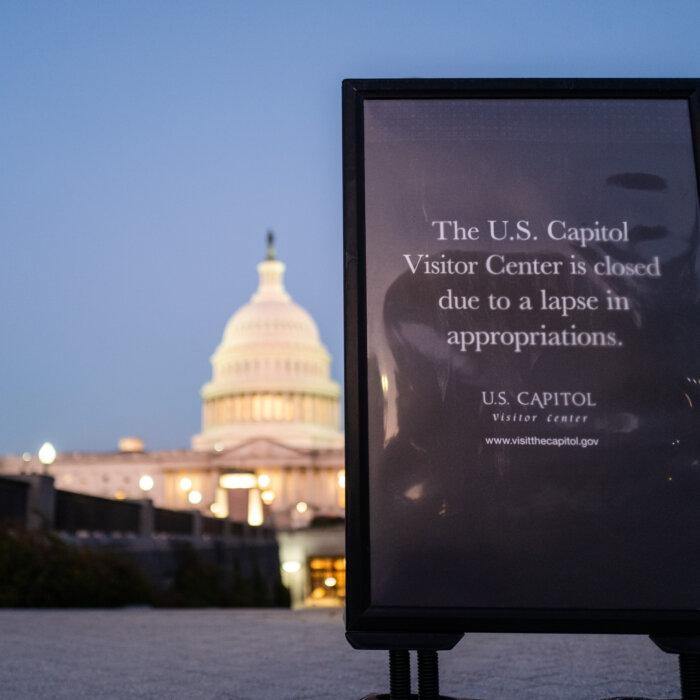
Historically, both essential workers and furloughed workers have not been paid during a government shutdown but receive back pay after funding for their sector of government is appropriated.
On Tuesday, a senior White House official confirmed that the OMB had circulated a memorandum affirming an obligation to back pay essential government employees who continue to work during shutdowns, but not furloughed employees who do not work during shutdowns.
The OMB memo, which is not yet final, argues that for back pay to be provided to furloughed employees, appropriations must specifically provide for such funding.
Senators Weigh In
As he spoke to reporters on Tuesday afternoon, Senate Majority Leader John Thune (R-S.D.) faced questions about the White House memo concerning back pay for furloughed federal employees and where Republican lawmakers stand on the issue.“I haven’t looked at the memo specifically yet. My assumption is that furloughed workers will get back pay,” Thune replied. “But that being said, this is very simple. Open up the government, and this is a non-issue. We don’t have to have this conversation.”
During the Democratic Senate press conference on Tuesday afternoon, Sen. Patty Murray (D-Wash.) criticized Trump for “threatening to ignore the plain letter of the law to deny federal workers back pay, which I tell you right now is not going to work.”
While the White House memo affirmed that government employees working through the shutdown will get back pay, lawmakers have acknowledged apprehensions about delays in their paychecks.
House Speaker Mike Johnson (R-La.), speaking with reporters, noted U.S. military personnel would miss an Oct. 15 round of paychecks if Congress doesn’t reach a deal soon.
“In order to process those checks, you really have to get it resolved by the 13th, ... and the Democrats are showing no interest whatsoever in reopening the government,” Johnson said.
No Clear Path Forward to End Shutdown
There’s still no clear path forward on ending the shutdown, despite the increasing temperature in Washington.That’s because under Senate rules, Republicans need 60 votes to pass the bill, which means that at least seven Democrats would need to agree.
The bill put forward by Republicans, which has the backing of Thune and Trump, is considered a “clean” funding extension, describing a bill without partisan attachments or other bill riders.
Democrats’ bill calls for reversing up to $1 trillion in Medicaid cuts enacted under the One Big Beautiful Bill Act, as well as an extension of Affordable Care Act (ACA) insurance subsidies that are set to expire at the end of this year.
On Oct. 6, lawmakers rejected both proposals again, while on Oct. 7, no vote was held at all.
Meanwhile, both parties say they have the most popular support for their proposals.
Republican lawmakers over the past week have described these demands as unprecedented and a non-starter, but Democrats have said they feel comfortable in holding firm on their demands.