Illinois Gov. JB Pritzker signed a law Monday in Chicago requiring the largest artificial intelligence companies to open their safety practices to independent outside audits, a requirement the governor says does not yet exist in any other state.
The Artificial Intelligence Safety Measures Act, known as Senate Bill 315, makes Illinois the third state to regulate the most powerful AI systems, after California and New York, and the first to require annual third-party audits of how the biggest developers guard against catastrophic risks. It takes effect Jan. 1, 2027.
“Where the federal government has been unwilling to step up, states must venture once more unto the breach,” Pritzker said at the signing. “We must protect our people from the dangers of AI while still harnessing the unique potential of the technology.”
The law applies to what it calls large frontier developers—any company whose AI models are trained using very large amounts of computing power and whose corporate family reported more than $500 million in annual revenue.
Those companies must write, publish, and update each year a plan describing how they assess and reduce catastrophic risks, including cybersecurity and risks from the companies’ own internal use of their models.
They must report serious safety incidents within 72 hours, or within 24 hours if an incident poses an imminent risk of death or serious physical harm, and submit to annual independent audits. The law also requires confidential channels and protections for employees who report safety concerns.
Attorney General Kwame Raoul, whose office will enforce the law, said the audit requirement sets it apart.
“This audit process mandates that the auditor has access to unredacted versions of the AI model,” he said, adding that frontier systems, because of their computing power, “could be causing catastrophic events, such as cyberattacks, the creation or release of certain kinds of weapons, or the potential of evading control of the developer or user.”
His office is able to seek civil penalties of up to $1 million for a first violation and up to $3 million for later ones.
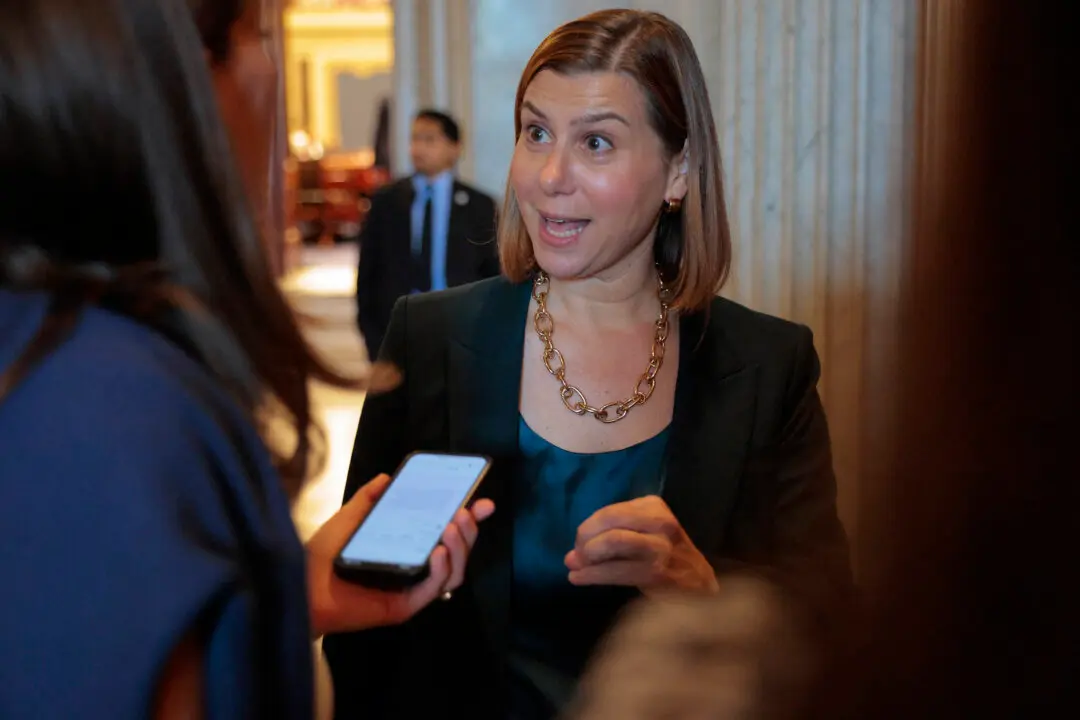
The bill passed both chambers of the state Legislature with bipartisan support, 110–0 in the House and 52–5 in the Senate. Democratic State Sen. Mary Edly-Allen, the Senate sponsor, said Illinois joins New York and California as a group of states that together “represent roughly 40 percent of the American market, creating what will effectively become a national standard for AI safety.”
She said the law targets systems capable of being misused for cyberattacks, biological threats, fraud, and election interference. “If we got social media wrong, and we did, we cannot afford to get AI wrong at an even greater scale,” she said.
Rep. Daniel Didech (D), the House sponsor, said the risks the law addresses are “not theoretical,” citing a mass shooting in which the alleged shooter made use of an AI chatbot, as well as AI-assisted attacks on water utilities. He compared the rules to seat belts and airbags, saying safety requirements had made cars and air travel safer without stopping innovation.
House Speaker Emanuel “Chris” Welch (D) said the safeguards ensure Illinois “will not be a 21st century wild, wild west,” and said the House working group that developed the measure would keep meeting to address AI’s effect on prices, utility bills, and elections.
Two of the largest companies the law regulates, OpenAI and Anthropic, publicly support it. Didech singled out Anthropic, saying it “stood with us from the beginning.”
Cesar Fernandez, who leads state and local government relations for Anthropic, said in a statement that Illinois is the first state to pair AI transparency requirements with independent verification.
Thomas Woodside of the Secure AI Project, which also pushed for the bill, compared the audit requirement to the origins of federal meat inspection. “Independent experts should verify the safety claims of the largest AI developers,” he said, arguing companies should not be “left entirely to their own devices.”
Not everyone backed the measure. NetChoice, a technology trade association, filed testimony opposing the bill, calling its audit requirement an “impossible compliance obligation,” because no recognized standards or certified auditors yet exist for evaluating frontier-model safety. Other industry groups also urged lawmakers to reject or narrow it.
The law arrives as the Trump administration has been pushing back against state-level AI rules. In a December executive order, Trump directed federal agencies to challenge the most “excessive” state AI laws, arguing that state-by-state regulation “creates a patchwork of 50 different regulatory regimes that makes compliance more challenging, particularly for start-ups.”
Pritzker, who pushed to keep the third-party audit requirement that he said other states had stripped from similar bills, framed the law as a starting point. “There will be more to do on this front as this new technology becomes even more widely used,” he said.