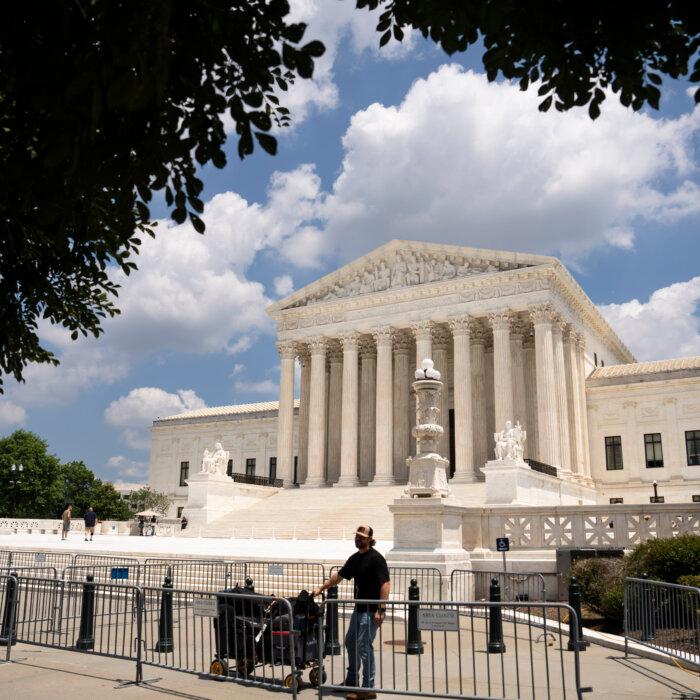
The Supreme Court on June 30 struck down federal limits on how much a political party can spend in coordination with its own candidates, freeing the national party committees to direct unlimited sums into individual campaigns months before the 2026 midterm elections.
The 6–3 ruling applies equally to both parties. But the two main national committees enter the newly deregulated landscape in far different financial standing.
The Republican National Committee (RNC) holds more than eight times the cash of the Democratic National Committee (DNC), and the DNC remains the only national party committee carrying debt, according to the latest June monthly filings with the Federal Election Commission. June’s filings cover a period through May 31.
The RNC reported $125.5 million in cash on hand and no debt at the end of May, its most recent monthly filing shows. The DNC reported $14.9 million in cash and $18.3 million in debt over the same period.
The Democratic Party’s congressional committees are far more competitive with their Republican counterparts.
On the Senate side, the Democratic Senatorial Campaign Committee (DSCC) reported $38.9 million in cash, and the National Republican Senatorial Committee (NRSC) reported $48.9 million, both with no debt. On the House side, the Democratic Congressional Campaign Committee (DCCC) reported $73 million, and the National Republican Congressional Committee (NRCC) reported $81.8 million, again both debt-free.
Among the six national party committees, the DNC is the only one reporting any debt.
The contrast is specific to the national committees. At the candidate level, Democrats have outraised Republicans this cycle in both chambers, according to FEC data.
All Democratic Senate candidates running in 2026 have raised about $442.9 million combined, against about $287.4 million for Republican Senate candidates, and Democratic House candidates have raised about $848.4 million to Republicans’ $632.1 million, according to FEC data.
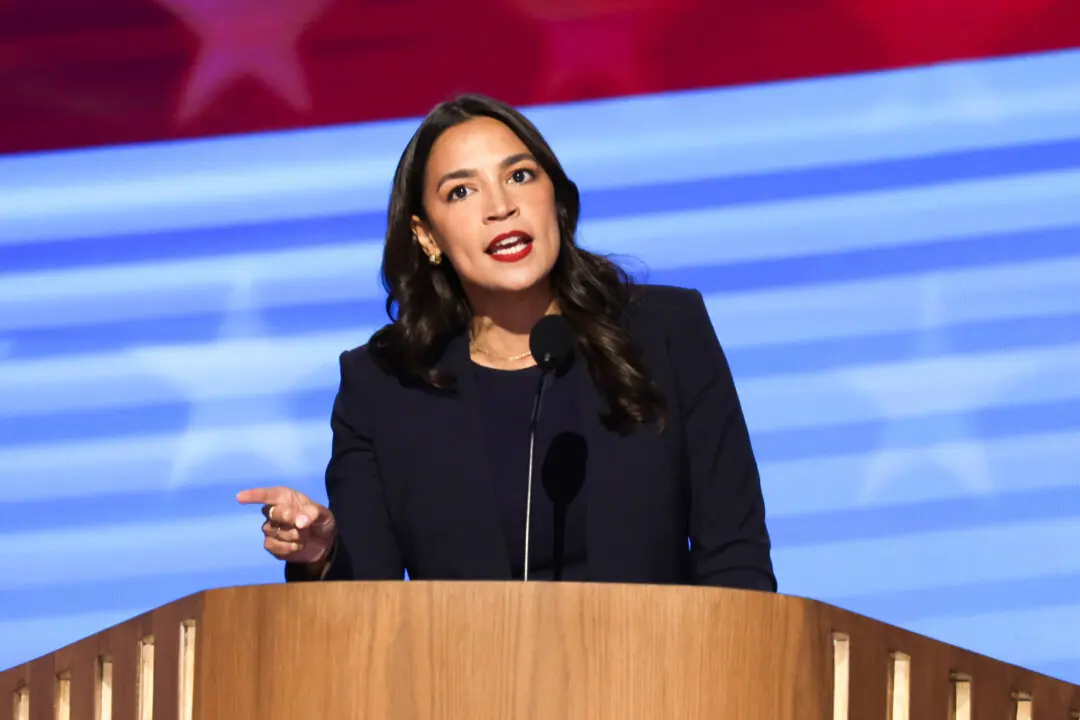
Democrats also hold nine of the 10 top Senate fundraising spots and seven of the 10 top House fundraising spots, led by Sen. Jon Ossoff (D-Ga.) at about $81.1 million and Rep. Alexandria Ocasio-Cortez (D-N.Y.) at about $31.1 million.
Avis Jones-DeWeever, a Democratic strategist and principal at Nouveaux Strategies, said the financial gap matters most in the final stretch before the election. Though many public opinion polls have tended to favor Democrats heading into November, she said, “being at a nearly 10-to-1 disadvantage in dollars available to spend in the critical last few months before the midterms under any circumstances would be unfortunate.”
She said that disadvantage, combined with Democratic losses in what she called “unprecedented midterm redistricting efforts,” could amount to “a perfect storm” working against any polling edge the party holds heading into November.
The DNC has said that debt reflects a deliberate strategy rather than a shortfall. As Chair Ken Martin told the Pod Save America podcast in April, the committee took out a loan in 2025 to invest early in organizing, voter registration, and state party infrastructure, an approach he summarized as “organize everywhere, win anywhere.”
Martin has said the DNC raised a record $105 million in 2025, most of it from small grassroots donors, and has described the debt as manageable. The committee also funds a national voter file, upon which candidates up and down the ballot rely, which costs more than $10 million a year. The DNC has not responded to requests from The Epoch Times to comment on its financial position.
The committees’ coordinated spending had been minimal under the caps that are now lifted. In filings covering activity through May, the NRCC reported $339,000 in such expenditures for the year, the DCCC reported $152,500, and the DSCC reported $4,000. The DNC, RNC, and NRSC each reported none. With the ruling, that category is no longer capped.
In a joint statement, the DNC, DSCC, and DCCC called the decision a setback.
“Today’s ruling is a win for billionaire donors and special interests who want more influence over the GOP agenda and an invitation for corruption,” said the statement from Martin, DSCC Chair Sen. Kirsten Gillibrand (D-N.Y.), and DCCC Chair Rep. Suzan DelBene (D-Wash.).
The three Democratic committees, which intervened to defend the limits after the Trump administration declined to do so, said Democratic House and Senate candidates have consistently outraised their Republican opponents.
The Republican committees that brought the case welcomed the outcome.
“This is a decisive First Amendment victory and a major win for the integrity of our political system,” said a joint statement from NRSC Chairman Sen. Tim Scott (R-S.C.) and NRCC Chairman Rep. Richard Hudson (R-N.C.). They said the ruling lets the committees “fully support our candidates” heading into the 2026 midterm elections.
The ruling is already reshaping how at least one committee plans to operate. In a memo to supporters, the NRSC said it would shut down its traditional independent expenditure unit and run most spending in direct coordination with campaigns. It said coordinated advertising also qualifies for the lowest broadcast rates offered to candidates, which it called far cheaper than what outside groups pay.
The Democratic committees dispute that, citing a solicitor general brief and two pending lawsuits over party access to those rates.
Whether the new freedom to coordinate translates into an advantage will depend in part on how much each committee has to spend. On that measure, the RNC enters the cycle well ahead of the DNC.