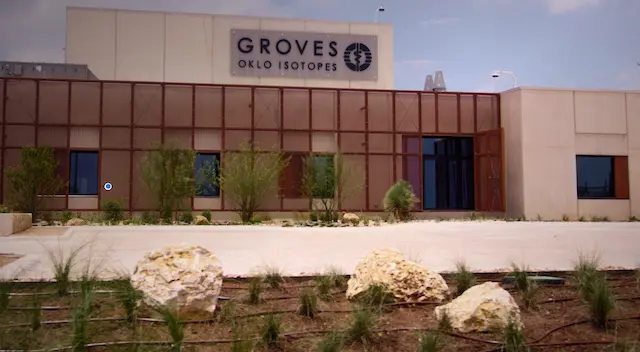
A hotly disputed annexation to accommodate data center development by the city of Cheyenne is raising questions about Wyoming’s industrial siting process and spurring calls to revise state statutes related to citizens’ right to petition government.
While these issues are unique to Wyoming, what’s happening in its capital city reflects national angst over “AI farm” data centers, an ambient distrust of artificial intelligence, and a gnawing sense among rank-and-file constituents that elected officials—from City Hall to the White House—are ignoring them.
According to Data Center Moratoriums, a website maintained by groups such as Good Jobs First to track data center proposals, up to 170 local governments have imposed or are pondering data center moratoriums, including Lakeland, Florida, on Aug. 3, and Broomfield, Colorado, and Prince George’s County, Maryland, in July.
Depending on the definition, there are 3,000 to 4,767 data centers operating in the United States, and nearly 1,800 proposed or being built, as documented by Cleanview, a market intelligence company that monitors power projects.
Opposition to data centers is mushrooming across the country despite President Donald Trump’s support for AI development as vital in ushering in “a golden age for American manufacturing and technological dominance” in what his administration maintains is an existential race with China.
According to a March 2026 Gallup poll, seven of 10 respondents nationwide don’t want a data center in their community. A June 2026 Reuters/Ipsos survey found that 77 percent of those surveyed expressed concerns over data center development.

Opposition is bipartisan, pervasive, and often has less to do with an actual project than with constituents asserting local control over big-money hyperscalers, government bureaucrats, and lawmakers making decisions at their doorsteps without knocking on their doors. Whether that is true or not, the backlash is real: Data Center Watch reports that at least 75 data center projects totaling an estimated $152 billion in value were denied, tabled, or withdrawn by local governments in the first quarter of 2026.
Most opponents cite concerns with data center water and electricity consumption. Those are certainly issues in Cheyenne, but there’s an undercurrent to the agitation in deep red Wyoming, where a hastily assembled petition drive by an ad hoc patchwork of residents has done what many thought improbable: garner signatures from 10 percent of the city’s registered voters within 20 days to force a referendum on data center development.
The Petition
The petition drive was launched in the wake of the Cheyenne City Council’s 6–3 approval of a 3,460-acre annexation to accommodate Microsoft’s multiyear expansion southeast of the city despite overwhelming opposition from residents during a seven-hour public hearing on July 13.
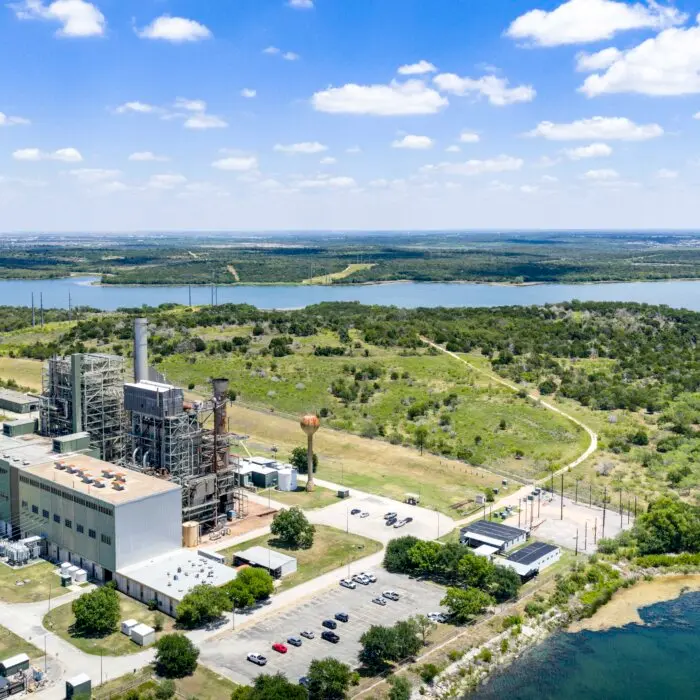
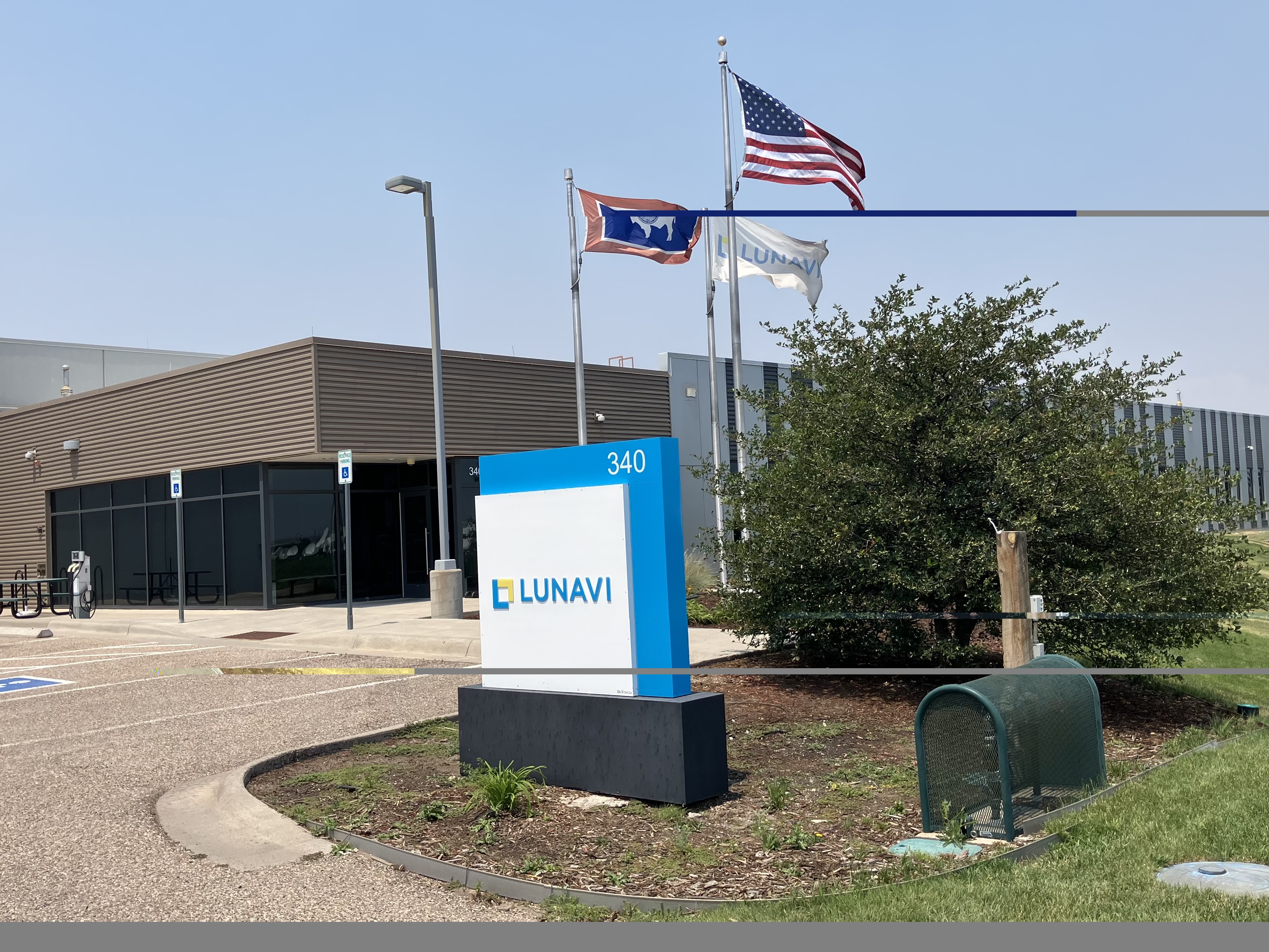
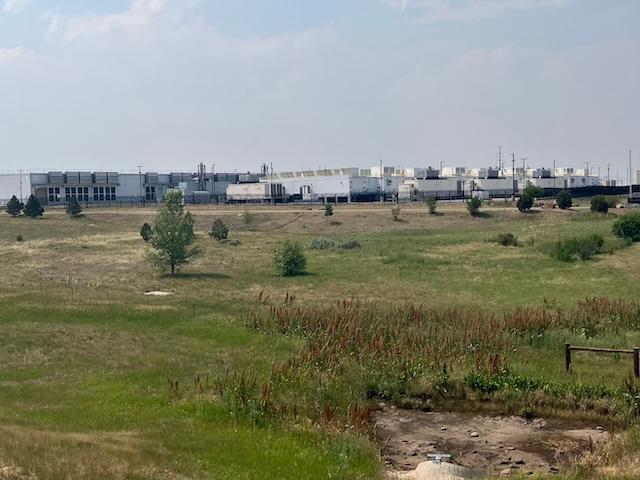
Microsoft, Cheyenne’s largest taxpayer, operates four of the city’s 10 active data center campuses. According to Cheyenne LEADS, the city’s economic development agency, five more are under construction, nine are in planning, and more than 30 developers are preliminarily engaged in building data centers there.
While there are places nationwide with more data center development, what distinguishes these operations in Cheyenne is sheer size. The High Plains city of 66,000, Wyoming’s most-populated, is rapidly emerging as a high-tech nexus and distribution hub. It straddles rail lines, two interstate highways, and transcontinental fiber optic corridors with abundant natural gas, a cool climate, and state incentives for high-tech developers.
Over the past two years, however, residents have grown anxious about the rapid pace of data center development manifesting in massive construction projects carving into the grasslands that roll onto the ramparts of the Rocky Mountains Front Range.
Opponents cite concerns over water, loss of agricultural land, unanticipated impacts—such as a March wastewater bacterium release from Meta’s 715,000-square-foot data center project—but there’s also pervasive unease over emergent AI technologies, a perceived lack of transparency by city officials, and state statutes many say allow deep-pocket corporations to bulldoze over small local governments.
Cheyenne’s data center opponents hit the streets after the council’s July 13 hearing, needing 2,739 signatures from registered city voters by Aug. 7 to get a referendum on November’s ballot asking voters to repeal the annexation.
“We turned in 3,275 signatures, plus a few here and there. Now it’s up to the city clerk” to certify that at least 2,739 are registered Cheyenne city voters, Hasenauer told The Epoch Times, noting the petition includes two questions for voters to “stop the annexation and then stop zoning for data centers.”
Whether it passes isn’t really the point, he said.
“This was the largest annexation in the history of Wyoming. We asked for a seven-month delay to let the Legislature come in” and address a range of issues, from industrial siting deficiencies to the 20-day referendum requirement for constitutional petitions, among the nation’s most restrictive, he said.
Hasenauer, who served two years as a Laramie County commissioner a decade ago and is running for the commission again in 2026, couldn’t sign the petition since he isn’t a city resident.
“It takes county people to solve city-slicker problems,” he said, predicting city officials will “look at every signature … to make it less than 2,800” and that the city is “going to challenge this in court” to keep it off November’s ballot.
During its Aug. 10 meeting, the Cheyenne City Council, after an executive session with Mayor Patrick Collins, asked City Attorney John Brodie to seek a declamatory judgment from state district court on whether a referendum can legally undo an annexation adopted by ordinance.
The People
There is no orchestrated, organized opposition in Cheyenne to data centers. It is an organic grassroots assembly of area residents who feel they were rebuffed when they questioned what was happening on the land around them, the roads they drive, and the water they drink.
Hasenauer said he assumed the lead because he’s “good at it.” He said more than 80 percent of the 3,000 people he spoke with while soliciting signatures through 97-degree heat, thunderstorms, Cheyenne Frontier Days, and early voting for Wyoming’s Aug. 18 primaries support a moratorium.
It was rewarding to hear, “You earned my vote by listening to the people,” said Hasenauer, who’s running unchallenged in the Republican primary and is virtually assured a commission seat in November. “I feel pretty good about that.”
Among those who joined Hasenauer in spearheading the opposition was a retired school teacher, a social worker dedicated to veterans, and a City Council dissenter, all with different concerns but united in the belief that some elected officials need to be reminded who they work for.
For career educator Katherine McAdams, who has lived in Cheyenne “close to 67 years,” the annexation was “déjà vu all over again,” recalling how a 2014 city incorporation of a 51-acre Thomas Heights parcel near her five-acre property was approved despite nearby landowners raising concerns that a proposed subdivision to be built there would create drainage issues.
“Ten years later, well, it’s actually been flooding for a long, long time up there,” she told The Epoch Times, noting “city taxpayers had to pay $350,000” to amend drainage issues that weren’t addressed “because they just wanted to push it through.”
When the Cheyenne Board of Public Utilities revealed in May that Cupriavidus gilardii bacteria had been discovered in the city’s wastewater system in March and traced to Meta’s Project Cosmo construction site, McAdams wasn’t surprised.
“You’re already seeing unintended impacts,” she said. “Things get pushed through so rapidly, and who picks up the cost for mistakes because you push things through? What’s the rush? I mean, what could go wrong with bringing in a large industry that could use electricity for a year equal to 1.1 million to 1.2 million homes? What could possibly go wrong?”
Heather Madrid, a licensed social worker, grew alarmed as issues she saw affecting people’s daily lives were not being addressed in public hearings—at least not by those elected to do just that.
“Can our hospital manage this? Can our emergency services handle this? Can our housing market handle this? What are the long-term impacts on water? Air quality?” she told The Epoch Times. “Just yesterday, I was driving on a small community road, and this massive scraper comes, is being towed to, I’m assuming, a data center, and we’re not getting paid for that. The road is being crushed by these things, and the taxpayers have to pay for that.”
Madrid is leading a “citizen’s petition” to catalogue how widespread opposition is, and is demanding that local governments remedy what she calls “the business park loophole,” and that state lawmakers revise industrial siting statutes to include “an impact fund that would help the community.”
And that’s a split view that Cheyenne City Councilman Mark Moody maintains surfaces when those closest to a proposal’s details see a project differently than those closest to the actual project.
Moody, who voted against the July 13 annexation and proposed a one-year moratorium, which was rejected in an 8–1 vote on May 27, told The Epoch Times that what he sees unfolding in Cheyenne and across the country is “grassroots populists versus corporatists.”
The scenario “reminds me of the 1890s when William Jennings Bryan gained prominence,” he said. “You’ve got to keep these corporations in check. I really think this is a repeat of the 1890s, early 1900s. I really think history is repeating itself again.”
Moody believes he’s on the right side of history.
“We need more guardrails on this. We need to see more impact studies, and have [data centers] further away from residential areas,” he said. “For instance, I live in a residential area. There’s a data center going up, maybe, 500 feet from me.”
And that’s what he sees when he deliberates on constituents’ behalf in council chambers, history “repeating itself again” from his front door.
“This is going to have an impact on people,” Moody said, “and I just think that this is too much.”
“It’s that way across the country,” Hasenauer said.