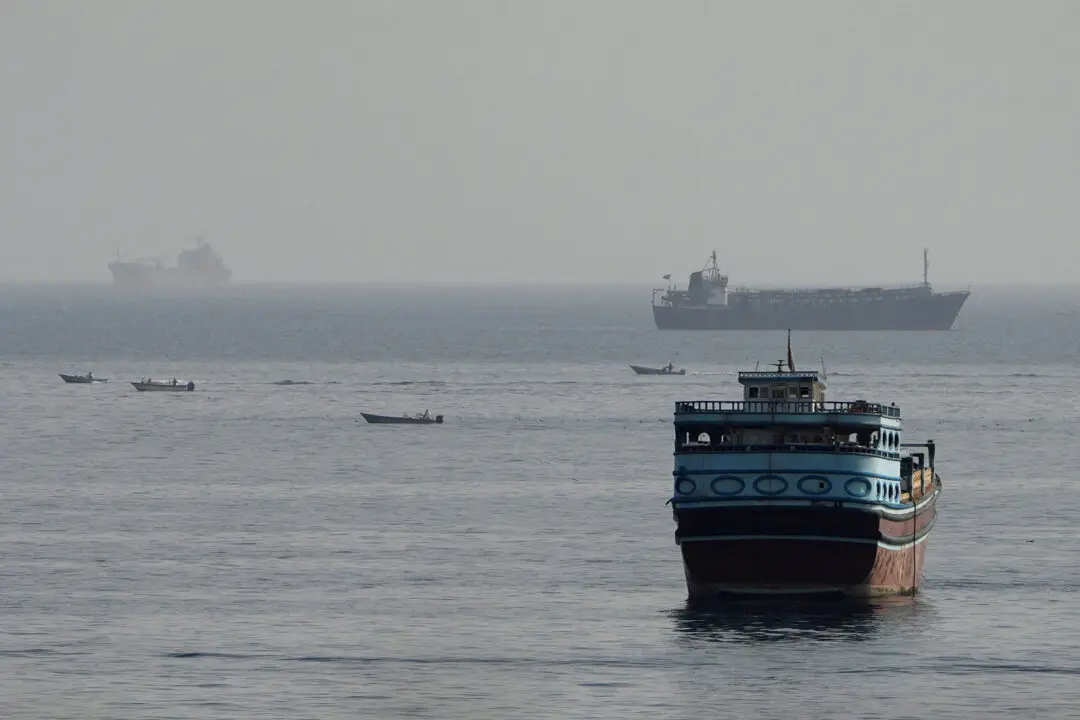
Crude oil tankers are trickling through the Strait of Hormuz despite Iranian threats and the U.S. Navy’s blockade, using a “shuttle” system orchestrated by Abu Dhabi and Kuwait that Tehran and Washington appear to be tolerating—at least for the moment.
“We’re not in raining oil, but oil is still coming out of the Gulf,” Lloyds List Senior Maritime Intelligence Analyst Tomer Raanan said during an Aug. 13 Lloyd’s List Intelligence weekly update on shipping traffic through the Strait of Hormuz and the Red Sea’s Bab el-Mandeb Strait.
“We’re still seeing this shuttle service, where ships load inside the Gulf, then they transit Hormuz, and they do ship-to-ship transfers in the Gulf of Oman.”
He said that many of the ships are “handled by” the state-owned Abu Dhabi National Oil Co. and Kuwait Petroleum Corp., moving through the southern, or Omani, side of the 104-mile strait, drawing threats but not fire from Iran.
No one knows how long this will last, Raanan, Lloyd’s List editor-in-chief Richard Meade, and Clarity Compliance Consulting co-founder Claire O’Neill-McCleskey acknowledged, but they held that in the murk of maritime logistics and legalities, of “shadow fleets” and “dark transits,” time and tides will chart a course when governments won’t.
According to London-based Lloyd’s List Intelligence, a global shipping journal established in 1734 by maritime insurer Lloyd’s of London, founded in the 1680s, there’s little change in the standoff in the strait after mid-July’s resumption of hostilities was followed by a weeks’-long lull, with little indication any resolution is imminent.
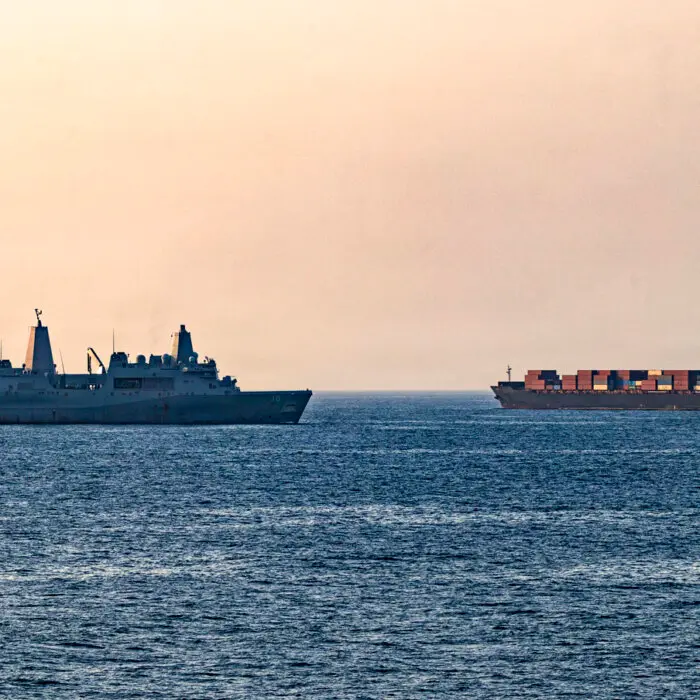
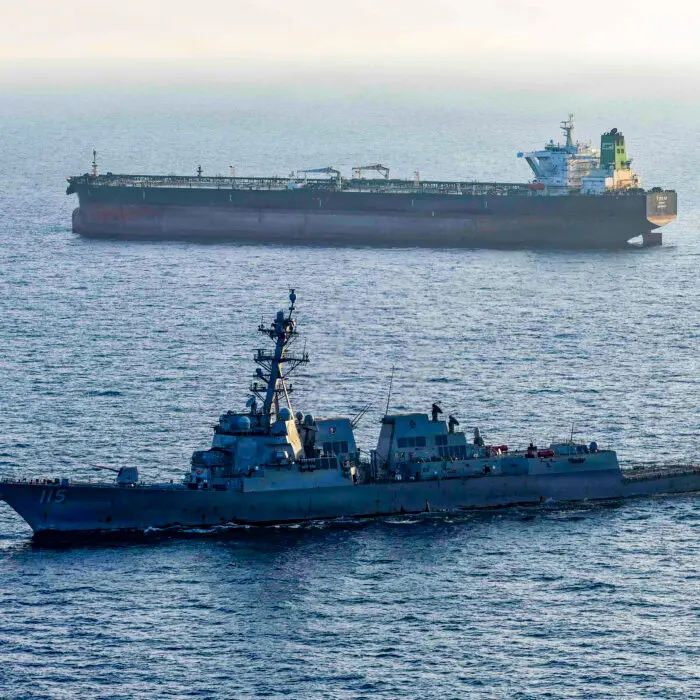
Lloyd’s Intelligence Hormuz Transit Monitor documents that since late July, about 14 to 15 ships a day are moving through the strait, down from more than 100 daily before the United States and Israel launched the war against Iran on Feb. 28.
Raanan said that after strait traffic increased between July 27 and Aug. 2 to 96 transits from 45 the week before, the pace has slackened by 16.7 percent, with 80 August 3–9 transits, with inbound shipping down more than 25 percent and outbound declining 8 percent.
Lloyd’s Red Sea Transit Monitor charts a more dramatic shift in traffic through Bab el-Mandeb Strait after the Houthis resumed attacks, primarily on Saudi shipping and Yemeni ports, including an Aug. 10 missile strike in Mocha that killed at least seven.
After 270 transits were tracked through the 20-mile Bab el-Mandeb Strait linking the Gulf of Aden with the Red Sea between July 20 and 26, and 273 documented between July 27 and Aug. 2, “early data from last week shows a drop in traceable traffic” by as much as 60 percent, Raanan said.
Open? Shut? Both!
There will be no certainty in “traceable traffic” through the Strait of Hormuz until the United States and Iran reach an accord insurers and shipping companies believe is stable and enforceable, Meade said.
“The U.S. insists the strait is open and exports of Middle East crude are back up to around 75 percent of volumes prior to the start of the conflict,” he said. “Iran claims that Hormuz is shut and that it will not reopen until America accepts conditions it has laid down for ending the war.”
Meanwhile, Meade added, Pakistan, which, with Oman, has been mediating talks between Washington and Tehran, “says it’s not discouraged by the escalations in this double-talk, but it remains optimistic.”
The bottom line, he said, is, “The strait is both open and closed, controlled by the U.S. and Iran, and an agreement is close, but increasingly diverging from stated conditions of both sides.”
And the longer the standoff continues, the more divergent those conditions become, Meade said, with Iran demanding withdrawal of the U.S. Navy’s Fifth Fleet from Bahrain and its parliament “pushing ahead” with fee and permit requirements.
Among those actions are Iran’s establishment of its Persian Gulf Strait Authority to regulate Hormuz traffic; its Persian Gulf Marine Insurance Co., created to impose mandatory insurance before securing “transit permits”; and its Hormuz Safe Marine Services Authority, a digital platform to “provide mandatory transit insurance and security monitoring.”
The Iranians, “among other things, seek transit service fees, authority over inbound vessel management, restrictions on U.S. and Israeli and other ‘hostile shipping,’ significant penalties of up to 20 percent of cargo value for violations under a draft parliamentary bill,” Meade said.
This puts commercial shippers in a quandary, said O’Neill-McCleskey, who worked in the U.S. Treasury Office of Foreign Assets Control (OFAC) for a decade, leading its Compliance Division between 2023 and 2025.
The Trump administration is opposed to allowing Iran to impose transit fees or acknowledge any sovereignty claim in the strait, she said, and OFAC has sanctioned the Persian Gulf Marine Insurance Co. and Iran’s Hormuz Safe.
“The hardest thing right now for ship owners is, if you look at the messaging from OFAC … and the actions they have taken—there haven’t been many the last month—they do not want people taking the northern route through Iranian waters, and you can’t pay [the Iranians because] OFAC views it as a violation of sanctions,” O’Neill-McCleskey said, “even to get security guarantees or have other communications with the Iranians to get through that route safely.”
That’s the “messaging,” she said, but enforcement appears to be restrained, at least recently.
“We haven’t seen yet, at least publicly, anyone that has gone through the northern route be sanctioned,” O’Neill-McCleskey said. “There hasn’t been, you know, media reporting on subpoenas or anything like that.”
Statements from U.S. officials and President Donald Trump don’t help in clarifying what’s next, she said.
“The U.S., at very senior levels, has communicated they do not want to see Iran earning money from fees through the strait,” O’Neill-McCleskey said, “even though we hear in other reporting there is some openness toward an arrangement that would end with some sort of technical or service fees going to Iran and Oman.”
This is being watched closely, she said.
“The longer you go without a very clear public enforcement action to signal what the U.S. is really focused on, the more people start to feel like, ‘Hey, we can just do what we want. They’re not watching,’” she said. “The longer this goes on, I think people are going to start testing” the United States and paying Iran’s fees.
It comes down to “which side they’re more afraid of?” O’Neill-McCleskey said. “I would rather risk the wrath of OFAC and hire a good lawyer than deal with my very expensive ship full of the crew getting hit” with an Iranian missile or drone.