Cheyenne, Wyoming, data center opponents are scrambling to garner at least 2,700 valid petition signatures—10 percent of the city’s registered voters—by Aug. 2 to get a referendum on November’s ballot asking residents to adopt a 12- to 18-month pause on approving new server factories in Wyoming’s capital city.
The petition drive was launched in the wake of the Cheyenne City Council’s 6–3 approval of a 3,460-acre annexation to accommodate Microsoft’s planned multiyear expansion southeast of the city despite overwhelming opposition from residents during a seven-hour public hearing on July 13.
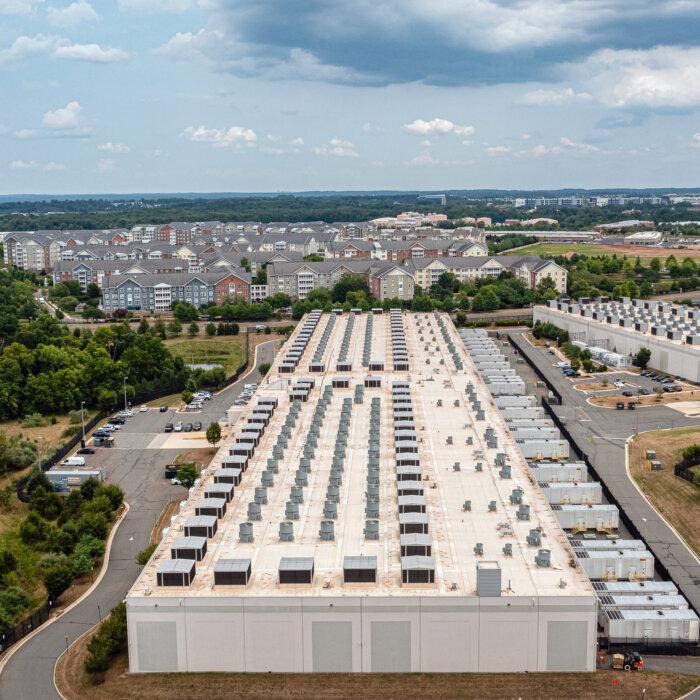
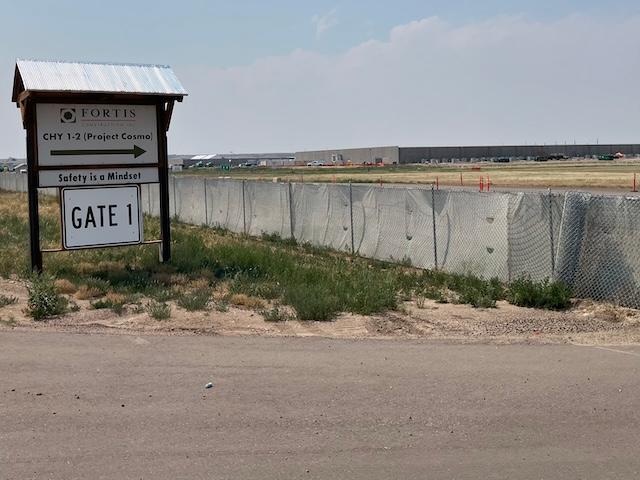
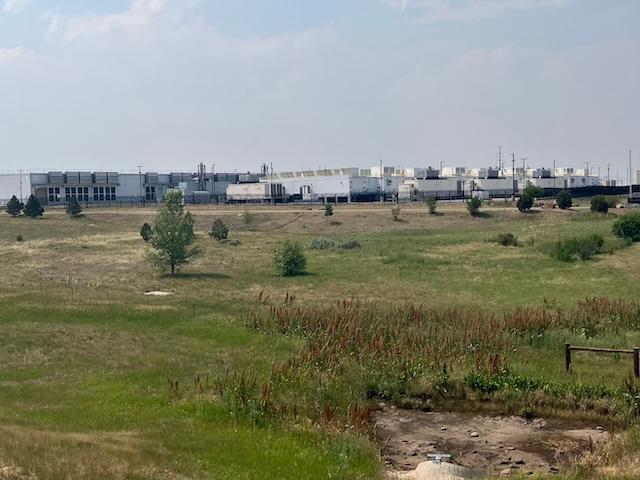
Microsoft, Cheyenne’s largest taxpayer, operates four data center campuses in the city. According to Cheyenne LEADS, the city’s economic development agency, 10 data center locations are active, five more are under construction, nine are in the planning pipeline, and more than 30 developers are at least preliminarily engaged in potentially building data centers there.
The High Plains city of 66,000—Wyoming’s largest city—is rapidly becoming a high-tech artificial intelligence nexus and distribution hub. It sits astraddle rail lines, two interstate highways—including the quickly urbanizing 100-mile Interstate 25 stretch south to Denver—and transcontinental fiber optic corridors with abundant natural gas for electricity, a cool climate, and state incentives for high-tech developers.
However, over the past two years, residents have grown increasingly uneasy with the rapid pace of data center development now manifesting in massive construction projects carving into the open, rolling grasslands that frame Cheyenne, citing concerns over water, loss of agricultural land, unanticipated impacts—such as an alleged March wastewater bacterium release from Meta’s 715,000-square-foot data center project—unease over emergent AI technologies, a perceived lack of transparency by city officials, and state statutes they say allow deep-pocket corporations to roll over small local governments.
Cheyenne is not unusual. Opposition to data centers is mushrooming across the county despite President Donald Trump’s robust support for AI development as vital in ushering in “a golden age for American manufacturing and technological dominance” in what he and administration officials say is an existential race with China.
According to a March 2026 Pew Research poll, seven in 10 respondents nationwide do not want a data center in their community.
This national angst is now stewing in deep red Wyoming, the country’s least populated state with its highest percentage of registered Republicans, where Trump won 2024’s election by 46 percentage points and where a hastily assembled petition drive by an ad hoc patchwork of residents is racing against time to do something they say their elected officials don’t want them to do: Vote to invite or reject more data centers in their city.
‘We Fell Down on This’
From July 17 to July 26, as the city hosted the 130th annual Cheyenne Frontier Days, a crown jewel of the annual professional rodeo cowboy circuit that draws more than 550,000 visitors and generates $30 million for local businesses, it was difficult to find city residents registered to vote in the crowd, said M. Lee Hasenauer, a 37-year resident and former landscape business owner who is among those spearheading the drive.
“We’re at 600,” he told The Epoch Times on July 21, two days into the petition drive that must collect verified signatures from 10 percent of the city’s registered voters within 20 days of filing a petition to force a referendum. “We need 2,100 more. But our goal is to turn in over 5,000, get as close to 7,000 as we can get.”
Standing outside a Hobby Lobby in 90 degree Fahrenheit heat, Hasenauer, who served a two-year stint as a Laramie County commissioner a decade ago and is running for the commission again in 2026, said that although the timeline is tight, he is convinced that the referendum will get on the ballot, because local residents overwhelmingly don’t want more data centers.
“It will force the city council to put it up for a ballot vote so all the citizens in the city of Cheyenne can decide instead of just 12 people on the city council,” he said. “And frankly, 80 percent of the people here are against data centers. I mean that’s the way it is across this country.”
The irony is that he’s not a city resident. He can’t sign the petition.
“I’m trying to help because I’m a good petitioner and I know the Constitution,” Hasenauer said, noting that he’s a “Tea Party organizer, a real conservative guy, trying to help a liberal lady” in a fight that transcends political affiliations.
That “liberal lady” is retired educator Katherine McAdams who, with licensed clinical social worker Heather Madrid, is working with Hasenauer in leading the petition drive.
“I’m a moderate kind of person but if you want to call me ‘woke,’ OK, but what could go wrong with bringing up a large industry that could use electricity for a year equal to 1.2 million homes?” McAdams said, referring to a project by Tallgrass and AI developer Crusoe that would require eight times the electricity that state residents consume.
“What could possibly go wrong?”
All three—as well as state Rep. Ann Lucas, a Republican, and Cheyenne City Councilman Mark Moody, who voted against the July 13 annexation and proposed a one-year moratorium rejected in an 8–1 vote on May 27—listed a litany of concerns with water demand, chemicals leaching into soils and septic systems, stressed infrastructure, impacts on housing, declining property values, loopholes in state law, and inadequate industrial siting.
But there is one central theme.
“People feel like something is being done to them, and they had no information and no say in it,” said Lucas, who is seeking a second term in Wyoming’s House of Representatives where, if reelected, she will sponsor a bill to give citizens greater ability to petition local governments. “We fell down on this. We fell down. People are feeling scared—and they’re angry.”
Madrid is among them.
“It’s become as much about our government not representing us as it has become about data centers,” she said.
‘We Try to Get to the Table’
Cheyenne LEADS CEO Betsey Hale said the Microsoft annexation was vetted in six public hearings before the city’s planning commission, public service commission, and city council with the measure approved in three readings by the council over a span of months.
“So there’s six times, six opportunities, for citizens to interact, engage,” she told The Epoch Times. She said the hearings worked because folks such as McAdams and Madrid brought up some good things that are now being incorporated into the projects.
Hale said it’s understandable that people are anxious, because there’s a lot of construction around the city and more is coming. They are reacting to disruption, but because of citizen input, hyperscalers are coordinating improvements in a comprehensive manner that will bring needed infrastructure and amenities to city residents, such as a recreation center, better roads, sidewalks, and upgraded water and sewer networks.
She said she doubts that the petition drive will succeed and refuted Hasenauer’s claim that data centers are overwhelmingly unpopular in Cheyenne.
“I’ve gone to just about every hearing on the data centers. It’s the same 30 to 40 people. The same folks go up and they say the same things,” Hale said, wishing the petitioners luck. “That’s going to be a mess for the city clerk and the county clerk to go through all those names to see if they’re actually legitimate residents.”
Critics exaggerate how much water they consume, she added, noting that the Cheyenne Country Club “uses more water than 10 operating data centers do on an annual basis” during golfing season, “which ain’t very long in Wyoming.”
Debate on details is welcome, Hale said.
“What we do in Wyoming is we try to get to the table,” she said. “We try to have conversations. We don’t argue our case in the media and we also don’t do things in Wyoming like they do them in Loudoun, Virginia, right? We’ve been doing this a long time.”
She said there has not been evidence of any issues since Microsoft built Cheyenne’s first data center in 2012.
But debate on details is not what is happening on social media forums such as Cheyenne Community Connections 2.0 on Facebook and neighborhood pages on Nextdoor, she said. She cited allegations repeated in public hearings as if they were confirmed facts: “I don’t know what you want to say, kickbacks? Under-the-table deals made behind curtains and smoke-filled rooms?”
And it’s getting weird, Hale said.
“I had a troll trolling me out of Bangladesh. I’m trying to remember what night I spent in Bangladesh in my 61 years of life. Who could I have possibly made mad there?” she said, noting that “hate posts” and threats against her and city officials are being monitored by Meta and the Department of Homeland Security.
“I mean, it’s a land-use dispute. They happen.”