Michigan’s two remaining Democratic Senate candidates closed their final debate on July 27 by each arguing they were better positioned to beat former Rep. Mike Rogers (R-Mich.) in November, one week before an Aug. 4 primary that will settle a contest between the party’s progressive and establishment wings.
Abdul El-Sayed, a former Wayne County health director, and Rep. Haley Stevens (D-Mich.) were asked in the closing minutes what made each of them the candidate who could best take on Rogers.
El-Sayed said polling had consistently shown him as the strongest general-election candidate and cast himself as the only contender not funded by corporate money.
Stevens pointed to her endorsements by Democratic establishment elected officials and her record in Republican-leaning territory.
“I will beat Mike Rogers just like I have beat Republicans four times over,” she said.
Stevens returned repeatedly through the hour to the argument that, rather than pursuing the job, El-Sayed was pursuing national attention. She said Michigan needed “a senator who can win and who can deliver” and told viewers that Republicans were propping up his campaign.
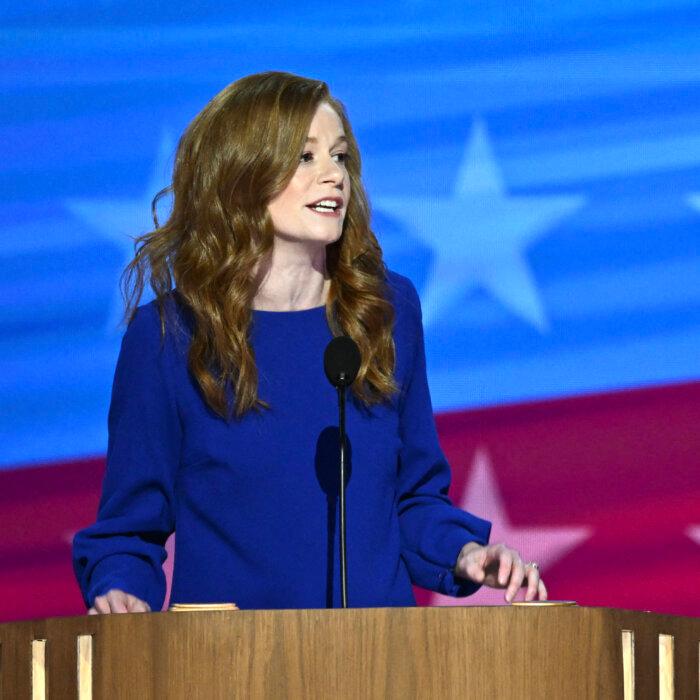
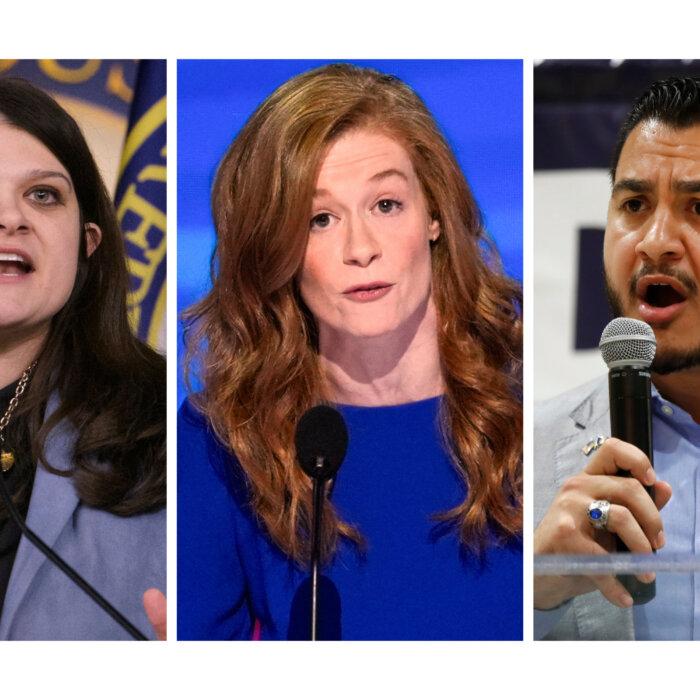
“I just took another attack and I want you to ask yourself, what is it you deserve from your politics now? Do you deserve someone more focused on their opponent, or do you deserve politics where we are all asking how do we actually serve you best?” he said.
2 Points of View
The largest recurring dispute was over outside money. El-Sayed said he is the only candidate in the race who does not accept corporate contributions and repeatedly tied Stevens to spending by the American Israel Public Affairs Committee [AIPAC].
Stevens said everyone has “a right to be frustrated about campaign finance.”
She said El-Sayed is also backed by a super PAC, and that she supports a two-state solution in relation to AIPAC and Israel. Asked directly whether she takes money from utility companies, she said no.
Both candidates criticized Immigration and Customs Enforcement (ICE), but offered different remedies.
Stevens said she is leading an effort to redirect $70 billion from the agency and said she opposes additional funding.
El-Sayed said he supports abolishing ICE outright.
“I don’t think that ICE needs to exist,” he said, adding that immigration enforcement predated the agency and could be carried out without it.
Asked how he would describe his politics, El-Sayed said he is not a socialist and described himself as a capitalist who favors antitrust enforcement against monopolies.
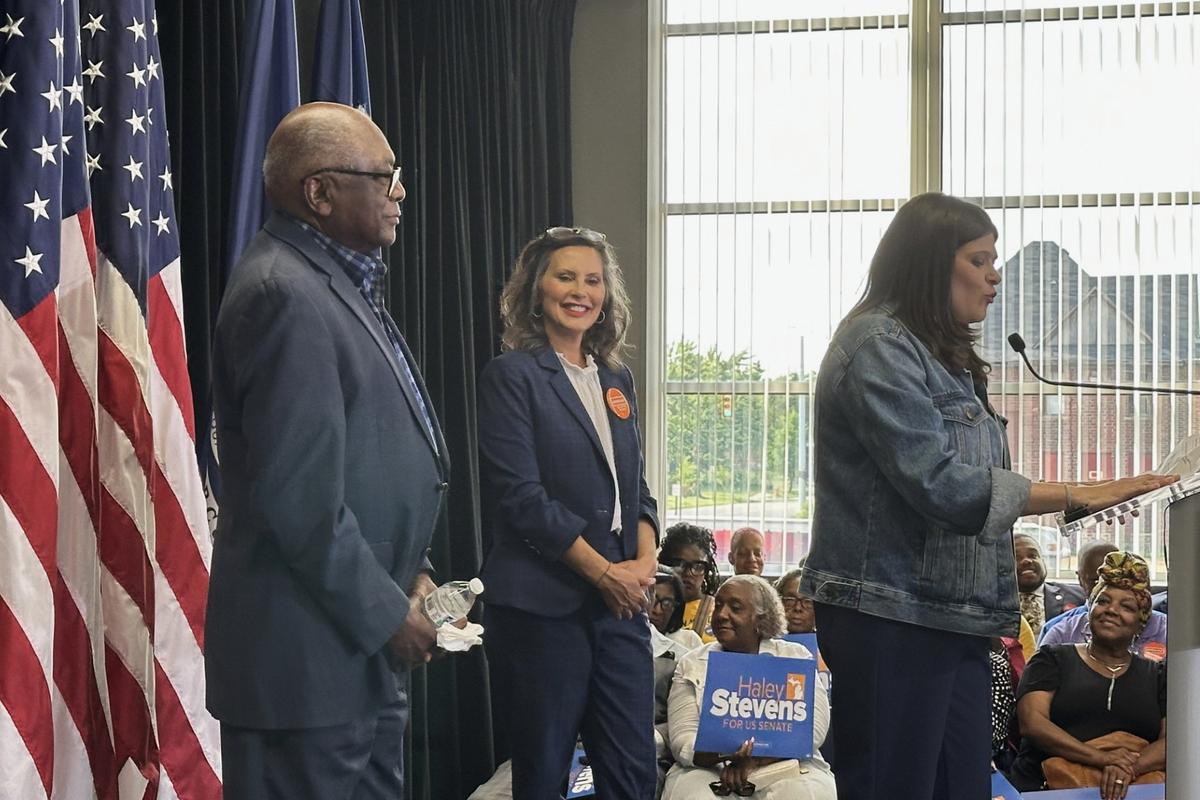
Stevens described herself as “Michigan’s manufacturing geek” and pointed to endorsements from Sen. Gary Peters (D-Mich.) and other moderate elected democrats such as Minority Leader Sen. Chuck Schumer (D-N.Y.) and Michigan Gov. Gretchen Whitmer.
Republican Response
The Republican National Committee and the National Republican Senatorial Committee both responded the night of the debate.
“Tonight, Abdul El-Sayed and Haley Stevens proved they’re cut from the same socialist cloth,” RNC spokesman Hunter Lovell said in a statement, adding that whoever wins will face Rogers, who he said “stands shoulder to shoulder with President Trump to lower costs, [and] bring back good-paying manufacturing jobs.”
NRSC Regional Press Secretary Samantha Cantrell said in the committee’s release that the two candidates were in a “race to the bottom in their effort to prove who is more radical.” The committee also said Stevens had misstated her record on utility company donations and on a vote related to congressional stock trading.
The Michigan Democratic Party’s public statement on the day of the debate addressed a different event. President Donald Trump appeared at a General Motors testing facility in Milford on July 27 and brought Senate candidate Rogers onstage with him.
State party Chair Curtis Hertel said in a statement that Michiganders were “tired of Donald Trump and his Republican allies,” naming Rogers among them, and said Republicans who appeared with Trump had “showed up to support the toxic agenda that’s raising costs on Michigan families.”
Neither the state party nor the national Democratic committees commented on the primary debate itself but have instead focused their messaging on Rogers.
The seat opened when Peters announced in January 2025 that he would not seek reelection.
Rogers is unopposed for the Republican nomination. Douglas P. Marsh is running for the Green Party while Lydia Christensen is running as an independent.