Minnesota Gov. Tim Walz signed an executive order on Aug. 18 barring state agencies from advancing copper and nickel mining projects in the watershed that feeds the Boundary Waters Canoe Area Wilderness, four months after Congress voted to repeal a 20-year federal ban on mining in the same region.
Executive Order 26-10 from the Democratic governor directs the Minnesota Department of Natural Resources (DNR) and the Minnesota Pollution Control Agency to stop all permitting and environmental review work on nonferrous mining proposals in the Rainy River Headwaters Watershed until a pending state lawsuit, Northeastern Minnesotans for Wilderness v. DNR, is resolved.
Nonferrous mining refers to metals other than iron, including the copper and nickel deposits that run through northeastern Minnesota.
The order also tells the DNR to issue no new state mineral or surface leases for such projects in the watershed, to review every existing lease there and enforce its terms, to decline to take part as a cooperating agency in any federal environmental review of a project in the watershed, and to draft legislative language that would ban nonferrous mining in the watershed permanently.
“The Boundary Waters is a national treasure and home to some of Minnesota’s most pristine waters and wilderness,” Walz said in a statement. “This place is deeply personal to me, to Minnesotans, and to people across the country who have paddled these waters. I am using my full executive authority to protect the waters and wildlife of the Boundary Waters and to ensure the outfitters, small businesses, and communities that depend on it continue to thrive for generations to come.”
The order follows Congress’s vote earlier this year to undo Public Land Order 7917, issued by the Interior Department under President Joe Biden in January 2023, which had withdrawn about 225,504 acres of the Superior National Forest in Cook, Lake, and St. Louis counties from federal mineral and geothermal leasing for 20 years.


The withdrawal was made, the order stated, to protect the ecological integrity and wilderness values of the Rainy River watershed, the Boundary Waters, and the 1854 Ceded Territory of the Lake Superior Chippewa.
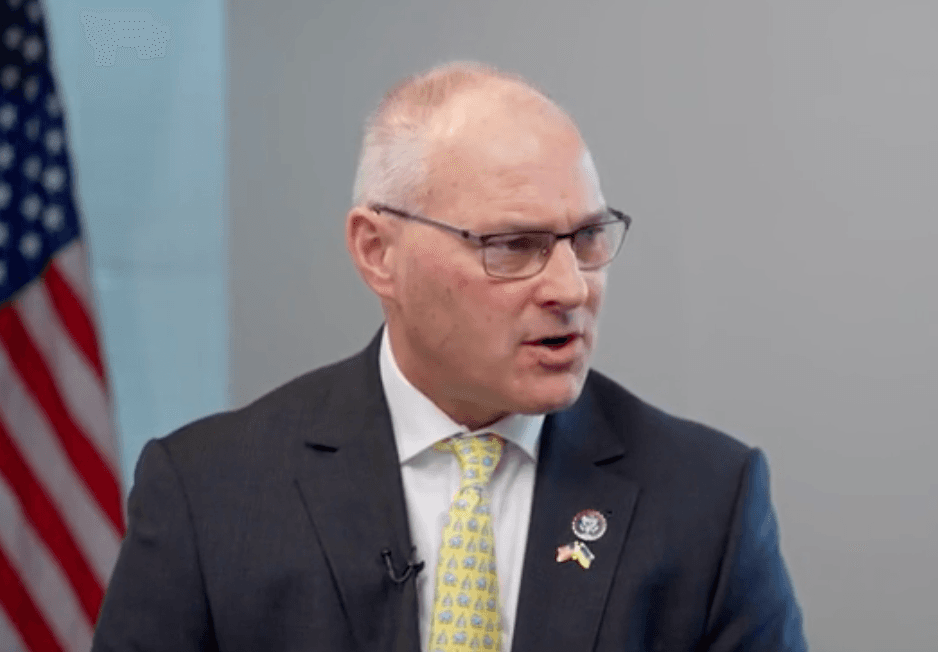
Rep. Pete Stauber (R-Minn.), whose Congressional Review Act resolution repealed that withdrawal, said Walz’s order threatens jobs in his district.
“His radical, job killing executive order puts thousands of family-supporting union jobs at risk and ignores the will of those who actually live and work in Northern Minnesota,” Stauber said in a statement to The Epoch Times on Aug. 18, adding that the governor’s support of “permitting reform” in his view actually equates to “eliminating the process altogether.”
“In addition, it jeopardizes the crucial school funding that benefits every district across the state. Years of rigorous review, environmental study, and massive private investment have been erased in seconds.”
Stauber’s resolution passed the Senate on April 16 and went to the president for his signature. He said at the time that the repeal returned decisions to the standard permitting process rather than opening the wilderness itself to mining.
“Despite the lies and hysterics from the left, my bill doesn’t allow mining in the Boundary Waters or the surrounding buffer zone, nor does it weaken environmental safeguards,” Stauber said in an April statement. “It simply returns the decision to established permitting processes, where science, not politics, guides the outcome.
“We cannot continue to allow foreign adversaries like China to dominate mineral supply chains that are essential to our economic and national security.”
The area sits atop the Duluth Complex, which Stauber said is the largest untapped copper-nickel deposit in the world. His office has said that the federal government under Biden failed to transmit the 2023 land order to Congress as required for withdrawals larger than 5,000 acres, and that the Trump administration transmitted it this year, opening the window for the review act resolution.
Under the Congressional Review Act, once Congress disapproves a federal action, the executive branch is barred from taking a substantially similar action in the future.
Minnesota DNR Commissioner Sarah Strommen said the order strengthens existing protections. “The Boundary Waters Canoe Area Wilderness is a Minnesota treasure, and we have a responsibility as Minnesotans to ensure its long-term protection,” she said in the statement alongside Walz.
Becky Rom, national chair of Save the Boundary Waters, said the state action addresses what her group sees as an unavoidable risk.
“The science is clear: copper mining and the Boundary Waters cannot safely coexist,” Rom was quoted in the statement. “This action helps safeguard the clean water, world-class wilderness, and outdoor economy that generations of Minnesotans cherish.”
Walz’s office said the region supports an outdoor recreation economy of nearly $1 billion.