
A federal judge on Wednesday blocked the U.S. Postal Service from implementing a Trump administration proposal to boost election integrity by enhancing ballot tracking and verification, finding it conflicted with a 2021 settlement requiring the agency to prioritize the timely delivery of election mail.
One day after the proposed rule was published in early June, the National Association for the Advancement of Colored People (NAACP) returned to court in a long-running lawsuit originally filed during the 2020 election, asking Sullivan to enforce a 2021 settlement that requires USPS to prioritize the monitoring and timely delivery of election mail through the 2028 election cycle.
The proposed rule stems from President Donald Trump’s March executive order directing USPS to develop new standards for handling federal ballot mail as part of a broader thrust to bolster election integrity.
Rule Boosts Election Integrity, DOJ Says
In opposing the NAACP’s motion, the Department of Justice (DOJ) argued in a court brief that the proposed rule was designed to improve—not hinder—the handling of election mail.Attorneys representing the Trump administration wrote that requiring standardized Election Mail logos and Intelligent Mail barcodes would make ballots easier to identify throughout the postal network. They argued this would allow USPS to better monitor the movement of mail-in ballots and help implement the “extraordinary measures” USPS has traditionally used to expedite election mail before federal elections.
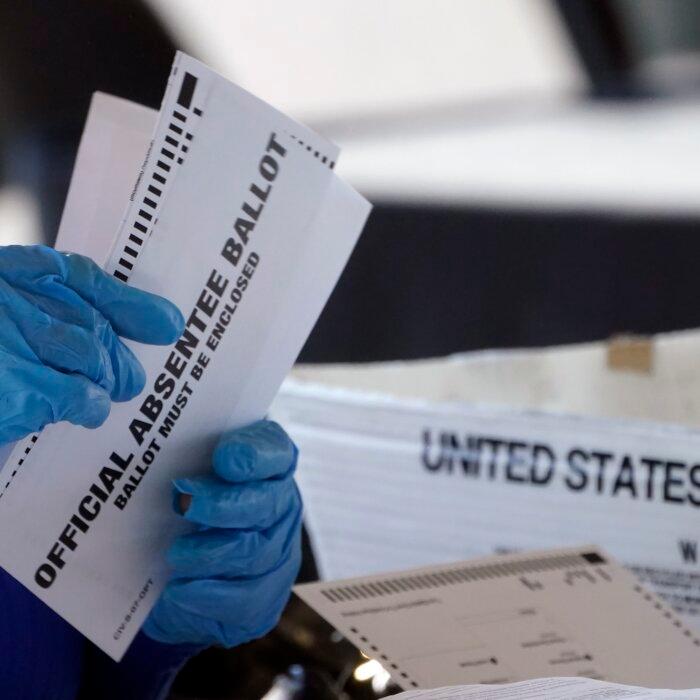
“Such requirements promote the ’monitoring and timely delivery of Election Mail'; they do not frustrate it,” they wrote in the brief. “And while the Postal Service has proposed requiring state and local election officials to identify the names and addresses of the persons to whom they send ballots and to provide the barcodes for the ballot envelopes, requiring this information—which officials already, by definition, have—would not compromise the lawful delivery of any mail.”
The administration stated in the proposal that the new rule would strengthen election integrity by creating a uniform ballot-tracking system while leaving decisions about voter eligibility entirely to the states.
Election officials—not USPS—would determine who is eligible to vote by mail and would submit lists of voters receiving mail ballots, together with unique barcode information, through a federal portal. The Postal Service would use that information only to verify ballot mailings and improve tracking, not to decide who could vote.
“State and local election officials would maintain full control over who they send ballots to,” government attorneys said in the brief.
Plaintiffs Claim ‘Confusion and Uncertainty’
The NAACP argued in its motion that the new requirements would violate the 2021 settlement and could prevent eligible voters from receiving mail ballots.“Implementation of the Proposed Rule would threaten to prevent millions of eligible voters from receiving mail-in ballots to which they are entitled,” attorneys representing the plaintiffs wrote.
They also argued that, even while the rule remains in proposed form, it already caused confusion within USPS, and among election officials and voters, about what procedures will be in place for mail-in ballots in the November 2026 election cycle.
“The pendency of the Proposed Rule ... creates confusion and uncertainty,” they wrote. “USPS, for example, cannot conduct internal or external trainings to plan for a rule that is not yet finalized. Nor can it provide answers or guidance to election officials and voters to mitigate confusion or uncertainty.”
The case traces back to August 2020, when the NAACP sued USPS over operational changes introduced around that time that plaintiffs said caused widespread mail delays during the COVID-19 pandemic and threatened the timely delivery of absentee ballots.
The parties settled the case in December 2021. Under the agreement, USPS committed through 2028 to issue nationwide election-mail guidance, organize regular “outreach meetings” with the NAACP before federal elections, provide performance reports, and make good-faith efforts to prioritize the monitoring and timely delivery of election mail.
Trump’s March executive order directed USPS to develop new standards to strengthen election security, prompting USPS to publish the proposed rule, which the NAACP challenged.
The judge sided with the plaintiffs, concluding that the proposed procedures conflicted with USPS’s commitment to prioritize the timely delivery of election mail.
Allison Zieve, director of Public Citizen Litigation Group, which represented the NAACP in the case, praised the ruling.
“The court today correctly recognized that USPS’s plan to create roadblocks to mail-in voting was inconsistent with its commitment to timely deliver election mail,” she said in a statement. “USPS’s plan was unwise, unlawful, and a threat to the millions of voters who rely on mailed ballots to participate in our democracy.”