Officials in Tehran said on June 30 that Iran remains determined to impose charges on ships using the Strait of Hormuz after a 60-day grace period expires, highlighting one of the most contentious issues in ongoing negotiations with the United States over a permanent agreement to end months of conflict.
Iran Rejects Challenges to Strait Authority
Speaking on Iranian state television, Ghalibaf said the decision to waive charges for 60 days had been made at the request of Persian Gulf coastal states after the war disrupted shipping and left vessels stranded following the temporary closure of the strait.“That decision was made at the insistence of the Persian Gulf littoral states, as some vessels had been stranded in the area after the outbreak of the war and the closure of the strait,” he said, noting that Iran had also committed to clearing mines from the waterway within 30 days.
He said Iran would then begin charging for maritime services it provides in the strait. Although Ghalibaf did not state explicitly that the fees would constitute a traditional transit toll, the Islamic Republic News Agency characterized his remarks as such, stating that “transit through the Strait of Hormuz will be free of charge only for 60 days.”
Ghalibaf said Article 5 of the memorandum states that Iran and Oman will jointly determine the future administration of the Strait of Hormuz, including maritime services, in accordance with international law and the sovereign rights of the states bordering the waterway.
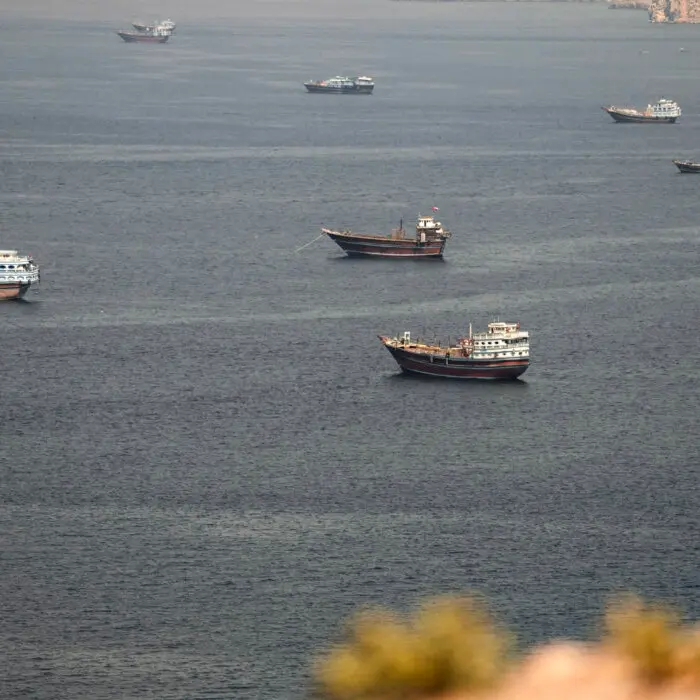
Tehran interprets that provision as recognizing Iranian and Omani sovereignty over the strait and giving the two countries authority to determine future maritime service arrangements, he said.
“There is no circumstance under which we would compromise on this matter,” Ghalibaf said. “These are our territorial waters.”
Washington Rejects Fees
The Trump administration has repeatedly challenged Iran’s interpretation of the memorandum, arguing that the Strait of Hormuz remains an international waterway where freedom of navigation cannot be restricted or conditioned on payment.In a joint statement issued with the Gulf Cooperation Council following Rubio’s regional visit, the United States and Gulf States called for “free, unconditional, and unrestricted navigation” through the Strait of Hormuz without tolls or attempts by any party to assert unilateral control.
Despite ongoing differences, negotiators pressed ahead on July 1 with technical discussions in Doha designed to flesh out the interim peace deal.
Qatar confirmed that Witkoff and Kushner met with Prime Minister and Foreign Minister Sheikh Mohammed bin Abdulrahman Al Thani to discuss implementation of the memorandum and broader efforts to promote regional security through diplomacy.
The interim memorandum reopened the Strait of Hormuz after weeks of war, suspended U.S. oil sanctions, called for Iran to dilute its stockpile of enriched uranium, and established a 60-day framework for negotiating a broader deal.
One of the most significant unresolved issues is the future governance of Hormuz, with Tehran seeking to assert control over shipping in the strait while Washington and its regional partners press for unrestricted passage through what is one of the world’s most important energy corridors.