The trade gap plummeted by nearly 24 percent to $59.6 billion, down from $78.2 billion, according to a report released by the Commerce Department’s Bureau of Economic Analysis on Nov. 19.
This came in below economists’ expectations of a $61 billion trade imbalance.
The report was initially scheduled for release on Oct. 7, but the 43-day government shutdown prevented its publication.
Imports declined by 5.1 percent to $340.4 billion, driven primarily by a $9.3 billion drop in nonmonetary gold purchases.
Government data revealed broad-based declines, including in foreign purchases of computer accessories, transportation, telecommunications equipment, and jewelry.


August exports ticked up by 0.1 percent to $280.8 billion as U.S. companies shipped more crude oil, computers, and maintenance and repair services.
Exports of consumer goods and automobiles decreased by $1.5 billion and $400 million, respectively.
The United States registered trade deficits with Mexico ($16.3 billion), China ($15.4 billion), and Vietnam ($14.4 billion). Surpluses, meanwhile, were observed with the Netherlands ($5.1 billion), South and Central America ($4.9 billion), and Hong Kong ($1.7 billion).
Despite a narrowing imbalance, the January–August trade deficit is up by 25 percent year over year to $713.6 billion.
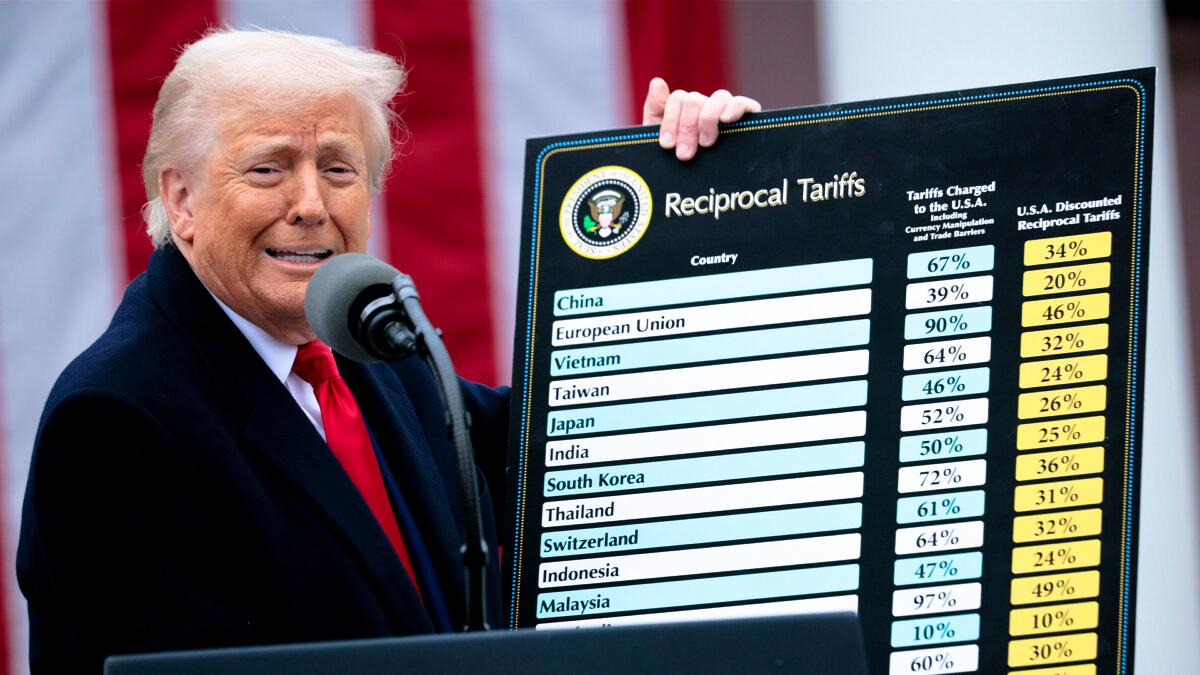
Trump implemented levies on almost every U.S. trading partner on Aug. 7, with a 10 percent global baseline tariff rate. Since the president had threatened massive tariff increases for months, companies accelerated their purchase plans earlier in the summer to avoid higher import duties.
Influencing the GDP
Still, the latest trade numbers will be a boon for third-quarter gross domestic product (GDP), according to Bill Adams, chief economist at Comerica Bank.“August’s smaller trade deficit will be a tailwind for third-quarter real GDP, since it means that more U.S. expenditures were directed toward domestically-produced goods and services rather than foreign ones,” Adams said in a note emailed to The Epoch Times.
The trade deficit influences growth figures because the GDP measures the value of goods and services produced in the United States.
For example, trade subtracted almost 5 percentage points from first-quarter GDP amid a historic spike in imports. Conversely, trade contributed 5.18 percentage points to the second-quarter growth rate.
Now that the record-breaking government shutdown has ended, more economic data are flowing in. The numbers trickling in appear to be positive for the July–September period.
“While this release is quite dated because of the government shutdown, it contributes to evidence that the economy was growing briskly in the third quarter,” Adams said.
The Bureau of Economic Analysis will release its third-quarter GDP report on Nov. 26.