The U.S. House of Representatives has passed a bill that would require online platforms to provide some safeguards for children.
The Kids Internet and Digital Safety (KIDS) Act, introduced by Rep. Brett Guthrie (R-Ky.), passed in a 267–117 vote on June 29 with support from both Democrats and Republicans.
“I am glad to see the KIDS Act pass the House with a large bipartisan margin tonight,” Guthrie wrote in a June 29 post on X.
“This vote reflects the long-standing bipartisan efforts by Republicans and Democrats on our committee to put partisan politics aside and prioritize the safety of our kids online.”
The legislation, should it come into force, would require companies to offer ways for youngsters to limit features deemed addictive and put in place policies to protect children from some harms, including sexual exploitation.
The House’s passage of the bill sets up a dispute with the Senate, which passed the Kids Online Safety Act (KOSA) in 2024.

The House version does not include a “duty of care” provision, which would have required technology platforms and social media companies to take reasonable measures to prevent and reduce known harms to minors that result from the design of their products.
KOSA includes this aspect.
The House bill includes preemption language that opponents say would make it harder to sue social media companies for design features. Senate Democrats said this was an issue.
Sen. Maria Cantwell (D-Wash.) said during a call with reporters last week that preemption would have led to a different result in landmark California cases involving Big Tech giants Meta and YouTube.
“Let me be clear,” she said. “The Senate is not interested in having these cases preempted.”
KOSA cosponsor Sen. Richard Blumenthal (D-Conn.) said, “Preemption should not be a part of it, period.”
In order for a bill to pass the Senate, it needs 60 votes to overcome a filibuster.
Cantwell said in a June 26 statement that “this package has gutted many of the key provisions in the Senate bill necessary to protect kids and their families, and it is grouped with another set of bills that also fall short of showing what strong safety measures are needed for kids, and instead inserts many studies at a time when our government needs to do more than just study this problem.”
The new legislation has had additional pushback from states.
The group, which also includes the attorneys general for the District of Columbia and the Northern Mariana Islands, sent a letter to Congress asserting that the KIDS Act would preempt existing state laws that address online harms for minors.
“The deck is stacked against young people online,” Minnesota Attorney General Keith Ellison said in a statement. “Some of the world’s most gifted designers are building apps, programs, and websites to addict young people, and those young people need our help. Unfortunately, the KIDS Act misses the mark in several extremely significant ways.”
Ellison said state laws already address rules for social media harms, obscenity, social gaming platforms, and artificial intelligence chatbots.
Another opponent of the KIDS Act is the Electronic Frontier Foundation, a civil liberties nonprofit, which has warned that its implementation would require age checks to get online.
“Buried inside the KIDS Act are provisions that will push online services to verify all users’ ages, require government-directed moderation policies for online speech, and even create new rules about private and encrypted communications,” the Electronic Frontier Foundation said on June 24 ahead of the bill’s passage.
“While supporters continue to claim this bill protects minors online, its requirements come at the expense of privacy, free expression, and the ability of people of all ages to use the internet without revealing sensitive data.”
Other groups, including Parents for Safe Online Spaces, a coalition of parents who have lost children because of online harms, issued statements in support of the bill after it passed on June 29.
“This bipartisan package contains meaningful improvements that our members have advocated for, including provisions that protect states’ ability to issue stronger regulations and hold tech companies accountable for the presence of children and teens on their platforms,” Parents for Safe Online Spaces said.
Legislation Around the World
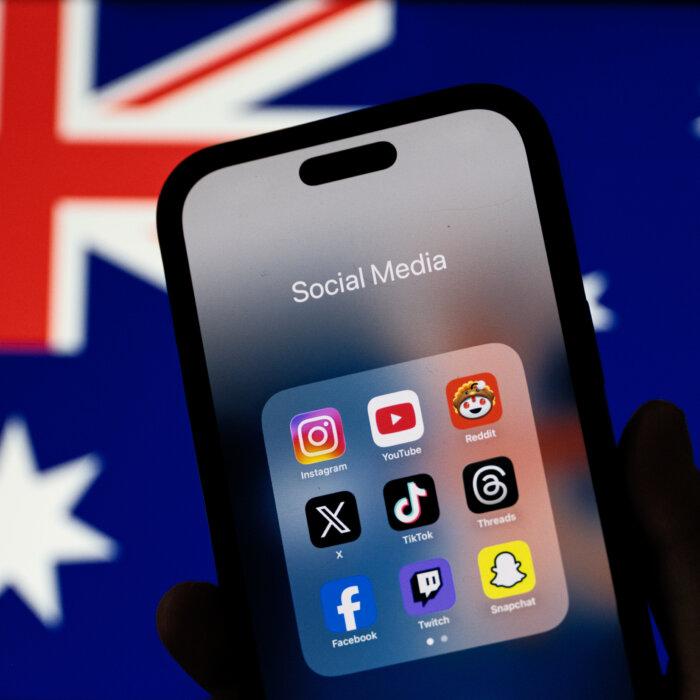
Numerous other nations around the world have imposed or are actively exploring similar bills relating to children’s safety online.The law requires social media sites such as TikTok, X, Facebook, Instagram, YouTube, Snapchat, Reddit, and Twitch to check the age of Australian users and ban those younger than 16.
Companies that fail to comply face penalties of up to AU$49.5 million ($34 million).
Other nations considering similar legislation restricting teenagers’ usage of social media include the UK, Canada, France, Turkey, Fiji, Malaysia, and New Zealand, as well as supranational organizations such as the European Union, which is considering bloc-wide restrictions.