This copy is for your personal, non-commercial use only. Distribution and use of this material are governed by our Subscriber Agreement and by copyright law. For non-personal use or to order multiple copies, please contact The Epoch Times Reprints.
Alaska Airlines restored service late on July 20 after a technical issue triggered a systemwide outage and forced a temporary ground stop for all Alaska Airlines and Horizon Air flights, the company said on July 21.
The disruption began at about 8 p.m. Pacific Time on July 20 and lasted approximately three hours, according to a company statement posted to X. Operations resumed at 11 p.m. on the same day as the ground stop was lifted.
While service has restarted, Alaska Airlines said residual delays are likely as it works to reposition aircraft and crews and return to normal operations.
“We apologize for the inconvenience and encourage guests to check the status of your flight before leaving for the airport,” the company stated.
The Federal Aviation Administration’s website confirmed the ground stop affecting both Alaska Airlines and its regional subsidiary, Horizon Air. Neither the airline nor the Federal Aviation Administration (FAA) provided details about the nature of the outage.
The timing of the disruption comes as the FAA is facing heightened scrutiny over its ability to effectively oversee airline safety and maintenance practices. In May, the Department of Transportation’s Office of Inspector General (OIG) launched an audit of the FAA’s oversight of United Airlines, citing a series of recent safety incidents involving mechanical failures.
“Recent safety events with United Airlines—such as flight diversions that can be traced to mechanical problems—serve to remind us that FAA oversight of maintenance programs is paramount,” the watchdog stated in a May 9 memorandum.
The audit will examine whether the FAA is rigorously enforcing safety protocols and will include site visits to FAA headquarters and regional offices, as well as United Airlines maintenance hubs in Chicago, Houston, and San Francisco.
While United is not the only carrier to face mechanical issues in recent months, the FAA’s oversight practices have drawn criticism in past reviews. Over the past five years, the OIG has conducted similar audits involving Allegiant Air, Southwest Airlines, and American Airlines, uncovering gaps in FAA procedures and calling for improvements in training, documentation, and risk assessment.
Concerns about air safety have prompted industry leaders to call for reform.
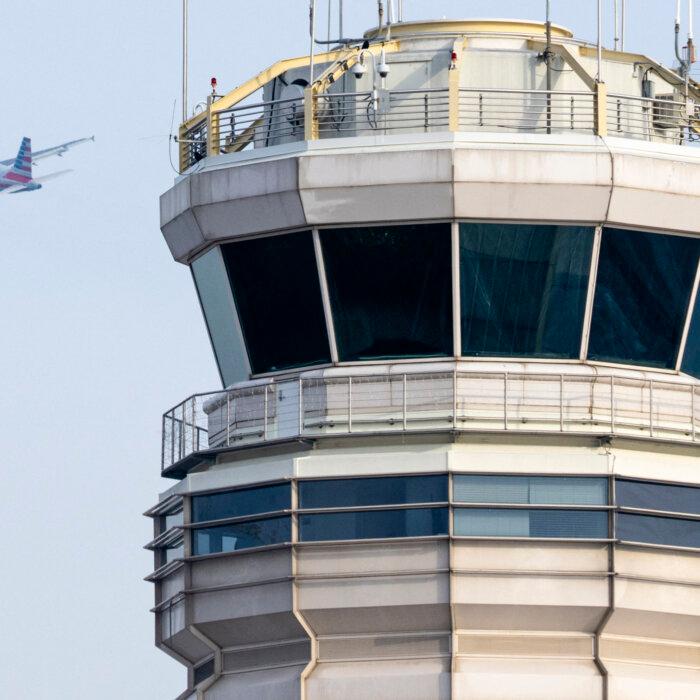
Also in May, the CEOs of 10 major airlines—including Alaska, United, American, and Delta—sent an open letter to Congress urging “bold action” to modernize the nation’s aging air traffic control infrastructure. They cited chronic staffing shortages, outdated technology, and degraded safety margins, warning that flight delays, cancellations, and passenger disruptions will worsen without immediate federal investment.
“This is unacceptable,“ the letter states. ”U.S. airlines, our pilots, flight attendants, technicians, and ground employees will never compromise on safety. Congress must do the same.”
The Trump administration has sought to address the problem of America’s aging air traffic control systems. In May, Transportation Secretary Sean Duffy announced plans to streamline air traffic controller hiring, invest in tower and equipment upgrades, and offer bonuses to attract and retain qualified personnel. The FAA lacks about 3,000 fully certified controllers, Duffy said at the time.
Tom Ozimek is a senior reporter for The Epoch Times. He has a broad background in journalism, deposit insurance, marketing and communications, and adult education.