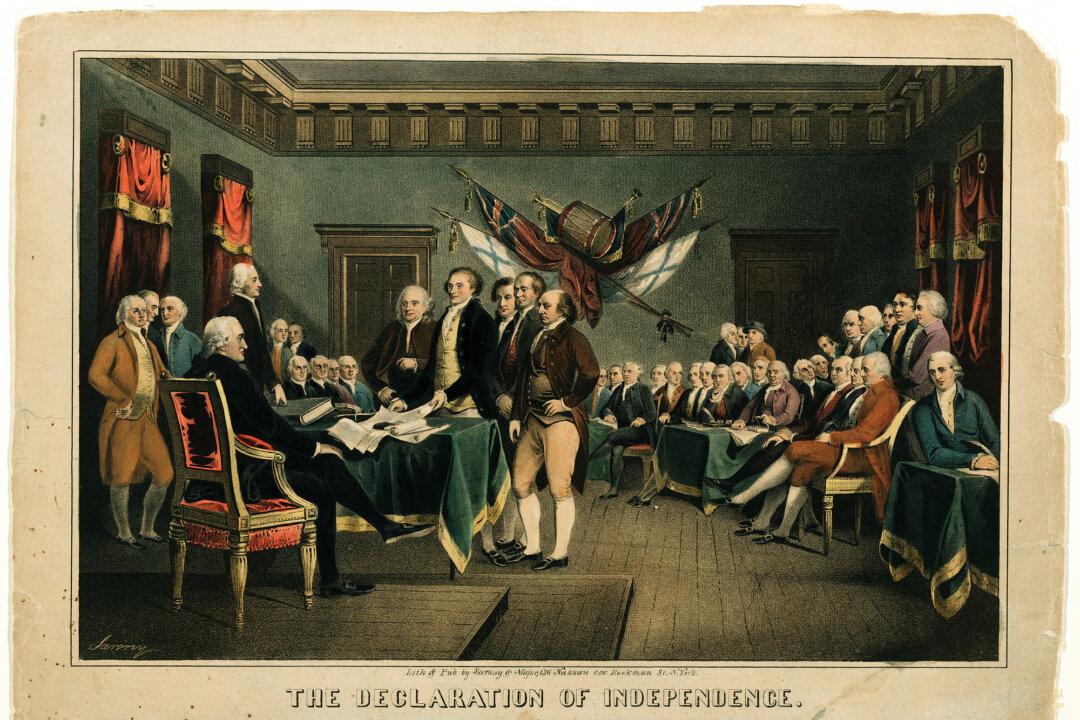
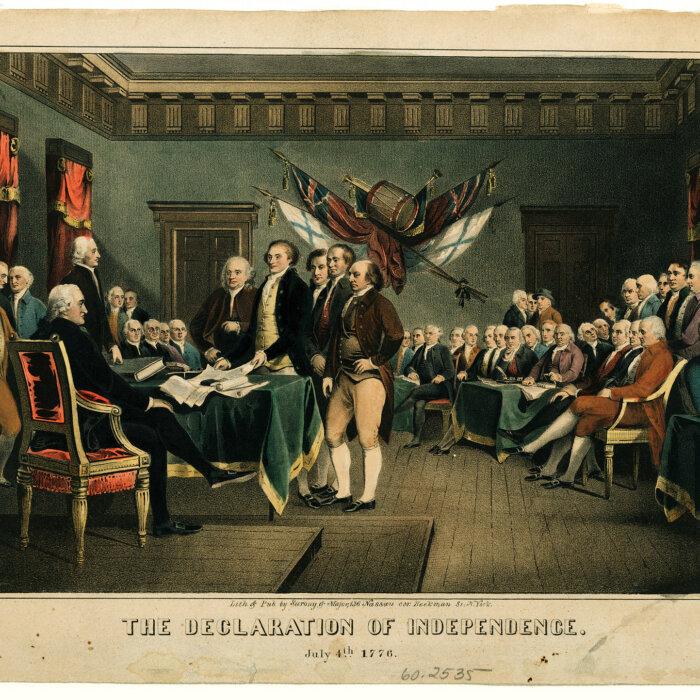
On the morning of June 28, 1776, Thomas Jefferson and the Committee of Five presented a draft of the Declaration of Independence to John Hancock, president of the Second Continental Congress. Although immortalized by John Trumbull’s famous painting, the historic moment unfolded with quiet parliamentary precision and strict protocol rather than fanfare.
That same morning, a drastically different scene was unfolding at the vital port city of Charles Town, South Carolina, now known as Charleston. A British invasion force of up to 3,000 soldiers and marines, supported by Royal Navy warships and transports, had been sent to suppress the growing independence movement and restore royal authority in the southern colonies. For weeks, the armada had been poised to strike the city and the surrounding fortifications.
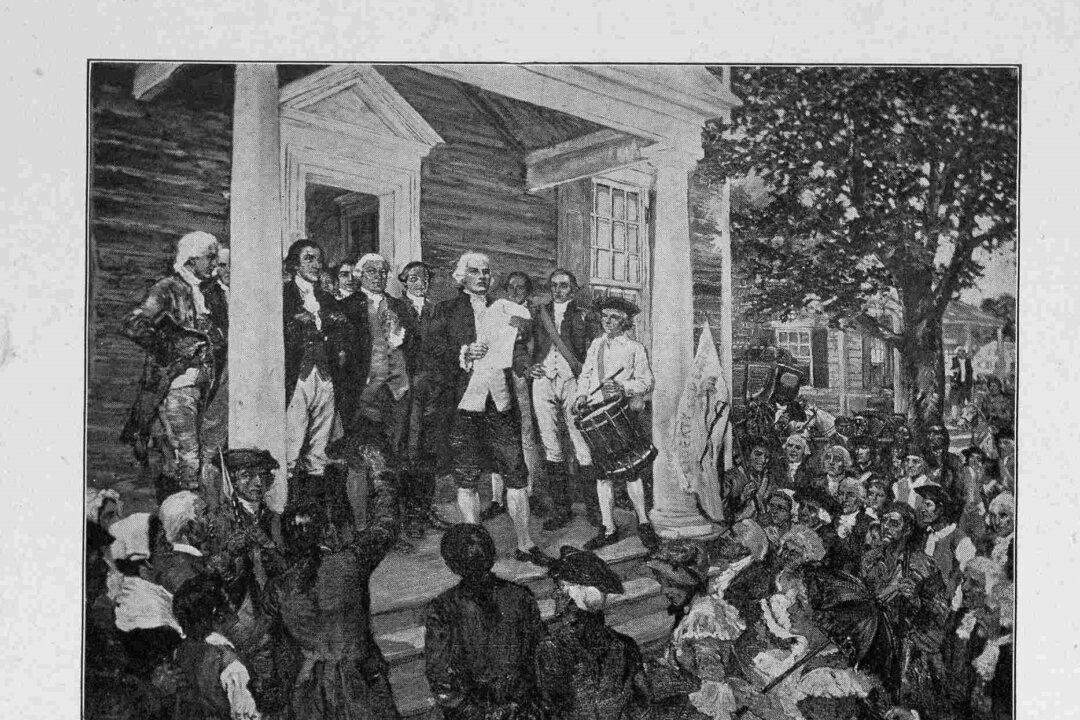
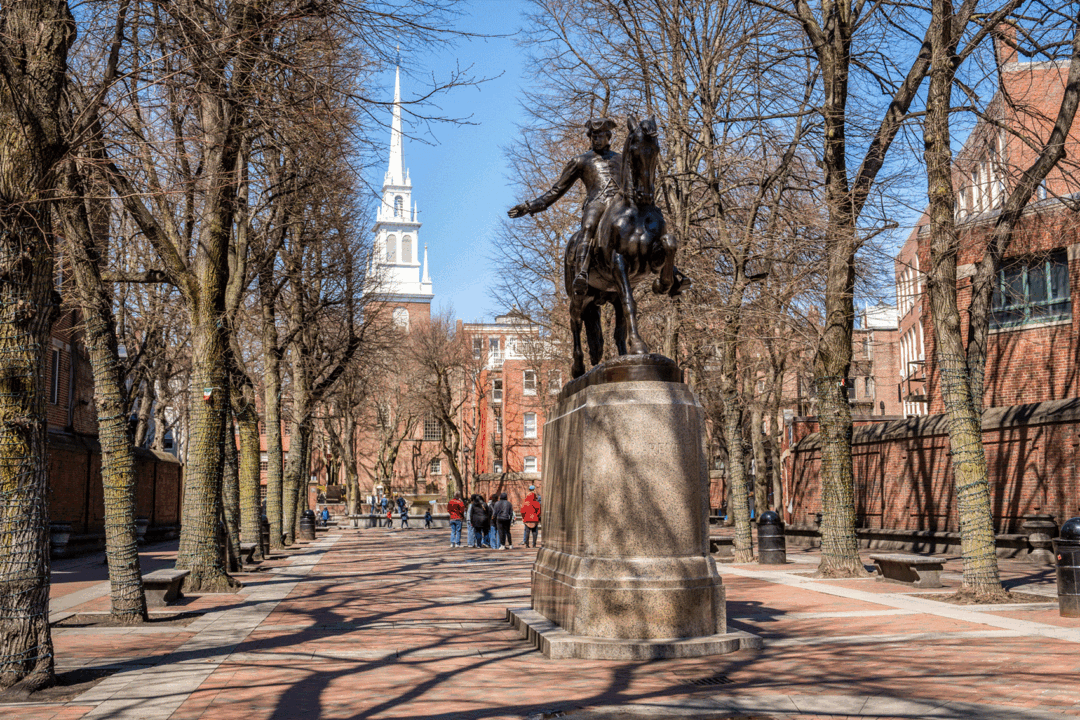
On the northeast shore of Sullivan’s Island, Col. William Moultrie and Col. William “Old Danger” Thomson were inspecting earthen batteries and entrenchments when a sentry posted nearby caught movement out at sea—British warships unfurling their sails and weighing anchor—and shouted the alarm. Moultrie immediately galloped his horse back to Fort Sullivan as the enemy ships began their slow approach. Upon arrival, he ordered the drummer to beat the “long roll”—the urgent alarm signal commanding soldiers to their battle stations.
The rhythmic thud of the drum could be heard four miles away in Charles Town. Large crowds gathered along the waterfront and crowded the upper floors of the city’s buildings for a clear view of what many expected would be an intense artillery duel. Among those watching was South Carolina President John Rutledge, standing on the second floor of the Exchange Building. Observing the scene unfold with his spyglass, Rutledge could see naval gunners loading their heavy cannon.
South Carolina Mobilizes
In December 1775, Patriots intercepted British dispatches revealing plans to strike the southern colonies. Those fears were confirmed the following February when British Gen. Henry Clinton, while visiting New York City, indicated that his destination lay somewhere in the South before departing for North Carolina on Feb. 28.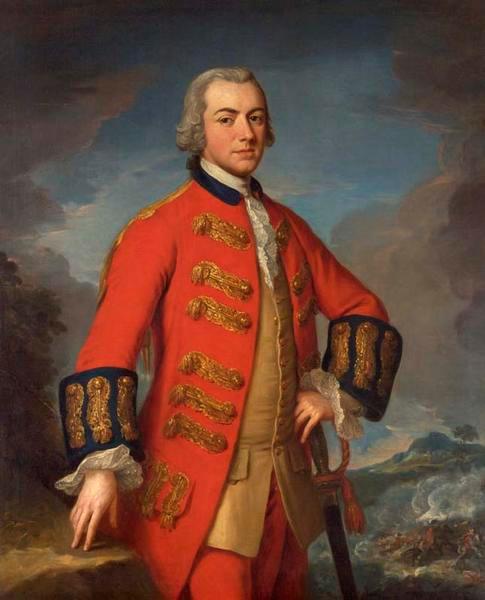
Alarmed by these developments, Congress created the Southern Department on March 1 and appointed Gen. Charles Lee as its commander. Lee, who had been overseeing the defenses of New York under Gen. George Washington, departed the city on March 7 for his new command.
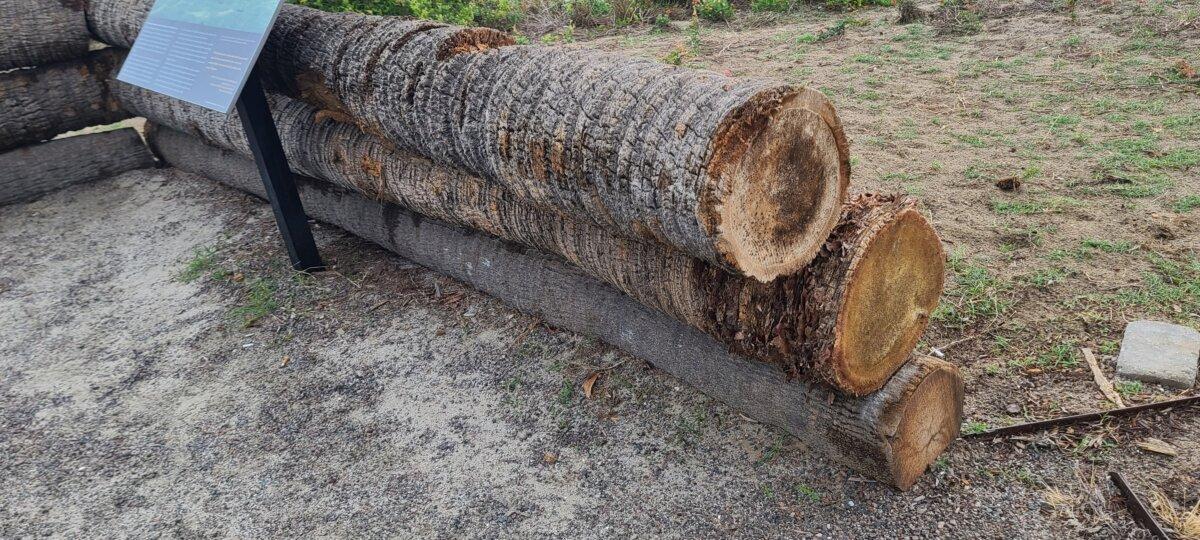
Rumors of an impending British attack swept through the Charles Town Harbor, prompting extensive defensive preparations. Within the city, workers erected barricades, breastworks, and heavy artillery batteries. Ringing the harbor, strategic outposts including Fort Johnson, Haddrell’s Point, and Mount Pleasant—along with scattered coastal redoubts—strengthened their lines with palmetto logs, sand, and powerful artillery.
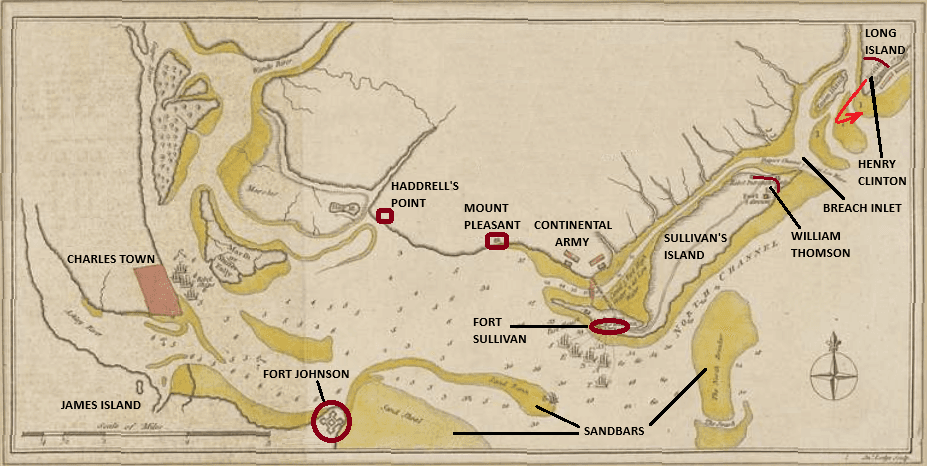
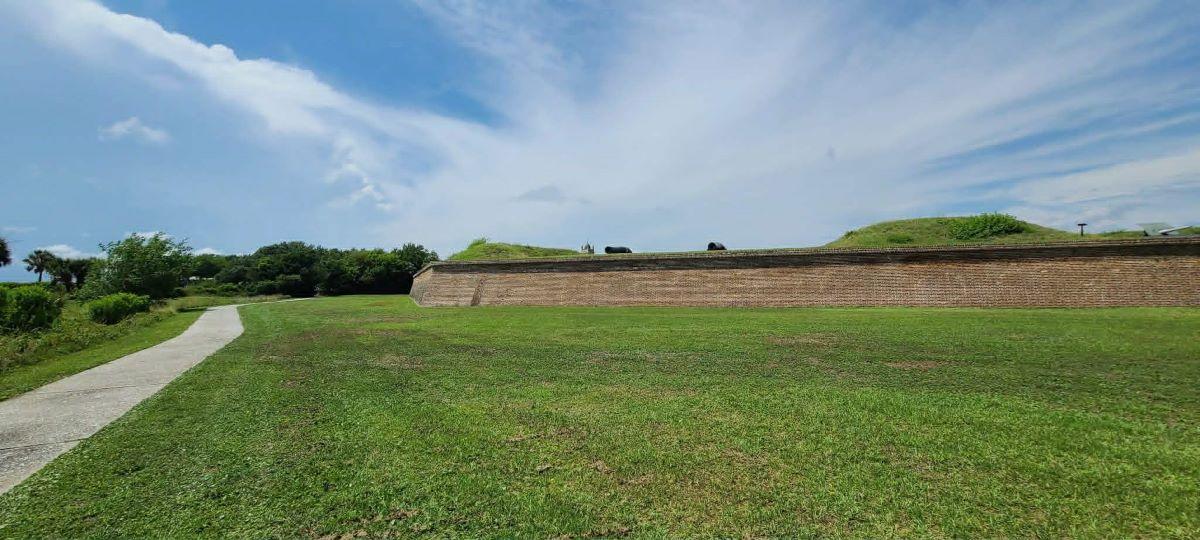
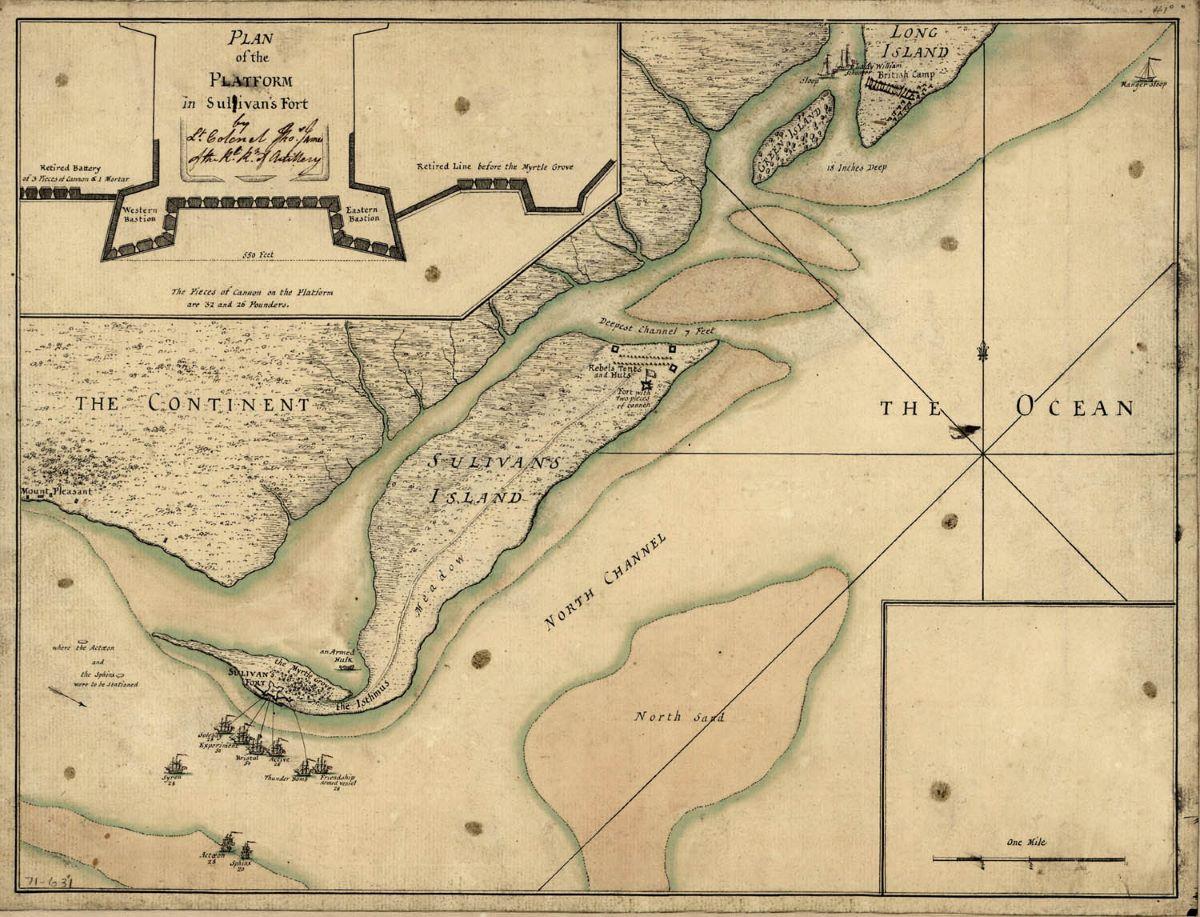
The harbor’s defense was focused on Sullivan’s Island—at the time, a roughly four-mile-by-quarter-mile strip of land positioned by the harbor’s entrance. Shallow sandbars dotted the area inside and outside the harbor, forcing deep-draft ships to navigate past Sullivan’s Island to avoid running aground. Because of the island’s position as a strategic bottleneck, work began on the construction of Fort Sullivan with palmetto logs and sand. Moultrie was given command of the fort.
The British Arrive
British vessels were spotted in late May taking soundings and gathering intelligence. On May 31, a Patriot horseman arrived at Rutledge’s headquarters to inform him that a massive fleet had been spotted on the horizon.On June 1, the British armada arrived and dropped anchor outside the harbor. For the next several days, they searched for accessible crossing channels among the shallow sandbars.
On June 4, Lee arrived with his staff and assumed command. When he inspected Fort Sullivan, he called it a “slaughter pen” and predicted its destruction by naval artillery within half an hour. He ordered the fort to be abandoned and for the men to fall back to the mainland. Rutledge, however, instructed Moultrie to disobey those orders and to continue working on the fort.
On June 8, Clinton issued a formal proclamation to the city, demanding its immediate surrender. His timing proved unfortunate because Lee’s vanguard of roughly 2,000 Continental soldiers from Virginia and North Carolina arrived on the same day.
After his proclamation was ignored, Clinton deployed more than 2,500 redcoats onto Long Island, now known as Isle of Palms. The island was one mile northeast of Sullivan’s Island, separated by a waterway known as Breach Inlet. Lee responded by redeploying Thomson and 780 men to fortify the beaches facing the waterway.
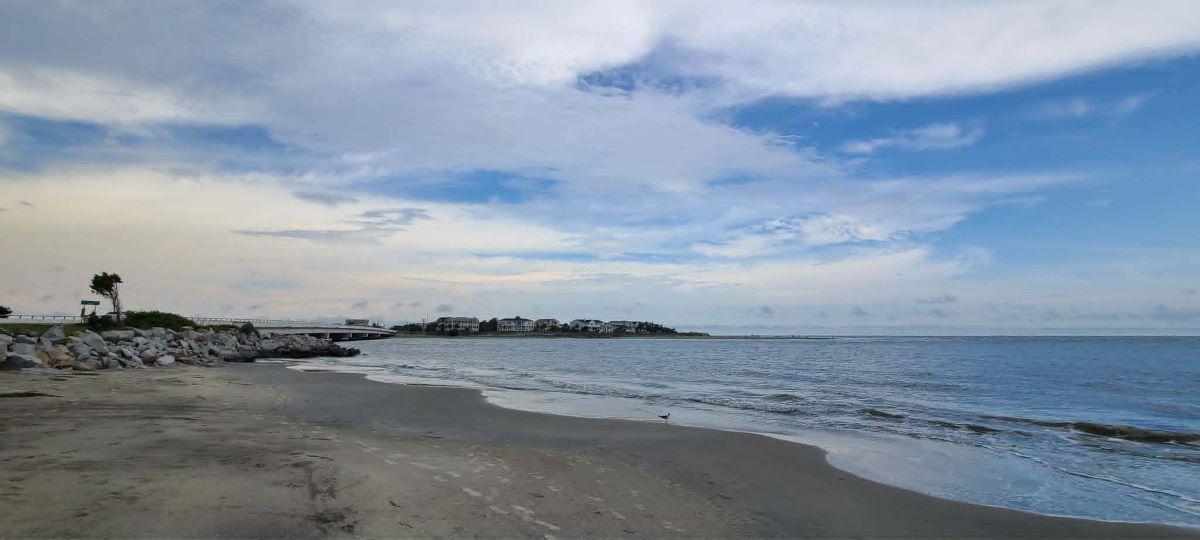
A coordinated assault of Sullivan’s Island was planned. Parker’s warships would batter the fort while Clinton’s men crossed Breach Inlet and attacked from the rear. However, flawed intelligence doomed the operation before Clinton ever set foot on Long Island. Early scouting reports mistakenly indicated that the inlet was an easily fordable sandbar measuring just 18 inches deep at low tide. In reality, Clinton’s men discovered a treacherous, 7-foot-deep channel driven by a ripping current that made a crossing by foot impossible.
June 28, 1776
On the morning of June 28, Parker found sea and weather conditions ideal for an attack. He signaled the fleet to weigh anchor, loosen their sails, and begin their advance, setting in motion Moultrie’s frantic dash back to the fort.HMS Thunder dropped anchor and fired the opening shots. Within minutes, all nine warships unleashed a thunderous cannonade at the unfinished fort.
The bombardment, however, produced an unexpected result. Instead of splintering into deadly shards, the soft, sponge-like palmetto logs absorbed the cannon’s impact. British officers later acknowledged that the unusual construction made the fort far more resilient than anticipated.
Moultrie’s men fired slowly and deliberately to avoid using up the fort’s limited supply of powder. Their carefully aimed shots inflicted heavy damage on the attacking ships, especially Parker’s flagship, HMS Bristol, which suffered extensive casualties. Nearly every officer on its quarterdeck was killed or wounded. Parker was among the wounded when an American shot tore away part of his uniform, leaving his backside exposed.
Also wounded aboard Bristol was Lord William Campbell, South Carolina’s deposed royal governor, who had volunteered to serve with a gun crew. Struck by flying splinters, Campbell never fully recovered from his wounds, dying in England two years later.
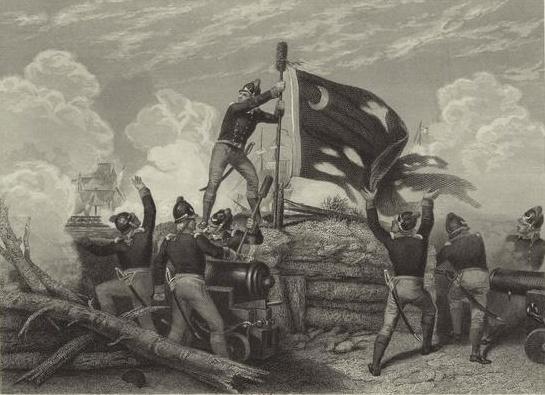
Enemy fire severed the fort’s flagstaff during the battle. Sgt. William Jasper climbed over the ramparts, recovered the fallen colors under fire, and fastened them to a sponge staff, raising them once more above the fort. His actions became one of the enduring images of the entire war.
Parker attempted to reposition three frigates to attack exposed areas of the fort. The vessels—Sphinx, Syren and Actaeon—ran aground on a shoal. Sphinx and Syren eventually escaped, but Actaeon remained stranded.
Clinton attempted to force a crossing using flatboats, but Thomson’s men unleashed a devastating barrage of musket and artillery fire from behind their entrenchments, forcing the British to abandon the attempt and leaving Clinton powerless to support Parker’s fleet.
Aftermath
Residents in Charles Town had spent the day anxiously awaiting news. When word arrived that Fort Sullivan still stood, celebrations erupted throughout the city. Even Lee, who had doubted the fort’s chances, praised the defenders. He visited the fort during the battle, observed the men’s calm bravery, and fired several rounds himself before returning to the mainland.
Americans suffered 37 casualties. British casualties approached 220.
The fort was later renamed Fort Moultrie in honor of its commander. The palmetto tree eventually became a symbol of the state, giving rise to its nickname “The Palmetto State.”
The victory provided a powerful boost to the Patriot cause and delayed major British operations in the South until December 1778.
Six days later, on July 4, 1776, Congress approved the Declaration of Independence.