The new year is right around the corner, which means a new batch of laws will soon take effect.
Law Enforcement Masks
Senate Bill 627 will ban law enforcement officers at the local and federal levels from wearing a face mask when operating in the Golden State.It also requires agencies to create policies limiting the use of facial coverings. According to the bill, face coverings excluded from this ban include clear face shields that don’t obscure the person’s facial identity, medical masks, motorcycle helmets, or masks necessary for underwater use.
School Policies
Senate Bill 760 will require schools to provide at least one all-gender restroom that’s available during school hours and school functions.The bill allows schools to convert their existing restrooms to comply. The state will reimburse local agencies and school districts for the costs.

The new bathroom policy applies to both public and charter schools and will take effect on July 1, 2026.
Distant relatives and temporary legal guardians designated by a parent in a family court will be allowed to sign a child out of school and authorize medical care.
AI Regulations
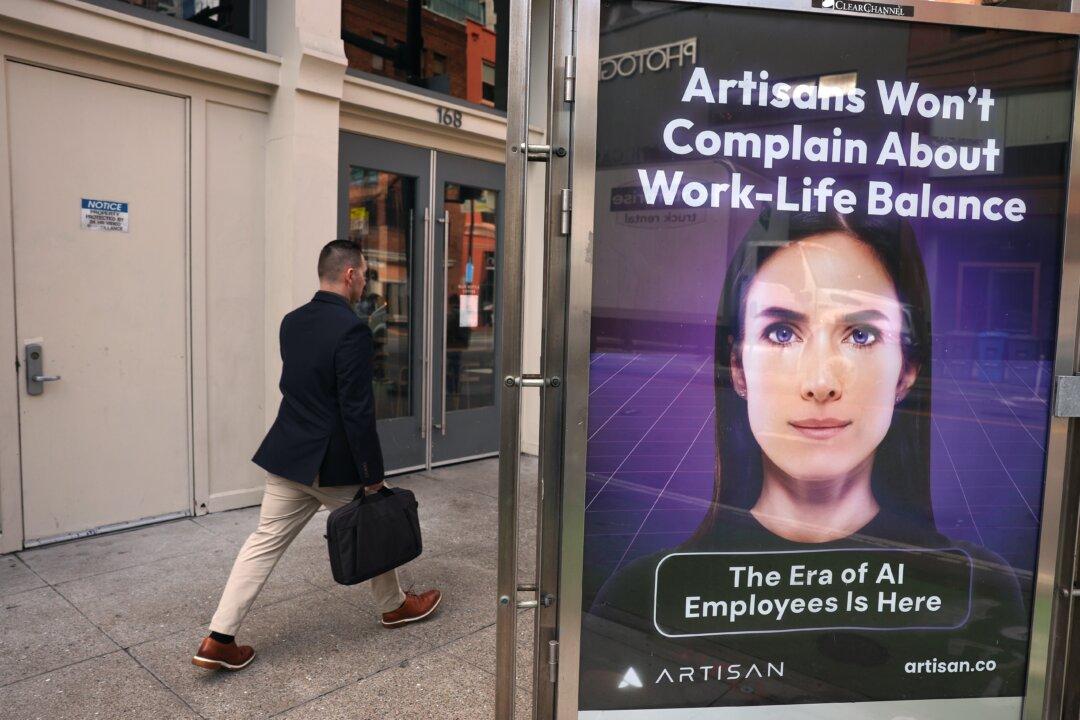
Senate Bill 243 will make California the first state to require safety regulations specifically targeting companion chatbots.The new law requires a technology operator to make it clear and obvious to users that the chatbot is not a real human.
It also requires the operator to maintain a protocol for preventing the chatbot from producing content involving suicide or self-harm for the user. Details of the protocol need to be published on the operator’s website to comply with the new law.
The new chatbot regulations will take effect on Jan. 1, 2026, and chatbot operators will be required to submit annual reports on suicide-prevention protocols beginning on July 1, 2027.
Frontier AI models are defined as “a foundation model that was trained using a quantity of computing power greater than 10^26 integer or floating-point operations,” according to the bill.
Under the new law, large developers will have to publish their “frontier AI framework” explaining risk management practices, mitigation strategies, and evaluations by a third party. They will also be required to release transparency reports detailing risk assessments prior to introducing updated AI models. Non-compliance would result in up to $1 million in fines.
Employer Pay Transparency and Reporting
Senate Bill 642 will revise the rules surrounding employers’ pay scales and employees’ pay history disclosures.Under this new law, employers are prohibited from asking applicants about their salary history information. However, if applicants voluntarily disclose their salary history, employers may still use the information to decide on salaries for applicants.
Employers now must also give employees pay scale information for their current roles upon request. Additionally, employers with more than 15 employees must include pay scale information in all job postings.
The new pay disclosure regulations will take effect on Jan. 1, 2026.
Under the new law, employers with more than 100 employees must store demographic data collected for pay reports separately from main personnel records. They will also have to submit their annual pay data reports to the Civil Rights Department for more job categories.
Health Care
Assembly Bill 144 establishes a handful of new health-related policies for the state, which took effect on Sept. 17 after the governor signed the bill into law.Key changes include requiring health plans to continue to cover, without cost-sharing, all preventive services and immunizations that are recommended at the federal level as of this year, even if the federal government later removes those recommendations. The California Department of Public Health will also have authority to supplement or modify federal health-related recommendations to create state-specific rules.
Health insurers must also, within 15 business days, cover any new recommendations by the state public health department regarding changes to vaccines and other preventive services.
The new law also extends protection to clinic employees, who “shall not be liable for any injury caused by an act or omission in the administration of the vaccine or other immunizing agent.”
AB 144 will also exempt out-of-state health care practitioners from having to obtain California licensure when providing services at the 2028 Olympic Games in Los Angeles.
The new law would also restrict insurance companies from using “step therapy” for insulin, which is when an insurance company specifies the sequence in which different types of drugs are allowed to be prescribed.
Total Ban on Plastic Bags
Senate Bill 1053 will eliminate single-use plastic bags at checkout, allowing only recycled paper bags for a 10-cent fee.The law covers supermarkets, large retailers with pharmacies, and some convenience stores, which can no longer provide plastic bags at checkout regardless of thickness or intended reuse.
It will also require, by 2028, that paper bags provided at checkout contain at least 50 percent post-consumer recycled materials.
The plastic bag ban will take effect on Jan. 1, 2026.