FLI’s Winter 2025 AI Safety Index assessed U.S. companies Anthropic, OpenAI, Google DeepMind, Meta, and xAI, and Chinese companies Z.ai, DeepSeek, and Alibaba Cloud across six themes, which included current harms, safety frameworks, and existential safety.
The independent panel of experts who conducted the review found that even with the highest-scoring developers, “existential safety remains the industry’s core structural weakness.”
Tech giants are working toward developing artificial general intelligence (AGI), or strong AI, which IBM defines as AI that can “use previous learnings and skills to accomplish new tasks in a different context without the need for human beings to train the underlying models.”
Artificial superintelligence or Super AI, if realized, “would think, reason, learn, make judgements and possess cognitive abilities that surpass those of human beings,” according to IBM.
All Fail on Existential Safety
The findings of the evaluation were presented in the form of report cards with letter grades from A to F, accompanied by a corresponding numerical grade point average (GPA).For the existential safety metric, which “examines companies’ preparedness for managing extreme risks from future AI systems that could match or exceed human capabilities, including stated strategies and research for alignment and control,” not one developer scored higher than D.
Anthropic, OpenAI, and Google DeepMind all achieved a D, which, according to FLI, indicates a weak strategy that contains “vague or incomplete plans for alignment and control” or shows “minimal evidence of technical rigor.”
The remaining five developers scored Fs, meaning they were regarded as having “no credible strategy,” lacking safeguards or increasing their catastrophic-risk exposure.
Poor Grades
The report also found a clear divide between the top performers—Anthropic, OpenAI, and Google DeepMind—and the rest, with the most substantial gap existing in risk assessment, safety frameworks, and information sharing.Even among the top-rated companies, overall grades were low, with Anthropic in the lead with a C+ (GPA score of 2.67), followed by OpenAI (C+/2.31), and Google DeepMind (C/2.08).
For the second group, Elon Musk’s xAI, Mark Zuckerberg’s Meta, Z.ai, and DeepSeek all earned Ds, while Alibaba Cloud was slapped with a D-.
The highest individual grade was a single A- for Anthropic, for information sharing.
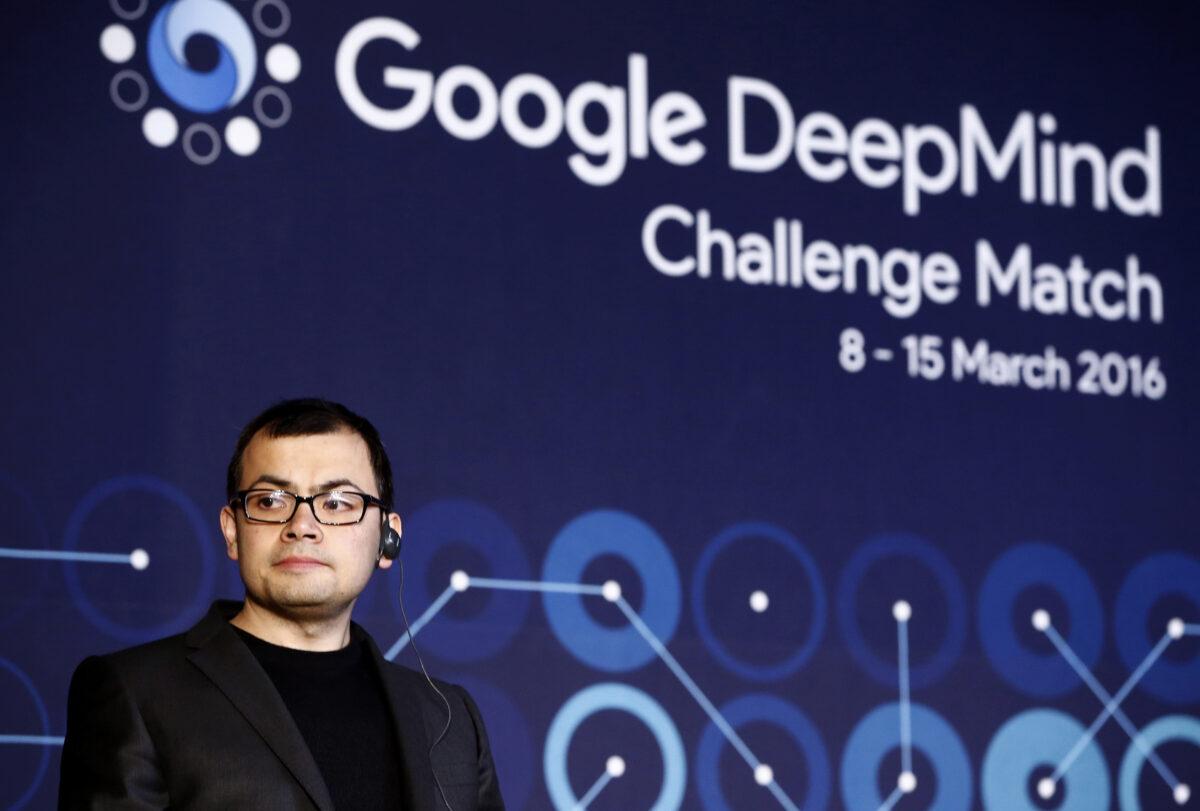
A Google DeepMind spokesperson told The Epoch Times that it takes a “rigorous, science-led approach” to AI safety.
The spokesperson said that its safety framework outlines protocols for “identifying and mitigating severe risks from powerful frontier AI models before they manifest,” adding that DeepMind will continue to keep safety and governance at a pace with innovation.
An OpenAI spokesperson told The Epoch Times the company invests heavily in frontier safety research and builds safeguards for its systems.
“Safety is core to how we build and deploy AI,“ the spokesperson said. ”We continuously strengthen our protections to prepare for future capabilities.”
Hacks, Lawsuits
The study comes amid heightened concerns over the impact of AI following reports of AI-induced self-harm, prompting several lawsuits that allege AI models drove users to commit suicide.Anothropic said that the attack “relied on several features of AI models that did not exist, or were in much more nascent form, just a year ago.”