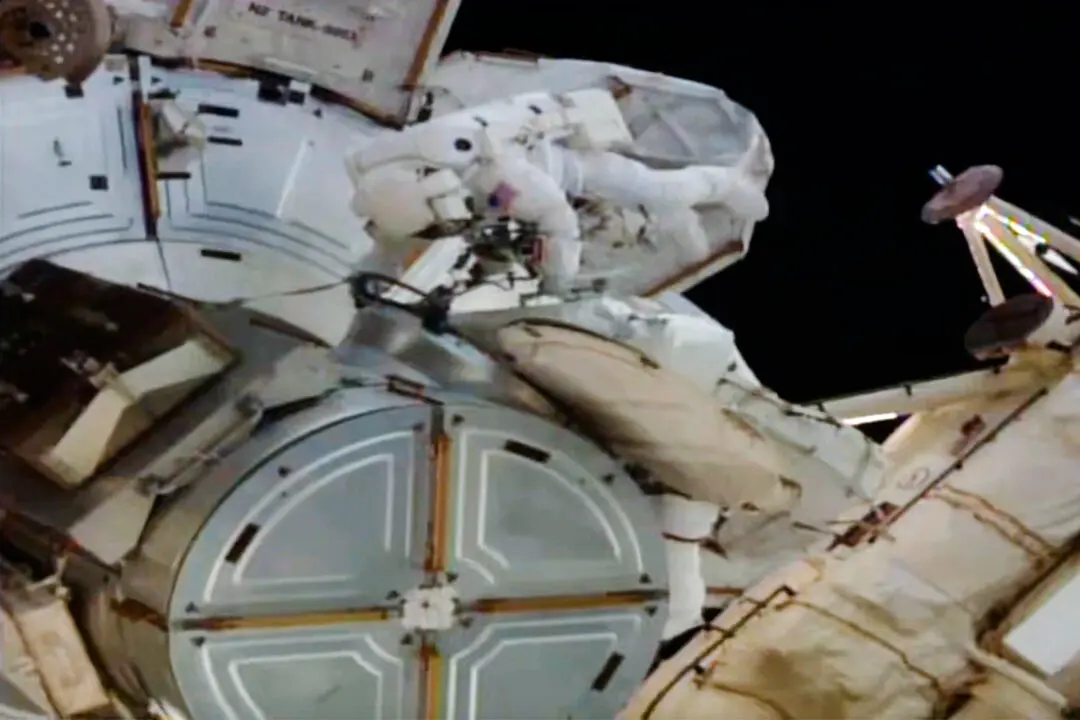
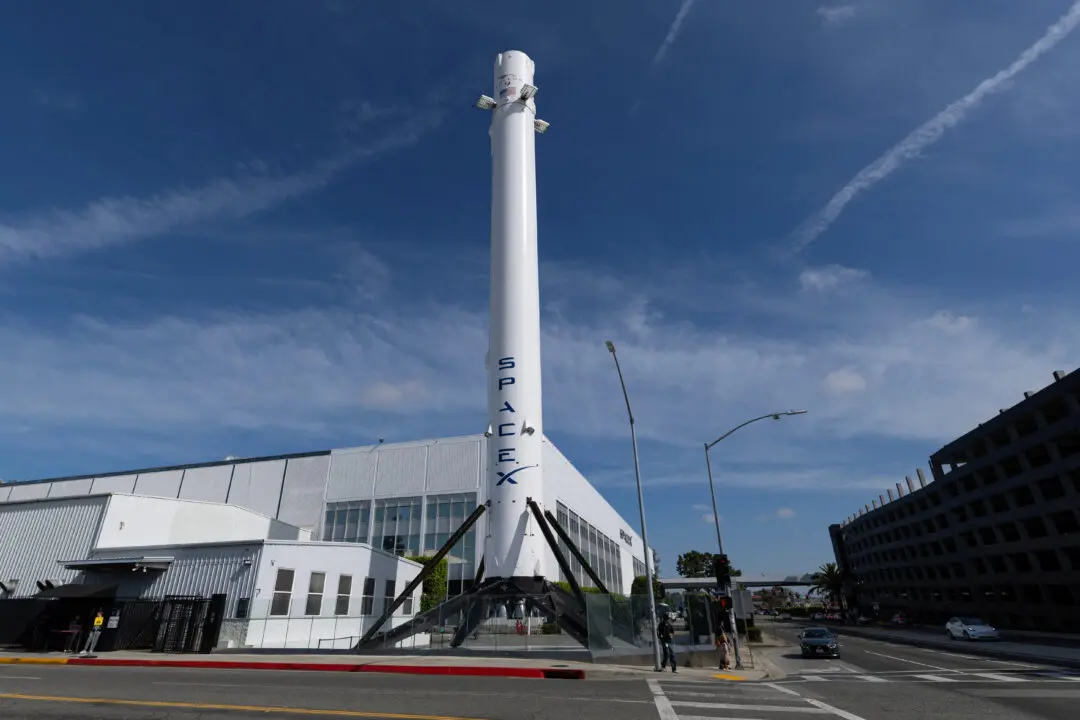
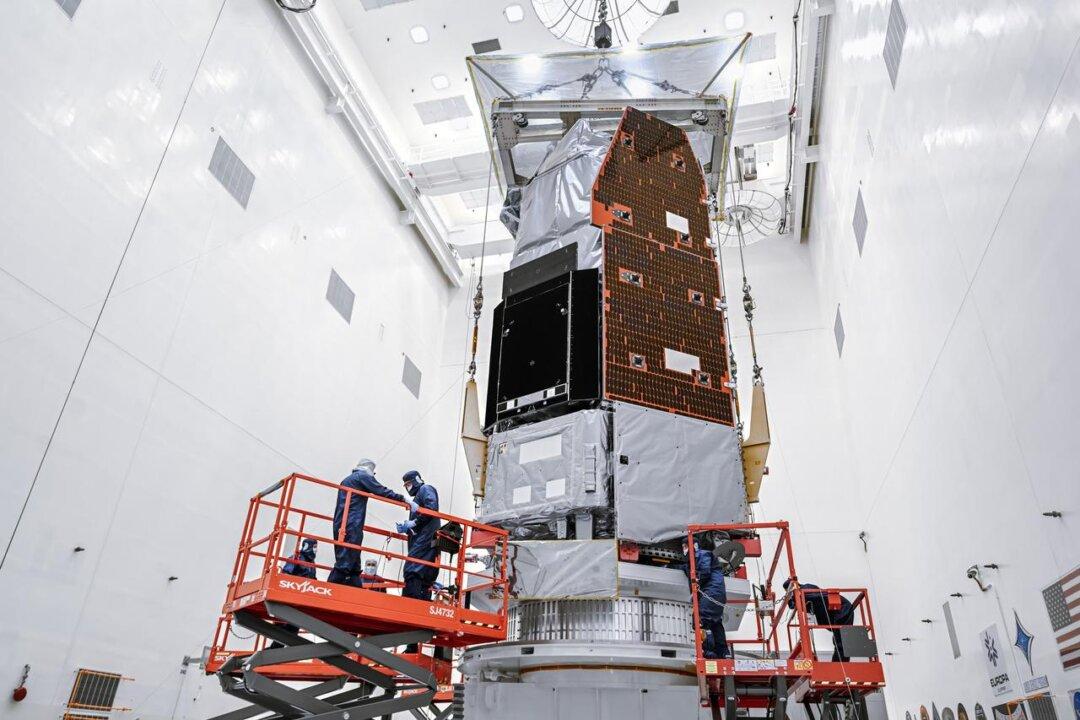
On Aug. 5, the discarded second stage of a SpaceX Falcon 9 rocket is expected to crash into the lunar surface.
After fulfilling its mission to send two unmanned landers to the lunar surface, the upper stage used to escape Earth’s gravitational pull began drifting through deep space. But gravity has begun to pull it down to the lunar surface near Einstein Crater.
While its impact does not pose any risk to human assets currently on the lunar surface, it has become the latest example of the dangerous reality of “space junk” amid humanity’s reach for the stars.
Falling Skies
There is an old cliché that what goes up must come down, and that rings true for the objects man sends into space.
Since the late 1950s, humanity has worked to launch more and more hardware beyond the Earth’s atmosphere. Ultimately, this means more and more shipments are being returned to sender as spacecraft complete their missions and become space junk.
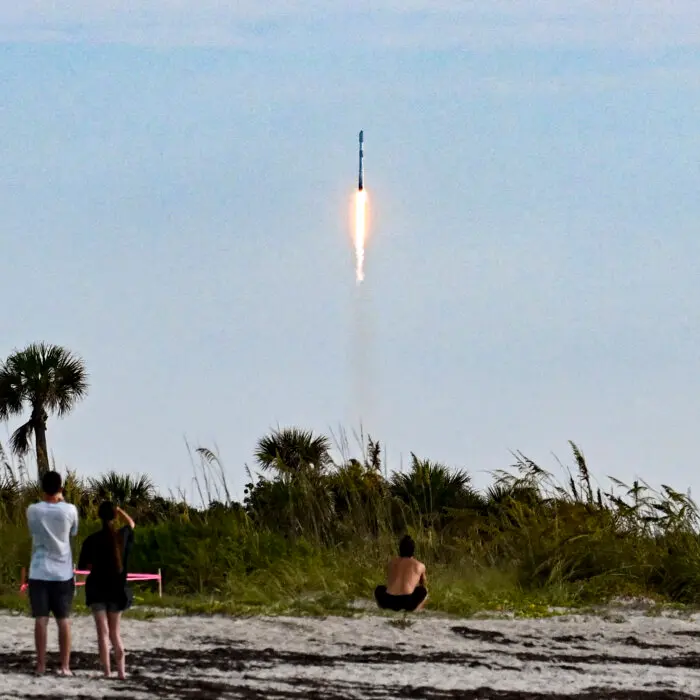
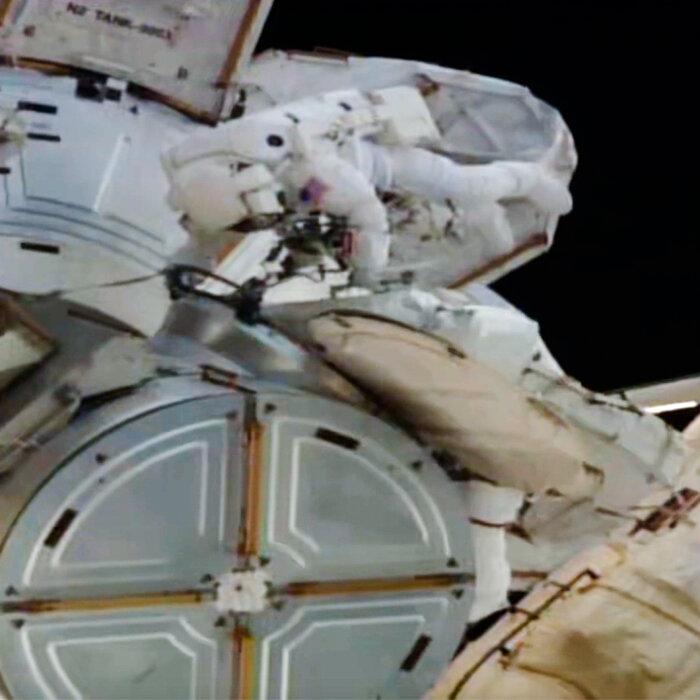
But when those objects come home varies greatly.
First, there is often space junk discarded during and after launch. Current rockets like the Russian Soyuz, the Chinese Long March 3 and Long March 5, and United Launch Alliance’s Atlas V all feature first-stage boosters that break off and fall back to Earth from high altitudes.
Launches from Florida’s Kennedy Space Center and the European Space Agency’s launch complex in French Guiana on the northeast corner of South America offer relatively clear areas of ocean down range for the pieces to fall, but other launch sites do not have the same luxury.
China has looked to capitalize on this coastal launch environment by opening a new complex on the island of Hainan in the south. However, most of its designated drop zones are in contested portions of the South China Sea between the communist regime and the Philippines.
The Philippine Space Agency reported rocket parts have washed up on its nation’s shores.
This safety concern was also exemplified stateside by SpaceX. Its behemoth Starship looks to bring an end to falling rocket stages by introducing 100 percent reusability. However, a test flight from the Texas Gulf Coast exploded shortly after launch in 2025, sending debris falling over parts of Florida, the Bahamas, Turks and Caicos, and other parts of the Caribbean. At least 240 flights were disrupted and diverted due to the incident.
Communist China also came under fire for reckless disposal of the upper stage of a Zhuque-3 rocket. The 11-metric-ton object orbited for four days out of control. Ultimately, it splashed down in the Indian or Pacific Ocean but remained a major concern as it was coming down, especially for European nations that found themselves directly under the decaying orbital path.
Orbital Shrapnel
This rocket part was far from the first time orbital debris survived re-entry and threatened to impact populated areas.
Pieces of rockets and whole satellites, probes, and space stations have continuously met their fiery fate by re-entering the atmosphere through either natural degradation of their orbits or through controlled descent and disposal.
NASA’s Van Allen Probe A, for example, was originally scheduled to re-enter the atmosphere in 2034. But intense space weather events triggered by the sun increased the still-present atmospheric drag on the orbiting spacecraft, causing it to slow down at a much faster rate. It re-entered the atmosphere over the Pacific Ocean on March 11, 2024.
For all spacecraft, attempts are made to ensure they either completely burn up in the atmosphere or splash down in the ocean or sparsely populated land areas like the Canadian Tundra, Siberia, and the Australian Outback. But it’s not always the case. Incidents of debris hitting homes or property, or washing up on beaches have been reported the world over.
And it’s not only whole spacecraft orbiting the planet that poses a risk to human operations.
According to NASA’s Orbital Debris Program Office, more than 25,000 objects 10 centimeters or larger are known to be orbiting the Earth and are tracked by the U.S. Space Surveillance Network. However, smaller objects measuring 1 to 10 centimeters are estimated to be around 500,000, and particles larger than 1 millimeter are estimated to exceed 100 million.
Material as small as three centimeters can be detected by ground-based radar systems, and materials smaller than one millimeter are primarily detected by measuring impact features on returning spacecraft.
The highest concentration of debris mostly sits at an altitude range of 466 miles to 621 miles, and poses a threat to objects in Low Earth Orbit like the International Space Station.
Principal sources of the debris have been spacecraft explosions and collisions, such as China’s intentional destruction of the Fengyun-1C weather satellite in 2007, and the accidental collision between the Iridium-33 American communications satellite and Russia’s retired Cosmos-2251 spacecraft in 2009.
Orbital shrapnel found closer to 372 miles up is expected to fall back to Earth in several years. But objects found around 500 miles up are estimated to stay flying for centuries, and anything higher than 620 miles will circle the Earth for 1,000 years or more.
In low Earth orbit (below 1,242 miles), orbital shrapnel is moving close to five miles per second, NASA says, and can hit other spacecraft with an impact speed 10 times the speed of a bullet.
The International Space Station is touted for being the most heavily shielded spacecraft ever to fly, reducing the risk of impacts from objects 1–10 centimeters in size, and the annual need to change its orbit or position to avoid on-orbit collisions remains a rare occurrence. However, the lack of understanding of these particles and the threat of mission-ending impacts remains high.
“Millimeter-sized orbital debris (OD) represents the highest mission-ending penetration risk to spacecraft operating in low Earth orbit,” the Orbital Debris Program Office said in a recent paper, emphasizing the need for better observation and tracking of these much smaller pieces of debris.
“The likelihood of non-catastrophic but mission-ending damage to critical systems caused by millimeter-sized OD is orders of magnitude greater than the likelihood of an accidental collision with a large, trackable object,” the paper adds. “In addition, a disabled vehicle is a sitting duck in the environment.
“Sooner or later, it could collide with other objects to create even more debris to further pollute the environment.”
The U.S. Space Surveillance Network has identified nearly 35,000 objects in orbit. Nearly 20,000 of them are spacecraft, up from around 5,000 in 2020. Despite the current decade’s massive uptick, the number of rocket bodies and mission-related debris remains relatively much lower, counting for less than 5,000 objects, and the number of fragmentation objects is actually decreasing since its peak of just under 15,000 in 2022.
The United States has made efforts to mitigate its space littering. NASA, the Department of War, the Federal Aviation Administration, the National Oceanic and Atmospheric Administration, and the Federal Communications Commission all impose licensing requirements related to mitigating space debris. And the federal government enacted the U.S. Government Orbital Debris Mitigation Standard Practices, which was updated in 2023.
NASA also recognizes that many spacecraft and rocket manufacturers and operators are aware of the need to mitigate the growth of orbital debris and voluntarily adhere to such measures.
However, as American ambitions turn back to the moon, another update to space debris policies might be in order.
Space Junk to the Moon and Beyond
After launching the Japanese-built iSpace Hakuto mission to the moon in 2025, the second stage of the SpaceX Falcon 9 rocket was disposed of in deep space. However, it was anticipated to finish its trip to the moon by crashing into the surface near Einstein Crater on Aug. 5 at 5,400 mph, marking the latest of hundreds of man-made objects to hit the surface.
Julianna Scheiman, director of NASA Science and Dragon Programs at SpaceX, said in an Aug. 3 briefing that SpaceX performed the appropriate maneuver to safely dispose of the second stage according to the current rules and regulations. But natural elements of the Earth-Moon-Sun system pushed the rocket piece back to the moon.
“What has happened is essentially a mixture of solar activity and gravity forces have put it on a path towards the moon,” she said.
This disposal is not a new problem; Apollo 8, the first crewed mission around the moon, was essentially followed by the disposable booster it used to escape Earth’s gravity for a significant portion of the outbound trip.
But it comes at a time when NASA and its international partners are gearing up to launch an unprecedented number of robotic missions to the lunar south pole in preparation for a permanent crewed settlement. This buildup will require disposable upper stages, possibly requiring another update in space debris mitigation.
“As a scientist, I also am very excited to see the observation,” Scheiman added. “But yes, one of the things that we’re working in partnership with NASA and the other appropriate agencies is ‘What is the best?’ ‘What is the best future disposal path for high-energy missions that are in, you know, the Sun-Earth-Moon system? And so yeah, we’re pretty excited about it.”