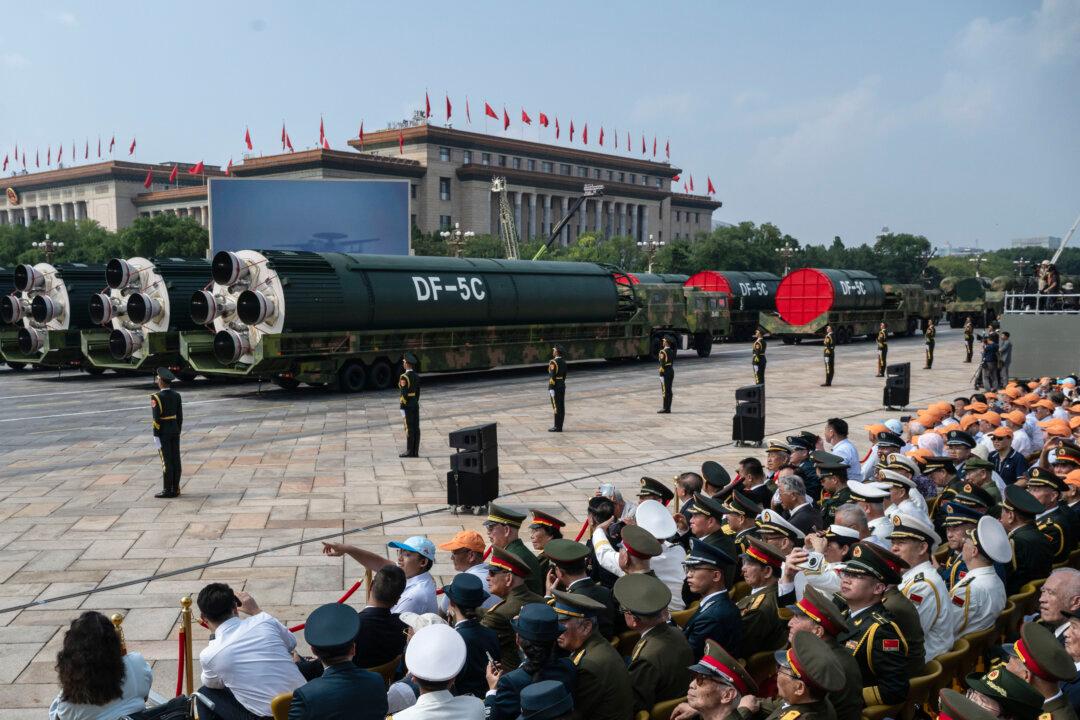
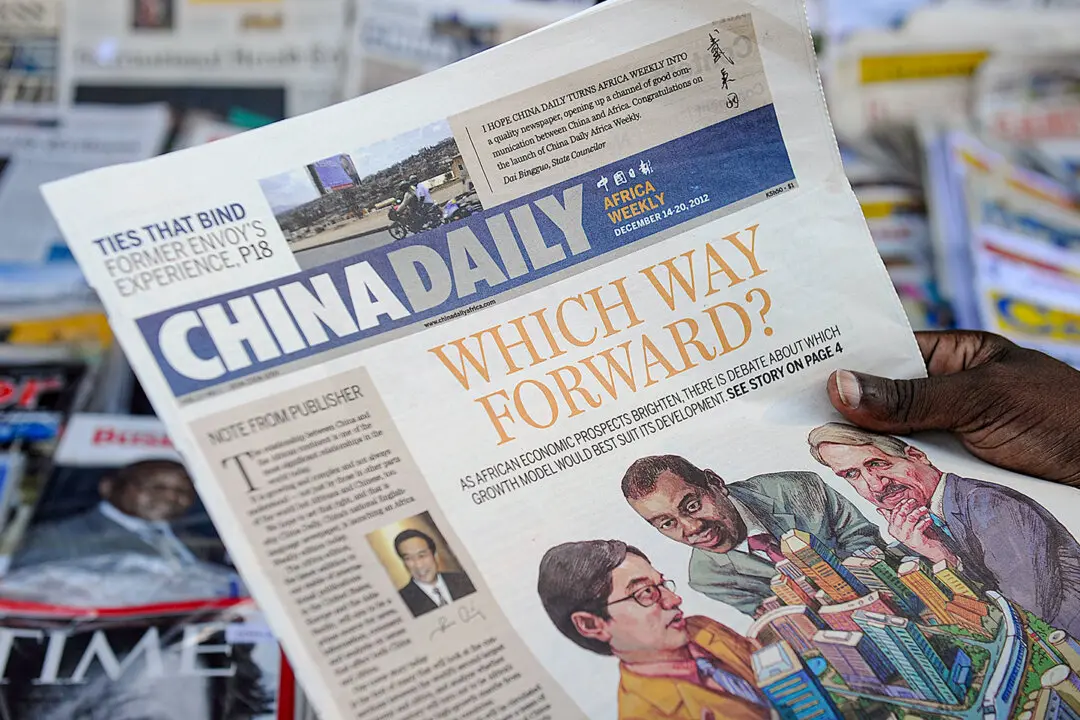
According to a recent article in the Chinese state-run Global Times, the United States is using the Enhanced Defense Cooperation Agreement (EDCA) with the Philippines to destabilize the South China Sea region. It cites a state-controlled think tank in Beijing, the South China Sea Strategic Situation Probing Initiative (SCSPI), as the source for that claim.
As usual with CCP propaganda media, the facts are otherwise—in this case, the reality is a projection of the Chinese regime’s sins onto the United States and its allies.
What the Global Times Article Actually Claims—and Doesn’t
Stripped of the propagandistic framing, the SCSPI report’s factual content is: the United States has grown from five to nine EDCA sites in the Philippines since 2016/2023, spent roughly $125 million on base infrastructure and $7.3 million on life-support contracts, increased rotational deployments and live-fire exercises, and deployed systems like HIMARS and the Typhon missile system during exercises. That’s it.This is U.S. forces operating on Philippine sovereign territory, at Manila’s invitation, under a treaty (EDCA, 2014) negotiated and ratified by a democratically elected Philippine government reacting to Chinese pressure that predates the agreement.
The word “destabilize” is never operationalized in the piece—no body count, no seized territory, no coerced neighbor is named as a victim of U.S. action. The word is doing the paper’s argumentative work without the paper ever cashing it out. The closest the SCSPI researchers come to a mechanism is “restraints and attrition ... during peacetime”—for example, the complaint is that the U.S. presence makes it harder for the Chinese Communist Party (CCP) to coerce the Philippines.

That is a tell, not a rebuttal.

The Actual Chronology of Who Moved First
2012: Scarborough Shoal
The CCP seized de facto control of Scarborough Shoal, roughly 120 nautical miles from Luzon and well within the Philippines’ exclusive economic zone (EEZ), after a standoff, and has denied Filipino fishermen access ever since.2013–2016: The ‘Great Wall of Sand’
China dredged roughly 3,200 acres of new land onto seven Spratly features—Fiery Cross, Subi, Mischief, and others—a series of land reclamation projects between late 2013 and late 2016, then militarized what it built: new radar and communications arrays, airstrips and hangars for combat aircraft, and surface-to-air and anti-ship cruise missile systems across the Spratly and Paracel chains. This is part of a decade of unilateral fait accompli by the CCP before the current EDCA expansion.2016: PCA Arbitration
The tribunal at The Hague ruled that Beijing’s historic-rights claims over maritime areas within its so-called nine-dash line have no lawful effect unless they are entitled under the United Nations Convention on the Law of the Sea (UNCLOS). The ruling held that China’s EEZ did not extend to the Spratly chain and found that China had infringed the Philippines’ EEZ rights by constructing an artificial island on Mischief Reef. Beijing’s response was a categorical rejection of a body it had agreed to be bound by through its ratification of UNCLOS.Nine years later, Beijing continues to describe the award as “a piece of waste paper that is illegal, null, and non-binding.” The Chinese subsequently enacted the 2021 Maritime Police Law and the Maritime Traffic Safety Law, using vague jurisdictional language not found in UNCLOS, as direct responses to the arbitration. This amounts to a false claim of sovereignty that has been codified into Chinese domestic law specifically to route around a ruling China lost.

Gray-Zone Coercion
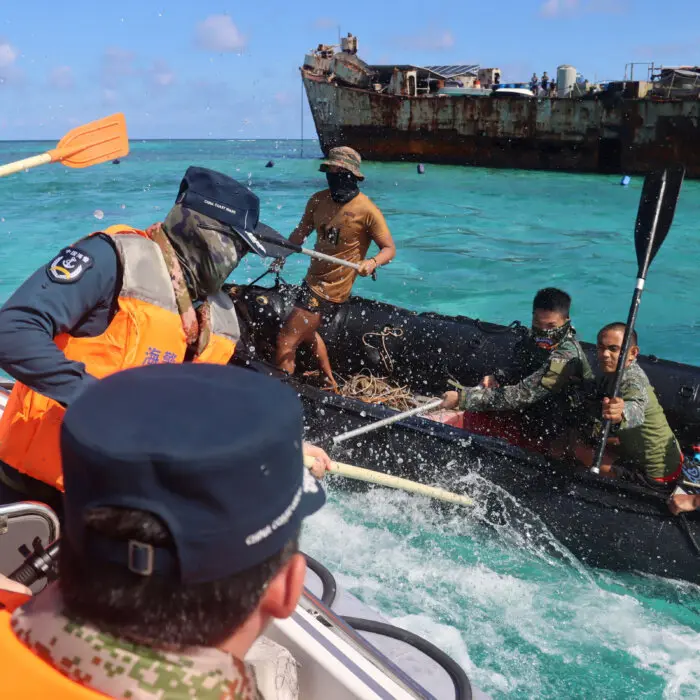
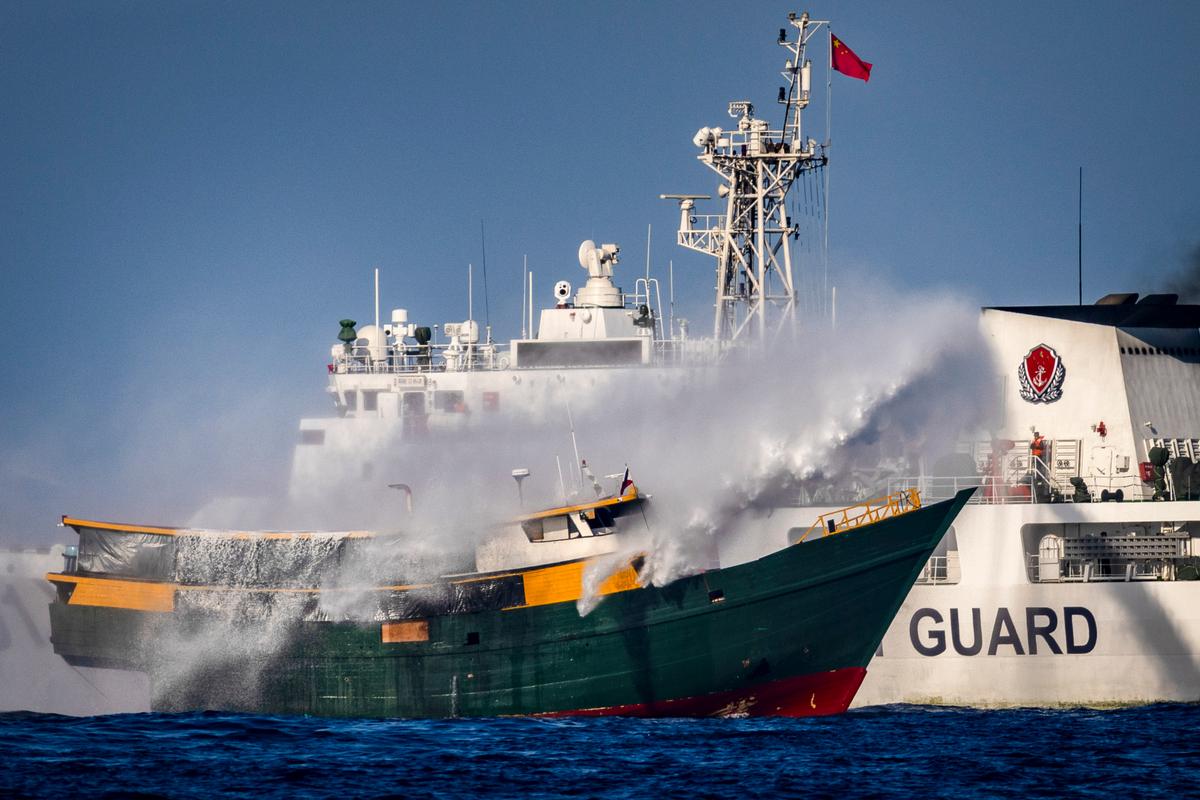
Here is what is actually destabilizing the region, almost all of which post-dates the 2016 arbitration ruling:- Second Thomas Shoal (Ayungin), 2021–2025: Between October 2023 and June 2024 alone, there were seven documented uses of force—water cannons, ramming, blinding lasers. The June 17, 2024, incident escalated to a violent Chinese coast guard boarding of a Philippine navy boat that injured its personnel.
- Scarborough Shoal, 2024–2025: Water-cannon attacks recurred repeatedly. An April 2024 incident damaged a Philippine vessel’s electrical, navigation, and radio systems—and China installed a 380-meter floating barrier across the shoal’s entrance to block Filipino access entirely. This was a direct thumbing of the CCP’s nose at the 2016 ruling.
- Sabina Shoal, December 2025: Chinese coast guard cutters surrounded 20 Filipino fishing boats, cut their anchor lines with rigid inflatable boats, and injured three Filipino nationals with water cannons.
Multilateral Tracks China Works to Block or Punish
Beijing’s default response to other countries settling their disputes with each other, without China, is condemnation, which is itself revealing:- Japan–Philippines Maritime Delimitation Talks: When Tokyo and Manila opened bilateral talks to delimit their overlapping claims, Beijing’s foreign ministry called the talks “illegal and void,” even though China was not a party to either. Typical CCP bluster.
- ASEAN–China Code of Conduct: Negotiations, ongoing in some form since the 2002 Declaration of Conduct, remain unconcluded after two decades precisely because China has resisted binding, enforceable language and geographic scope. The CCP has no interest in compromising!
- Philippines–Vietnam EEZ Efforts and Vietnam’s Island-Building: Notably, as Vietnam has ramped up its own reclamation since 2023, CCP-aligned commentary has pivoted to complaining that Western coverage “deliberately downplay[s] or ignore[s] ... the aggressive actions of Vietnam and the Philippines.” Riiight!
Concluding Thoughts
The Global Times/SCSPI piece inverts cause and effect: it catalogs U.S. basing and exercise activity in the Philippines as “destabilization” while never naming what that activity is responding to.The actual Chinese record—Scarborough Shoal’s seizure in 2012; roughly 3,200 acres of militarized artificial islands built unilaterally between 2013 and 2016, a 2016 arbitral tribunal ruling that stripped China’s nine-dash line of legal basis (a ruling Beijing still calls “waste paper” nine years on); and an escalating campaign of water-cannon attacks, ramming, and blockades against Philippine vessels inside the Philippines’ own EEZ through 2024–2025—shows the causal arrow running the other way.
EDCA expansion, the Balikatan military exercise’s growth, and Japan–Philippines defense cooperation are downstream reactions by treaty allies to a documented, decade-plus pattern of Chinese coercion, not an unprompted American initiative that provoked Chinese “self-defense.”
The Global Times piece is best read not as analysis but as an attempt to relitigate, in the court of international opinion, a strategic and legal position the CCP has already lost—by recasting the neighbors’ and allies’ defensive adjustments as the original sin.