China Daily is the Chinese Communist Party’s (CCP) state-affiliated English-language newspaper, established in 1981, that serves as a major outlet for external propaganda and international communication. On May 30, it bravely declared that it had published the China Daily Social Responsibility Report (2025). The report ostensibly covers the newspaper’s performance in the areas of “political responsibility, humanistic care, cultural responsibility, and lawful operations.”
This self-assessment is, at its core, a piece of institutional self-promotion produced by an organ of a one-party state with a documented and extensive record of suppressing the very things it claims to uphold.
Political Responsibility
The false notion here is that China Daily links China with the rest of the world through credible journalism. It presents itself as “a vital window for the country to engage with the world” and a “trusted news organization.” The documented record says otherwise.The U.S. State Department has designated China Daily’s parent entity a foreign mission—meaning an arm of a foreign government, not an independent press outlet. Former Secretary of State Pompeo explicitly called it a “mouthpiece of the Chinese Communist Party” and a “propaganda organ operating freely within the open American system.”
China Daily is owned by the CCP’s Publicity Department, the government agency responsible for disseminating propaganda. It has registered as a foreign agent under the U.S. Foreign Agents Registration Act (FARA) since 1983, which requires it to report its activities to the Justice Department.
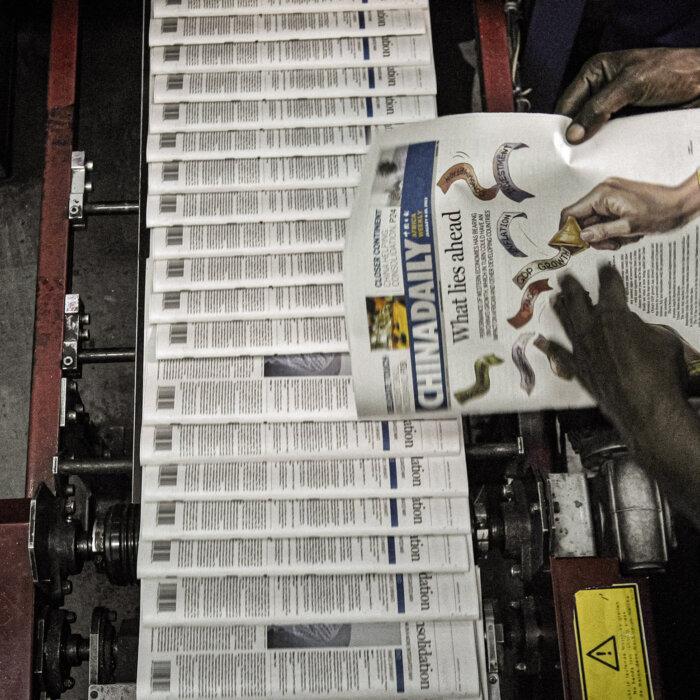
China Daily has spent millions running supplements called “China Watch”—containing propaganda disguised as news—in major U.S. newspapers. Scholars researching Chinese influence activities concluded that “it’s hard to tell that China Watch’s material is an ad.”
Since November 2016, China Daily has paid $19 million to U.S. media outlets, including $12 million to newspapers such as The Washington Post and The New York Times, to fund covertly placed pro-CCP content. This is not journalism—it is a paid influence operation masquerading as one.
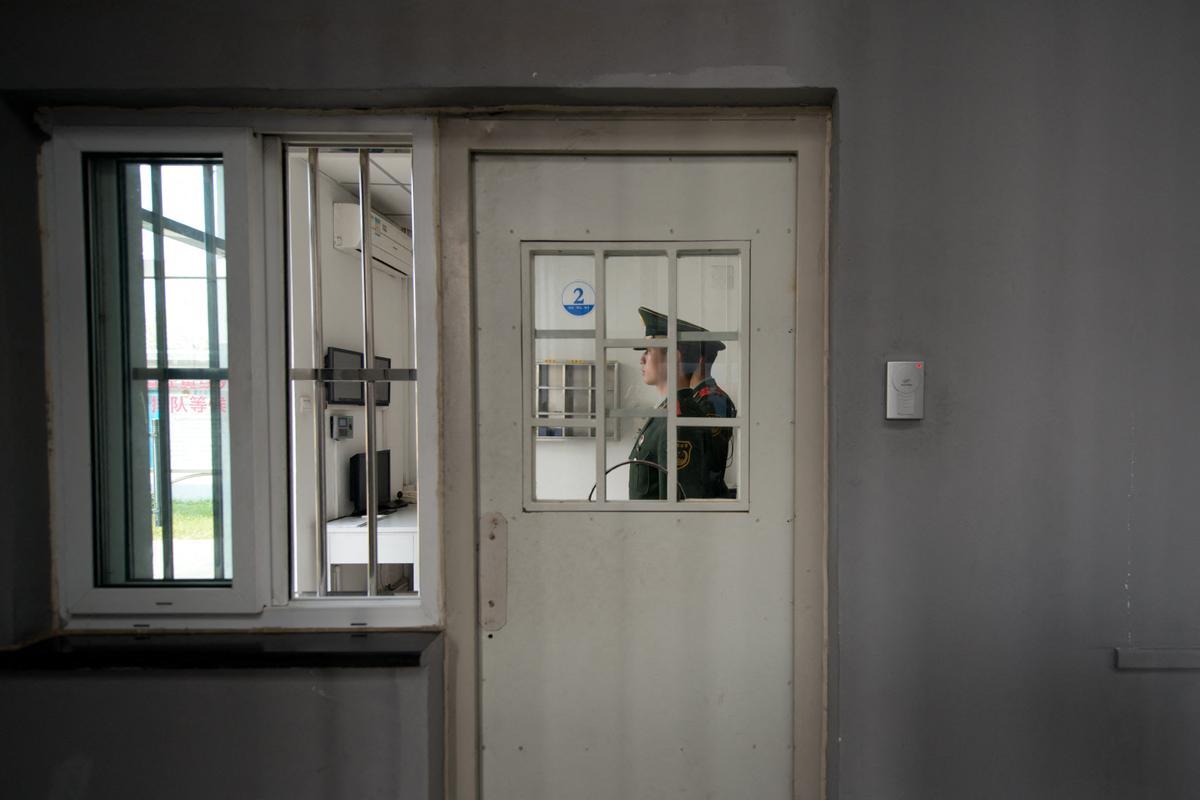
Meanwhile, on its home turf, China maintains the second-worst press environment on Earth. China ranks 178th out of 180 countries in the 2025 Reporters Without Borders (RSF) World Press Freedom Index, and remains the world’s largest jailer of media professionals, with at least 123 journalists and media workers currently imprisoned.
Humanistic Care
China Daily’s claim of “humanistic care”—caring for people’s wellbeing—collapses entirely when examined against the treatment of its own citizens who dare to report independently. China Daily certainly doesn’t do so!China is the world’s largest jailer of journalists, with more than 120 journalists currently detained. The Chinese regime, under Xi Jinping, has intensified its clampdown on the independent press—harassing, surveilling, and detaining reporters at scale.
The case of journalist Zhang Zhan is emblematic. She was sentenced to four years in prison in 2020 on fabricated charges of “picking quarrels and provoking trouble” for reporting from Wuhan during the COVID-19 outbreak—posting over 100 videos online documenting what the government wanted suppressed.
She nearly died on a hunger strike protesting her mistreatment and was released in May 2024. Then she was rearrested and sentenced again to four additional years in a closed-door trial that diplomats from at least seven countries were barred from attending. International and independent outlets detailed her four-year prison sentence for “picking quarrels and provoking trouble,” but China Daily was silent on the travails of this Chinese journalist!
On a broader scale, the CCP’s “humanistic care” for Uyghurs and other minorities in Xinjiang has been documented as something far darker. Fifty-one United Nations member countries issued a joint declaration condemning China’s crimes against humanity against Uyghurs, citing the U.N. human rights office’s conclusion that abuses were so severe and widespread they “may constitute international crimes, in particular crimes against humanity.”
Cultural Responsibility
The CCP’s idea of “promoting culture”—for example, cross-cultural exchange and Chinese civilization—means promoting Han Chinese culture at the deliberate expense of the cultures of Tibetans, Uyghurs, Mongolians, and other minorities. This is the narrative that China Daily regularly conveys.The CCP continues to undermine the rights of Tibetans to receive education in their native language. Nearly a million Tibetan children, as young as four years old, are being separated from their homes and forced into state-run boarding schools designed to indoctrinate them, causing the eradication of Tibetan identity.
China’s Great Firewall blocks global platforms in Tibet while censoring all references to the Dalai Lama, independence, and human rights. Platforms like Douyin and Bilibili have imposed bans on Tibetan-language livestreams. By 2023–2024, minority language content was routinely scrubbed, erasing digital expressions of culture. Somehow, China Daily missed this real news in its “responsible reporting” on Chinese culture.
In December 2025, the rubber-stamp National People’s Congress revised the National Common Language Law, removing earlier provisions that allowed minority languages to serve as primary mediums of instruction in schools. A 2026 U.N. Special Rapporteur report warned that these systematic restrictions on minority language education could lead to “linguistic erasure” and a serious risk of cultural destruction.
According to a 2025 U.N. document, the human rights situation in Tibet continues to deteriorate, with increasing evidence of systematic repression targeting Tibetan culture, religion, language, and identity. More than 1,000 monastics have been expelled since November 2024. Freedom House has given Tibet a freedom score of zero for two consecutive years. Nary a word from China Daily about that freedom score!
Regarding the long-abducted Panchen Lama: 2025 marks 30 years since the enforced disappearance of the 11th Panchen Lama, Gedhun Choekyi Nyima, who was abducted by Chinese authorities at the age of six. Despite repeated appeals from U.N. bodies and national governments, no independent verification of his well-being or whereabouts has ever been permitted. Mum is the word from China Daily about this, too.

Lawful Operations
China Daily’s claim of operating within a framework of law and accountability (that the civilized world recognizes and upholds) is undercut by the very nature of China’s legal system, which is structurally subordinate to the CCP rather than independent of it.The CCP’s anti-corruption campaign—often cited as evidence of rule of law—is widely understood by legal scholars and observers as a politically selective tool. Rivals of CCP leader Xi Jinping and officials who fall out of favor are prosecuted; systemic institutional corruption, which flourishes at the intersection of Party power and business, is insulated from scrutiny unless it serves political purposes.
Human Rights Watch, Freedom House, and the U.S. State Department consistently note that China’s judiciary is not independent—judges serve at the pleasure of the Party, and outcomes in politically sensitive cases are not determined by evidence. Never once has China Daily explained these basic facts to its readers!
The case of journalist Dong Yuyu illustrates this directly. In China, even contact with foreign diplomats—a perfectly normal part of journalism anywhere—can lead to imprisonment. Dong spent his first six months of detention under “residential surveillance in a designated location,” a system notorious for coercive interrogations and extreme isolation, followed by over three years in a detention center.
His appeal was rejected in November 2025, and he was transferred to prison. While reports from foreign outlets such as the BBC, The Associated Press, The Guardian, Reporters Without Borders, and The New York Times covered the case, there are no known China Daily articles on the case.
Concluding Thoughts
China Daily’s 2025 social responsibility report is itself an example of George Orwell’s newspeak that it practices daily: a document in which “political responsibility” means serving the Party, “humanistic care” exists alongside a mass incarceration of journalists and ethnic minorities, “cultural responsibility” is enforced through the destruction of minority cultures, and “lawful operations” occur under a legal system designed to protect the Party from accountability rather than protect citizens from the Party.Independent monitoring organizations—RSF, Human Rights Watch, Freedom House, the U.N. human rights office, and the U.S. Departments of State and Justice—have all documented the gap between China Daily’s claims and verifiable reality.
The report is more propaganda.