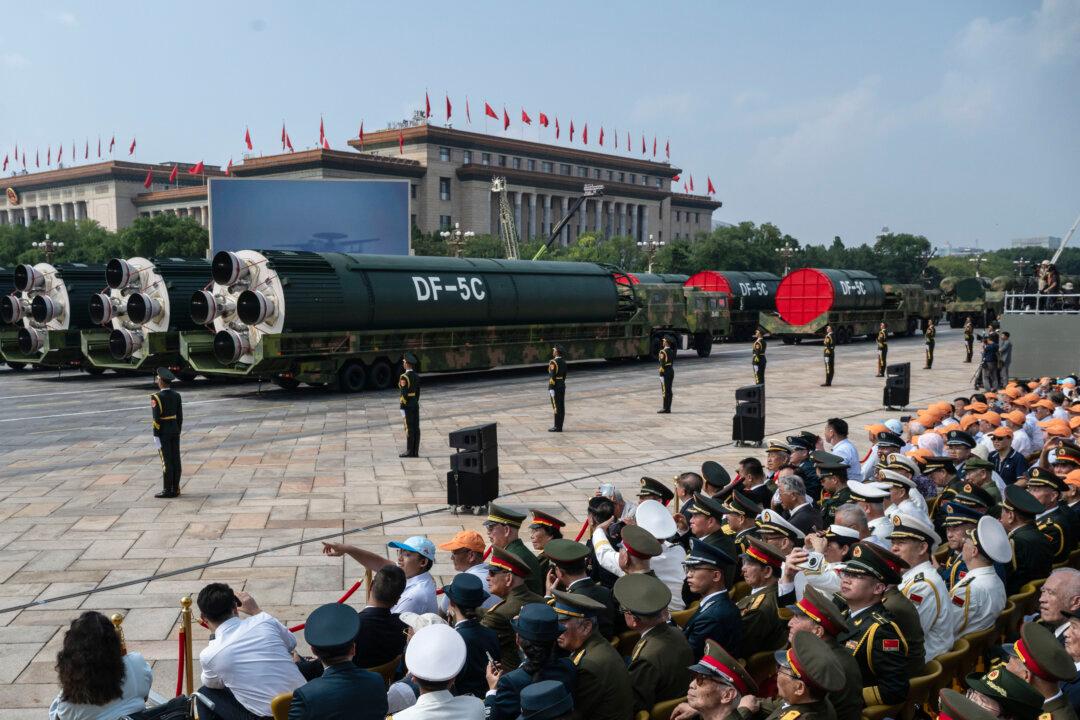
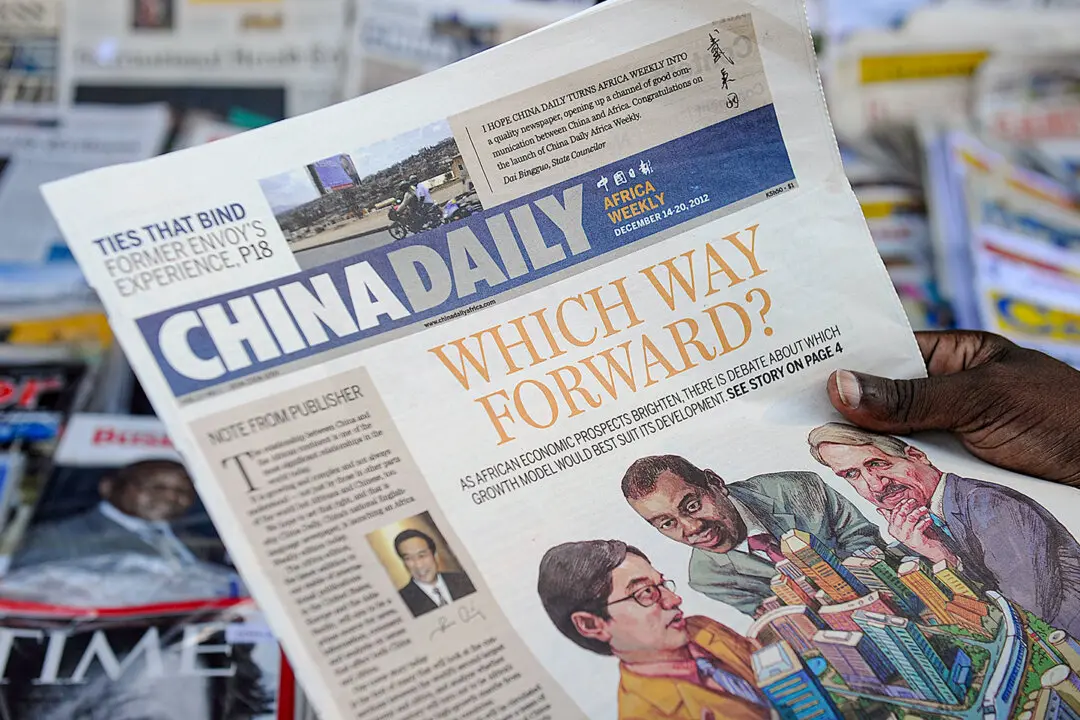
On 1 July, the founding anniversary of the Chinese Communist Party (CCP), Robert Lawrence Kuhn—chairman of the Kuhn Foundation and recipient of China’s Reform Friendship Medal—published an opinion piece in state-run China Daily and Xinhua, organs of the Party’s Central Propaganda Department.
The Friendship Medal is awarded to foreigners judged to have served the Chinese regime’s interests. Kuhn’s piece, “The CPC and China’s Developmental Miracle,” continues that service and should be read as a commissioned anniversary testimonial, not an independent assessment of its claim.
The analysis that follows examines Kuhn’s eight dimensions, asking for each what a constitutional framework—separation of powers, individual rights, elections, independent courts, and a free press—requires that the CCP’s system does not provide.
Ideology and Its Development
Kuhn’s article treats ideology as mere branding. “Xi Jinping Thought” is framed as a technocratic upgrade—alongside economy, law, ecology, and the rest—as if it were a firmware update that refines governance without constraining conscience.

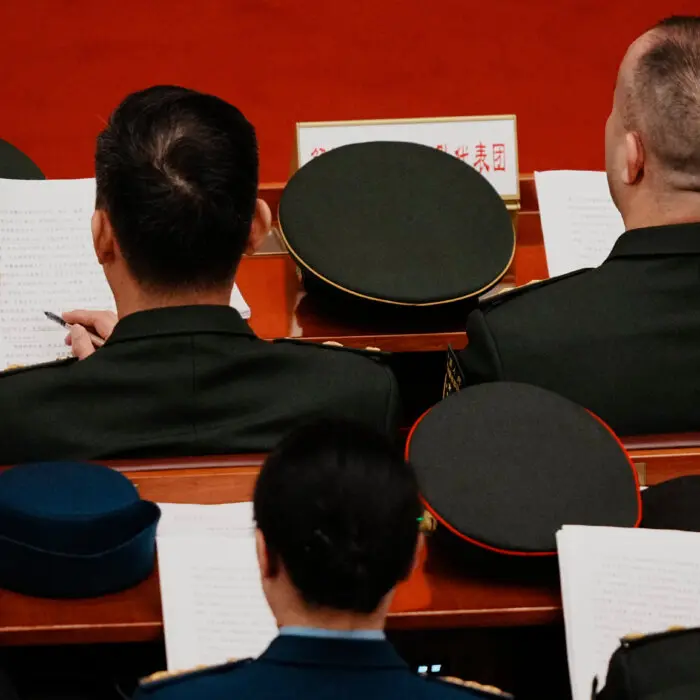
What this omits is that it is a state ideology backed by law. China has no First Amendment equivalent: no protection for refusing to affirm “Xi Jinping Thought,” no private space for belief beyond the state’s reach.
The U.S. Constitution assumes the government has no business certifying correct thought. The CCP’s constitution treats the Party’s ideological line as the organizing principle of the state, education, media, and law. An ideology that advances by adding mandatory content to curricula and legal codes is not openness; it is totalitarianism.

History and Its Legacies
Kuhn frames China’s “developmental miracle” as a 105-year continuum, yet the growth he celebrates began only after 1978, with Deng Xiaoping dismantling the controls the Party had built under Mao Zedong.
The Great Leap famine, Cultural Revolution purges, and failed planned economy go unmentioned. Takeoff occurred because the Party retreated from Maoist economics, allowed private enterprise, opened special zones, and let markets work where central planning had failed.
This is the opposite of the article’s lesson. The “miracle” shows prosperity returned as Leninist economic control loosened, not that one-party rule produces it. Constitutional systems need no Deng-style correction; they never concentrated unaccountable power that way.
The American system builds in checks and balances through elections, an independent judiciary, and a free press, rather than relying on a leader’s benevolence.
Leadership and Politics
“The [CCP] does not compete for power with other political parties,” the article states, treating this as a feature rather than the central defect.
A system in which the ruling party cannot lose office by popular vote is not a form of democracy; it is what democratic constitutions were designed to prevent.
The U.S. Constitution’s separation of powers, Bill of Rights, and contested elections exist precisely so no single faction can fuse Party, state, military, courts, and media into one unaccountable hierarchy.
The claim that the CCP has a “higher and broader obligation” to citizens because it faces no electoral competition inverts accountability. Without elections, an opposition press, or independent courts, that obligation is enforced only by the Party’s self-assessment.
In a constitutional system, obligations are enforceable at the ballot box, in court, and through a free press. In a one-party state, they are aspirational and ultimately whatever the leadership decides.
Structure and Organization
The article praises China’s five-level hierarchy—central to the village—as an efficient chain of command, citing the poverty-alleviation campaign.
Efficient it may be, but this is not federalism. It is a unitary structure in which every level answers to the Party Center, with no protected sphere of local self-government that Beijing cannot override, and no citizen right to resist through courts or elected representatives.
American federalism divides power vertically so no single chain can direct the entire state toward one leader’s priorities without resistance from co-equal branches or jurisdictions. The CCP’s system is optimized for the opposite: uniform top-down execution, treating internal dissent as a discipline problem rather than a legitimate check.
Personnel Selection and Training
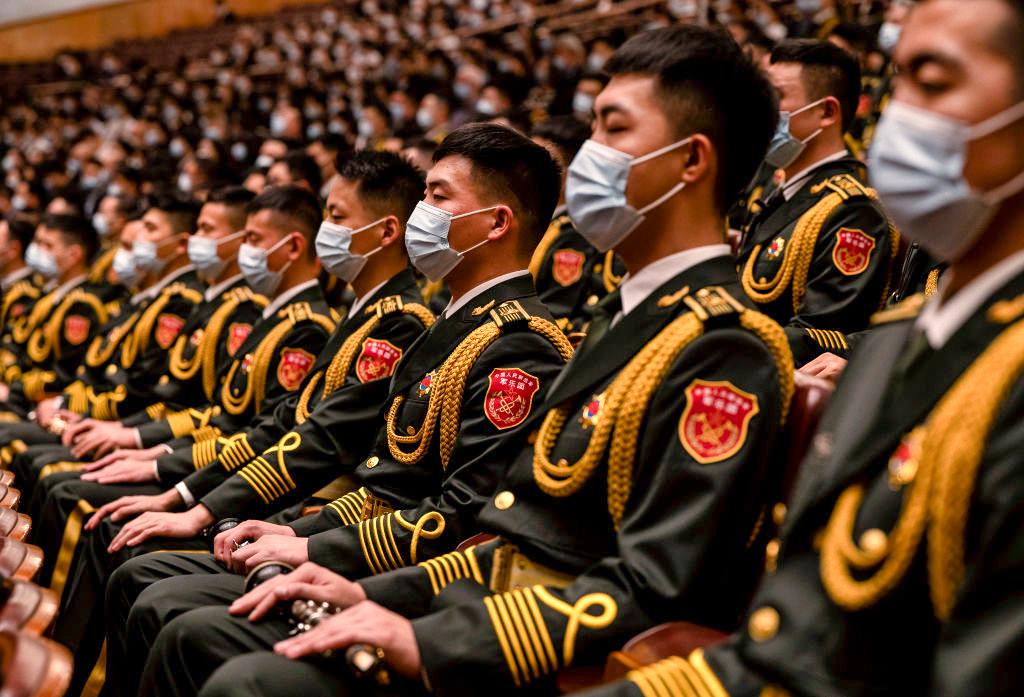
The essay admires the Organization Department’s role in selecting, training, assessing, promoting, and removing officials—a personnel system with no input from the governed. Officials are chosen, evaluated, and answerable only to the Party, never to the electorate.
Competence within that closed loop is possible; legitimacy is not, because legitimacy in a constitutional order derives from consent, not internal performance reviews.
By contrast, constitutional systems rest on officials who derive authority from the people and face removal through elections, impeachment, or judicial checks—external accountability, not internal to the bureaucracy.
Discipline and Anti-Corruption
The anti-corruption campaign is presented as Party “self-renewal.”
Unexamined is that a process run entirely inside the Party—with no independent judiciary, no enforceable due-process rights, and no clear line between rivals and the corrupt—serves as readily for purges as for clean governance. Under one-party rule, such campaigns have long doubled as tools to eliminate factional opponents.
A constitutional system separates these roles: independent courts, a free press, and a legislature that can check the executive. None of those constraints bind the CCP’s disciplinary apparatus. The Party polices itself, on its own terms, in secret proceedings (shuanggui/liuzhi), with no external body able to review the outcome.

Contemporary Challenges
The essay is almost entirely silent on the CCP’s real challenges, and the silence is revealing.
A genuine account would include the mass internment and cultural suppression of Uyghurs in Xinjiang; the dismantling of Hong Kong’s autonomy and independent judiciary under the National Security Law, in breach of the Sino-British Joint Declaration; the Great Firewall’s censorship of speech, press, and religion; the absence of independent unions or genuine elections; and a demographic crisis rooted in decades of coercive population control. None of this appears.
The economic “miracle” narrative also omits the terms of China’s reentry into the global economy. China’s 2001 accession to the World Trade Organization was premised on reciprocal market access and gradual liberalization.
Two decades later, the bargain looks lopsided: forced technology transfer, industrial subsidies and state-driven overcapacity, repeated intellectual-property theft, and a mercantilist posture that has produced structural imbalances with nearly every major trading partner. The growth story was substantially underwritten by Western capital and market access extended in good faith—and by commitments the Party did not keep.
Future Prospects
The article imagines future historians treating China as a model of prosperity without multi-party elections.
A more sober view notes that concentrating unchecked power in one hierarchy creates risks constitutional systems are designed to avoid: succession crises with no orderly transfer, policy reversals (zero-COVID, tech crackdowns, property seizures) imposed by fiat rather than legislated, and citizens left without legal recourse when the state errs.
Prospects for a system without elections, independent courts, or a free press rest entirely on the character of whoever holds power—the dependency constitutional government was built to end.
Concluding Thoughts
That asymmetry is the whole story.
A constitution that guarantees speech, press, religion, assembly, due process, and the right to remove one’s rulers by vote does not promise the same GDP growth curve Kuhn celebrates. It promises something the CCP system structurally cannot: that prosperity, when it comes, comes with the individual still free, and that if it falters, the people can change who governs without first asking the governing party’s permission.
So much for Kuhn’s “developmental miracle.”