A couple years ago, I was on a Zoom call with Allen Williams, one of the leading voices in regenerative agriculture, reviewing the soil test results from my ranch. He told me, “You need to plant annual summer grasses to bring up the microbial load in your soil.”
I paused and thought, “What’s the biggest of the annual summer grasses?” Corn, of course.
So I asked him, “Does corn have this same relationship with the soil?” He said yes, it did. The old varieties still do. But when we began breeding, selecting, and genetically modifying corn to thrive on synthetic nitrogen, phosphorus, herbicides, and bare-soil monocultures, we bred out the need for that microbial partnership. The plant stopped investing in its relationship with the soil because it no longer needed to rely on fungi and bacteria for nutrients. Everything it needed was being dumped on top.
That was my “aha” moment—not just about corn, but about us.
Every warm season grass has a sacred alliance with the soil. Beneath the surface, its roots weave into a living web of fungi known as mycorrhizae, tiny threads that trade nutrients between plant and soil, transforming dead minerals into life. These relationships stabilize the ground, store carbon, hold water, and feed the microbes that make soil truly alive. Traditional corn, such as the ancient varieties still grown by indigenous farmers, was once part of that system.


Maize co-evolved with people and soil, forming a three-way covenant of nourishment. The soil fed the corn, the corn fed the people, and the people fed the soil again through compost and care. But in modern agriculture, we broke that covenant.
At our farm in Bandera, Texas, we’re trying to rebuild that relationship. We grow Oaxacan green corn, an old indigenous variety that we grind into tortillas and chips for our restaurant after boiling it with lime, a process called nixtamalization. Ancient peoples discovered this process thousands of years ago, realizing that it made corn more digestible and nutrient-rich. We also grow an ancient multicolored popcorn variety that still has the deep mycorrhizal connections modern hybrids lost. Both of these corns maintain that old partnership among plant, soil, and human.
On our farm, these plants are fed not by synthetic fertilizers derived from petroleum but by the natural fertility that arises within a living system: livestock manure, microbial activity, compost, and the biology of the soil itself. It’s a partnership of reciprocity: We feed the soil so that the soil can feed us.
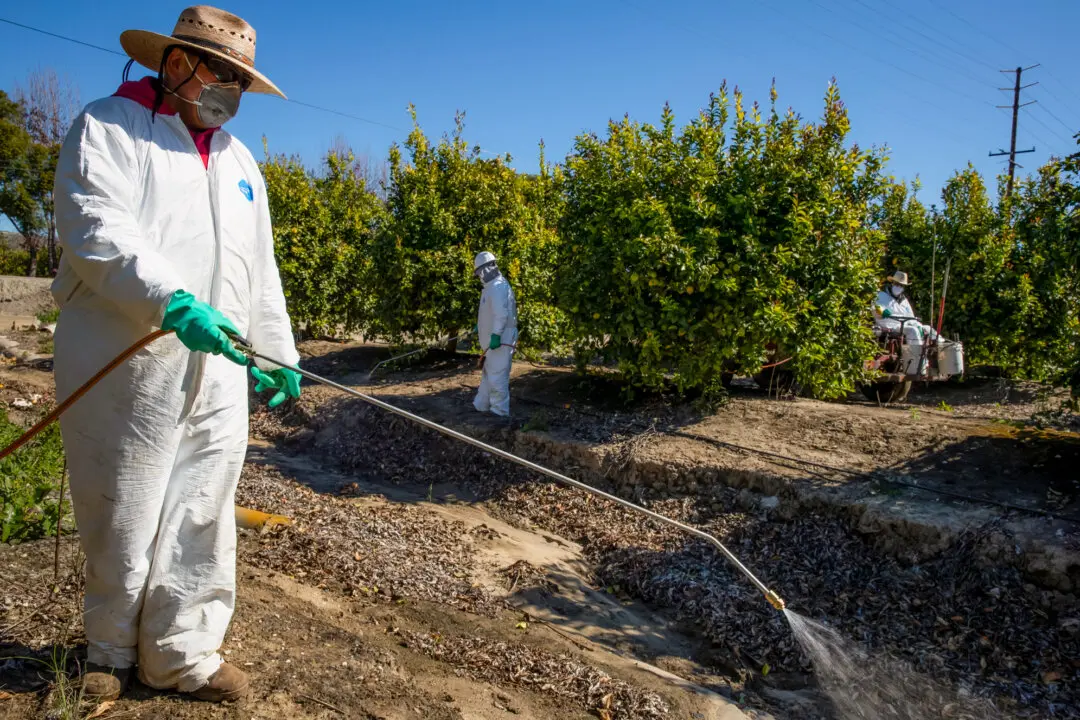
Modern corn has been bred to depend on chemicals instead of biology. We replaced the intelligence of the soil with synthetic fertilizer, so the plant stopped needing to reach for its fungal partners. Over time, we actually bred out the genetic expression that fosters deep microbial communication. Corn still grows tall, but it grows alone.
This shift mirrors what we’ve done in our broader culture. We’ve traded patience for speed, community for convenience, and stewardship for extraction. Just as the corn no longer invests in the soil, we’ve stopped investing in the foundations of our own nourishment, both physically and spiritually.
Plants don’t create minerals; they only absorb what the soil provides. When soil life dies, mineral uptake drops, and the food that grows there loses its nutrient density. So when you argue with your child about eating three bites of broccoli, consider that those florets may no longer contain the same minerals you ate as a child. They’re grown in soil treated like a sterile hydroponic medium instead of the living organism God designed it to be.
God’s design for the earth was perfect. The ground beneath us was created to be alive: self-healing, self-organizing, and full of mystery and wisdom. But like modern corn, we’ve strayed from that design. We’ve come to believe that we can pour on life instead of cultivate it from within. Corn is just a mirror of human behavior. We’ve chosen quicker and cheaper options, forgetting that real nourishment takes time, reciprocity, and faith.
I can already hear some readers saying, “But Mollie, your silly regenerative agriculture can’t feed the world.” And maybe it doesn’t have to. It only needs to feed our communities. Regenerative agriculture is not just sustainable; it’s resilient. It rebuilds the very systems that keep life functioning. And the truth is, the industrial model isn’t feeding the world either; it’s feeding a global supply chain. Many agricultural states in America still import up to 90 percent of their food, because the majority of what they grow—corn, soy, and cotton—doesn’t feed people. It feeds machines, animals, and industry.
This is not just an ecological issue. It’s a national security issue. We cannot claim to be self-reliant while depending on fertilizer from Ukraine, lentils from Africa, rice from China, and beef from Argentina. True independence begins in the soil beneath our feet. Each community needs to grow a diversity of crops that feeds that community. When we take care of our soil, we take care of our people.
When Williams told me to plant summer grasses, I realized that he wasn’t just giving me agronomic advice; he was giving me a life lesson. The soil teaches us about covenant, humility, and reciprocity. Corn may have forgotten how to invest in the soil, but we can remember. When we rebuild our relationship with the ground, we rebuild our relationship with creation itself. And when we let the soil live again, so do we.