Last night I spoke at a university in Texas. The president and his assistant put real heart into the evening, and I’m grateful. Our partnership with the university has grown over time; they’re a pickup site for our Community Supported Agriculture, and they’ve screened “Kiss the Ground” (2020) and “Common Ground” (2023), which my brother produced. It felt like community working the way it should: Students, faculty, and neighbors gathering around food, land, and honest conversation.
Before the reading and signing, I wandered downstairs to find something to drink. In the back corner of the food area stood a compact kiosk with two glowing Starbucks-branded boards. I didn’t study the menu; I already knew what I wanted. I ordered a venti iced green tea with no sweetener. My friend Marc ordered the same.
The young woman behind the counter smiled and said, almost cheerfully: “This should be interesting. I’ve never made tea before.”
I thought that I had misheard her. Tea? A teabag and hot water?
I told her no problem; I’d walk her through it.
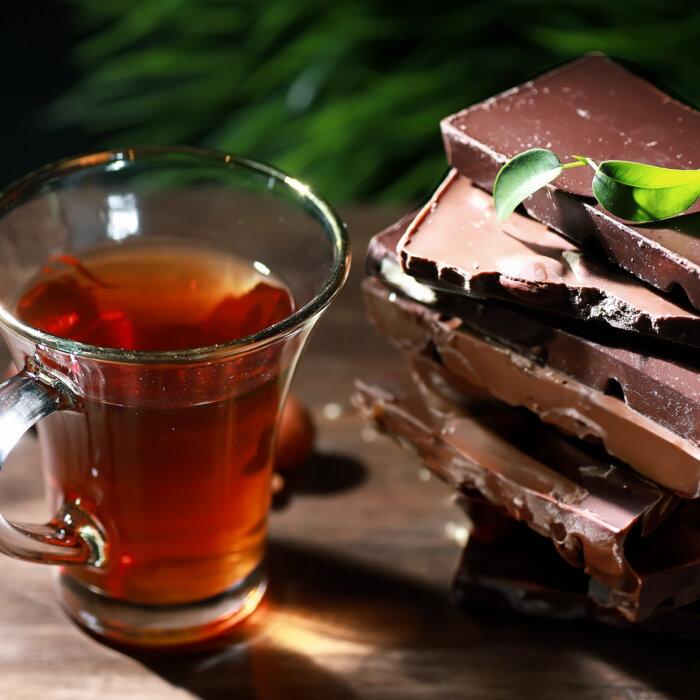
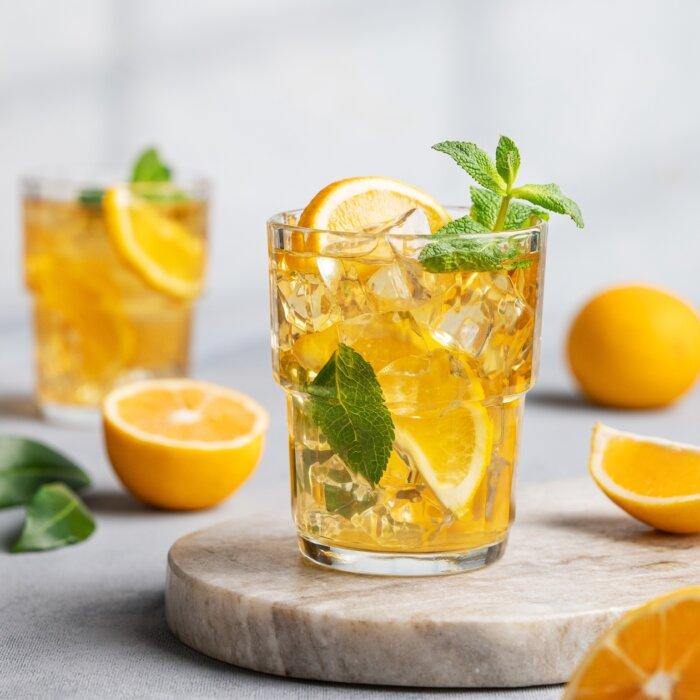
She asked a coworker where the teabags were. A finger pointed toward a rack on the back wall. She returned with a single bag. I suggested two per iced drink. She fetched more, then paused, unsure how to open the wrapper. A coworker leaned in and said, “You rip it; there’s another little bag inside.”
Next, she needed hot water. She looked around, confused.
“Where do we get the hot water?” she asked.
A third young woman walked over, introduced herself, and said she had some culinary experience and knew her way around a teabag. I smiled and told her that I had culinary training, too, inviting her to visit my restaurant. She showed them how to pull hot water from the espresso machine and suddenly the whole operation made sense.
They asked me three or four times if I wanted syrup. I assured them that I don’t drink sugar. Liquid sugar is empty calories, and I don’t need it.
I asked, mostly out of curiosity: “What about winter? Doesn’t anyone order tea during cold and flu season?”
“No,” the young woman said. “Just hot chocolate.”
I asked, “What’s the bestseller?”
She answered: “Frappuccinos. It’s all Frappuccinos.”
I laughed. “People like a little coffee with their sugar,” I said.
One of the girls added quietly: “My family has a lot of diabetes. I hear that’s not good.”
The first young woman eventually brought me the steaming pitcher and asked, with sweet sincerity, “Does it look cooked enough?” She filled the cup halfway with ice, poured the warm tea over it, and by the time it reached me the ice had vanished.
“How did I do?“ she said. ”I like feedback. I want to do things right.”
I told her, “You did great.” Then I asked how long she’d worked there. I expected a week.
“Just over a year,” she said. Her coworker added, “Me too.”
Let me be completely clear: This is not about shaming these lovely young women, the university, or Starbucks. They were kind, hardworking, and genuinely eager to learn. This is about a bigger question that settled into my mind and refused to leave: How have we become so disconnected from nature and from ourselves that young adults don’t know how to make tea from a teabag, let alone from a garden?
On our farm, we brew fresh iced tea every single day by harvesting mint, lemongrass, lemon verbena, olive leaf, and whatever else the season gives us. My children know how to make tea from a teabag and from the plants outside our kitchen door. To them, tea isn’t a mystery. It’s part of daily life.
And just a week ago, I went to a 4-H meeting with fresh herbs from the ranch and taught the kids how to make tea. I had no idea how timely that experience was. This moment at the university made me realize how grateful I am to be doing this kind of education: teaching young people how to grow something, harvest it, and turn it into nourishment. These simple, ordinary skills translate directly into health and wellness. They build confidence. They reestablish relationship with plants, with food, and with our own bodies.
But if a young woman in a cafe has never steeped a teabag, what else have we lost?
If two employees haven’t made tea in more than a year, that means that no one has been ordering tea—not even in winter, when a warm mug could help a sore throat. Instead, we’re ordering frozen sugar milkshakes and calling them coffee.
This isn’t an individual failing. It’s a cultural one.
We’ve unlearned the basics.
We’ve outsourced the simplest tasks to corporations.
We’ve confused convenience with care.
On the ranch, tea is one of our daily rituals. I love pu-erh from China, chai from India, herbal blends from our fields. Tea is grounding, comforting, medicinal. It’s one of life’s small joys. Yet somehow, many people now live without even the ability to make a simple cup.
When the default landscape is engineered around sweetness, syrups, and frozen drinks, what do we expect people to crave? Our bodies adapt to what we feed them—until they break. Diabetes, fatigue, inflammation, restless sleep, anxiety, brain fog: These are all symptoms of a culture that feeds sugar instead of skill and novelty instead of nourishment.
So what do we do practically, kindly, without shame?
• Reteach the basics. A simple sign: How to brew tea (hot or iced) in two minutes.
• Offer unsweetened defaults. Ask “Hot or iced?” instead of “What syrup?”
• Stock real options: lemon, sea salt, basic teas.
• Tell the truth gently: Sugar is not hydration.
• Celebrate competence: When someone learns a simple skill, acknowledge it.
Some will shrug and say, “It’s only tea.” But it’s never only tea. It’s a symbol of whether we’ve kept or lost the most basic threads of self-sufficiency. Knowing how to boil water and steep herbs is not just a kitchen skill; it’s a form of remembering who we are.
I drank my warm, ice-less iced tea gratefully and went upstairs for my talk. This morning, I’m still thinking about those young women: about their kindness, their effort, and the gap where a basic skill should have been.
This isn’t about blame.
It’s an invitation.
Let’s bring back the things that make us well.
Sometimes the most radical act in a sugar-soaked world is the simplest one.
Boil water. Add leaves. Take a breath and sip.