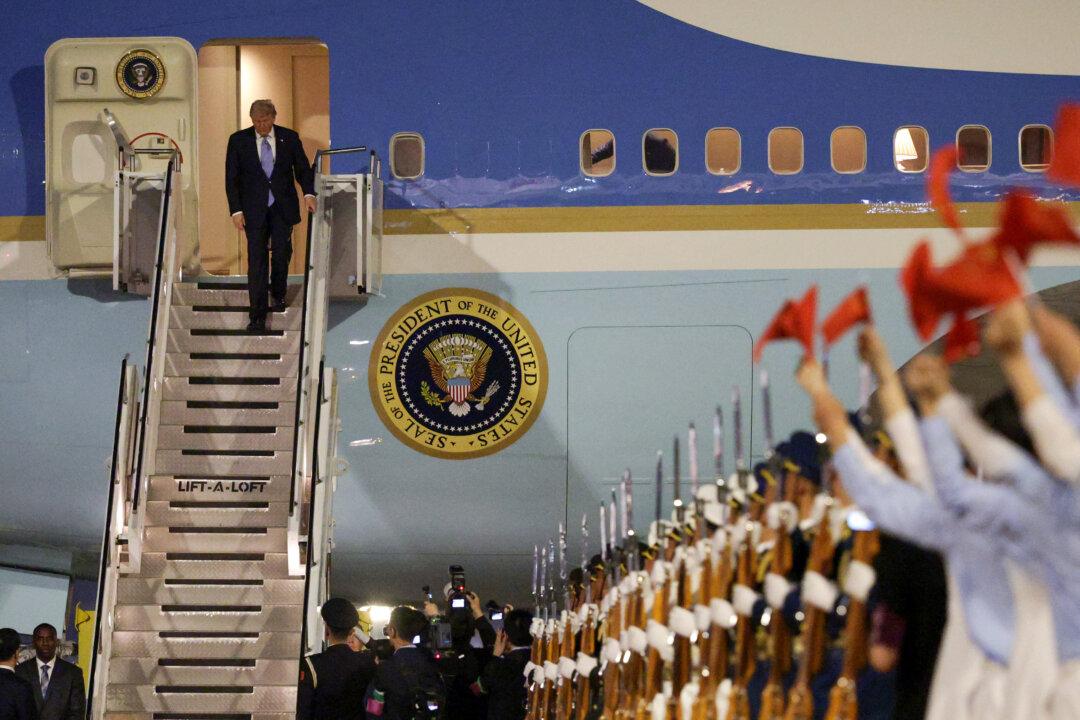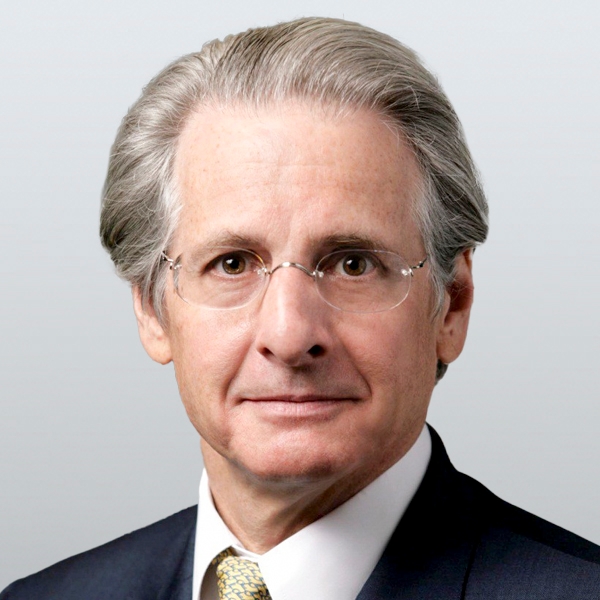
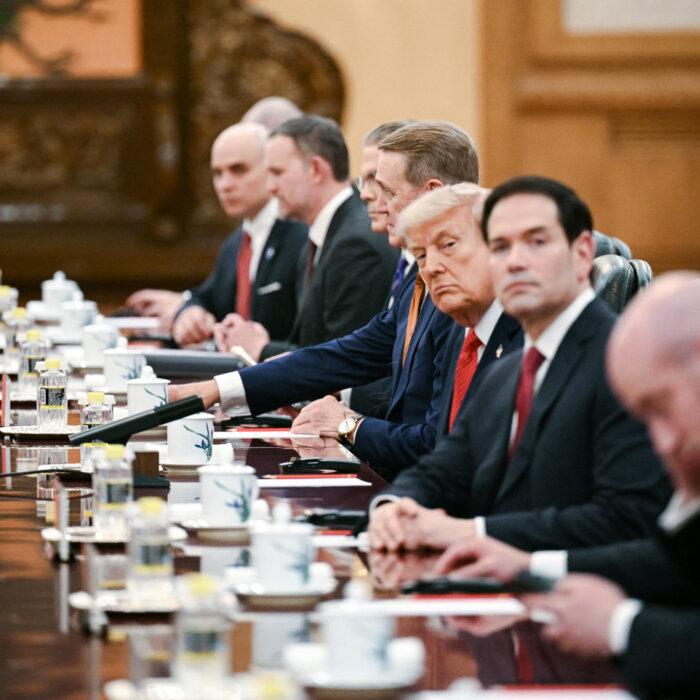
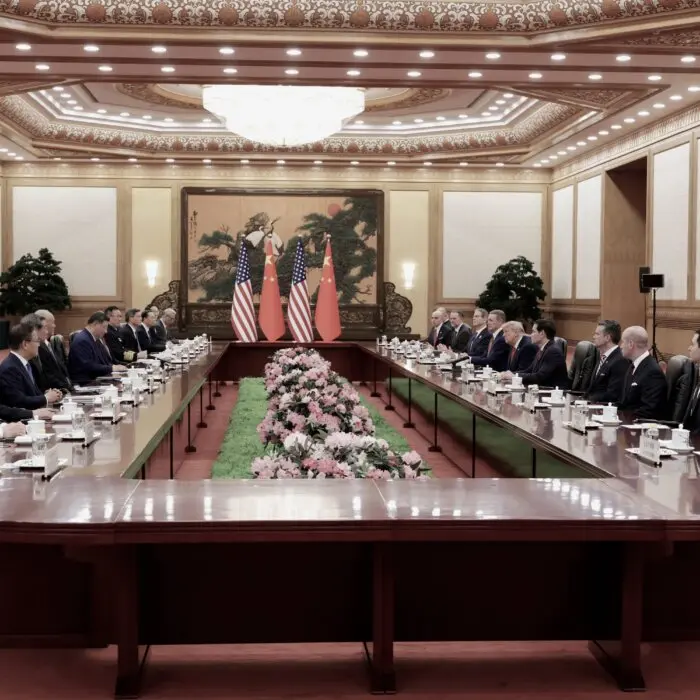
Both men seemed intent on avoiding difficult matters that need attention, most noticeably matters of cybersecurity, artificial intelligence (AI), export controls, and privacy. Hope persists that these important matters will get greater attention this coming September when Trump and Xi are scheduled to meet in Washington, but it is more hope than anything else.
Trump, on his way home, told the press on Air Force One that these subjects had come up, but the lack of any announcement suggests that he and Xi said little of substance and certainly reached no agreements.
U.S. Trade Representative Jamieson Greer was more pointed. After the summit, he told media outlets that AI, cybersecurity, export controls, and privacy were mooted, but in no way was agreement likely to emerge.
Because Nvidia chief executive Jensen Huang had joined Trump’s entourage at the last minute, hope rose that at least export controls, especially his company’s H200 chip, would have a significant place on the agenda, but from both Trump’s and Greer’s comments, it seems not.
Last December, for instance, Washington stopped just short of sanctioning China over what has been called the Salt Typhoon intrusions. These seem to have exposed almost every American’s phone data to Beijing-linked actors.
Washington has also indicated that China has successfully infiltrated critical infrastructure in the United States, including energy, water, and communications, including what is called Volt Typhoon’s surveillance of U.S. telecommunications.
Recently, Anthropic revealed that China has engaged in AI-enabled cyber espionage against a number of American institutions, while Washington has indicated that China has surveilled U.S. military activity.
Along with such public complaints from long before the summit, Trump’s admission during the meetings that this country has done much the same to China could have formed the basis for substantive discussions and perhaps a productive give-and-take, but none emerged. Nor, it seems, was much said about related privacy issues.
The administration has paid less attention to privacy matters than Congress. There and among citizen groups, efforts at bipartisan restraints on China’s abilities are evident. The main concern is with software embedded in Chinese-made products that tracks all sorts of information about U.S. citizens and residents.
Sens. Elissa Slotkin (D-Mich) and Bernie Moreno (R-Ohio) have advanced the Connected Vehicle Security Act to guard against Russian and Chinese software embedded mostly in automobiles and auto parts that could track the movements of Americans.