Someone sent me a text message this week that said, “You’re going to have a field day with this.”
A few moments later came the follow up.
“What’s interesting is that the vegans aren’t attacking Kevin Bacon.”
I knew exactly what she meant.
Years ago, when I transitioned my restaurants from strictly vegan to regenerative agriculture, many of the same people who claimed to care deeply about animals were furious. It didn’t matter how much time I spent discussing soil health, humane treatment, regenerative grazing, or ecological outcomes. To some people, I had become a heretic.
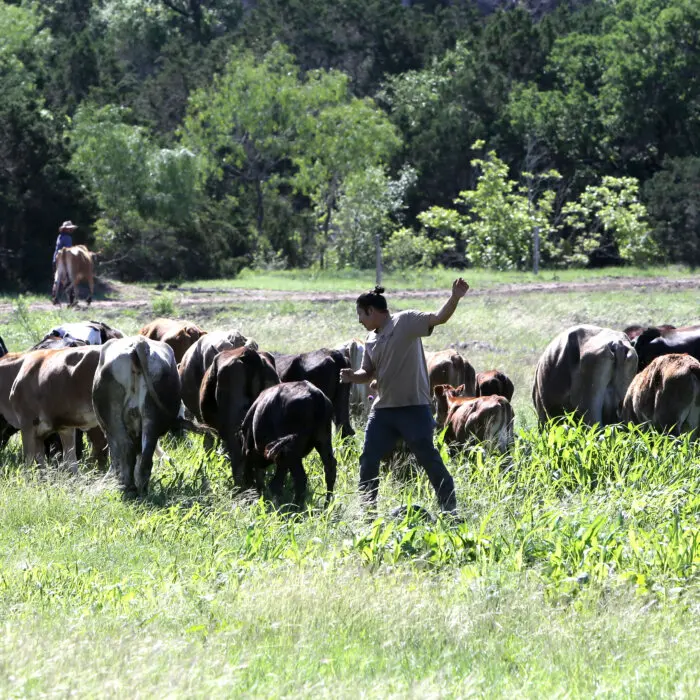
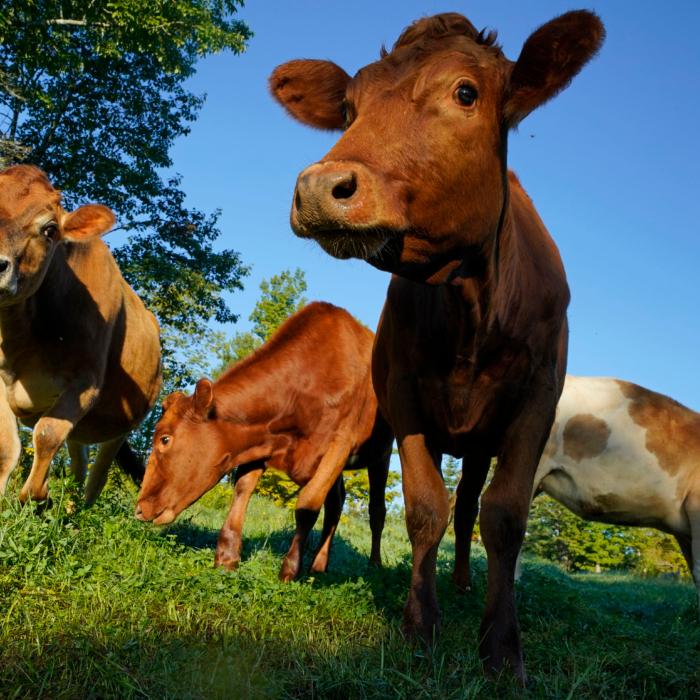
Apparently, if a former vegan chef adds dairy or meat to the menu after years of farming, she has betrayed the cause. But if a celebrity who still eats meat encourages everyone else to eat less of it one day a week, he’s a hero.
The article attached explained why.
Actor Kevin Bacon had temporarily changed his name to “Kevin Bean” on Wednesdays as part of a campaign encouraging people to replace meat with beans for the sake of animals and the environment.
The campaign included videos of Bacon encouraging people to skip meat on Wednesdays while wearing a jacket and pants covered in actual beans.
I admit I laughed.
Not because I thought it was ridiculous, but because I recognized something familiar. Years ago, I might have applauded the campaign without a second thought.
As I read further, I learned that Bacon stopped eating pork after raising pigs on his farm. More recently, he and his wife added miniature cows to their property. If the pattern continues, one wonders what will eventually remain on the menu.
Perhaps the funniest part of this whole story is that, over the years, I have personally known at least seven different people who named a pig Kevin Bacon. Farmers have been making that joke for decades, and nobody named their pig Kevin Bacon because they hated pigs. They named their pig Kevin Bacon because they loved pigs.
The joke only works because affection and agriculture have always existed side by side. For most of human history, loving animals and relying on them were not considered contradictions.
The more I thought about Kevin Bacon’s campaign, however, the less interested I became in Kevin Bacon himself. What interested me was the culture that celebrates this conversation.
I know that culture because I came from it.
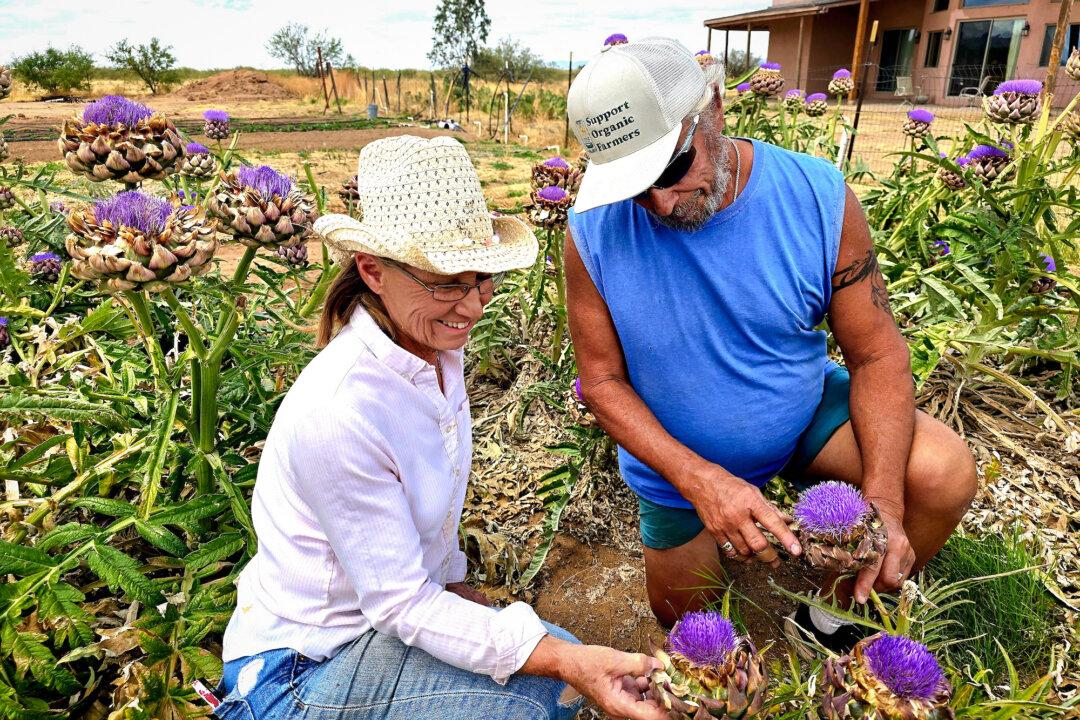
I was raised in a vegan household. By the time I became a chef and restaurant owner, veganism wasn’t simply a diet. It was part of how I understood the world. It shaped the food I ate, the restaurants I built, and many of my assumptions about animals, agriculture, and compassion.
One Halloween morning, back when I was still operating from that worldview, one of our cows, Hilda, was struggling to give birth.
I ran to get my husband. He came outside in his pajamas. Together we found Hilda exhausted and unable to deliver the calf on her own.
My husband grabbed hold of the calf’s hooves and pulled gently with each contraction. Eventually the calf slipped free.
But he wasn’t breathing.
Without hesitation, my husband took off his shirt and began rubbing the calf vigorously. He cleared mucus from its nose and mouth. He dried its body and rubbed its chest as if willing it to live.
“Come on,” he kept saying. “Come on.”
And it did.
That bull calf became known as Ghost, or Fantasma.
For the next two and a half years, I watched my husband care for that animal. There were feedings, scratches behind the ears, health checks, and countless quiet moments that never make it into social media posts about farming.
Then one day we harvested him.
I remember that day, too.
To many people, those two memories seem incompatible. How could someone fight so hard to save an animal and later participate in its harvest?
To me, those two memories are perfectly consistent. My husband did not save Fantasma because he planned to keep him alive forever. He saved him because his life mattered. He cared for him because his life mattered. And when the time came, he helped provide food for his family and community because that life mattered.
That is not cruelty. That is stewardship.
One of the things that makes me feel most secure about my husband is knowing that he can provide for our family no matter what happens. He can help a cow give birth, put down a suffering animal, hunt, process a hog, and fill a freezer with food for our family and our community. Modern culture often mistakes competence for brutality. I see something different. I see responsibility.
Many people assume that getting closer to animals naturally leads a person toward veganism. My experience was exactly the opposite.
When I started farming, I believed I could create a vegan farm. Not a vegan diet. A vegan farm. I imagined a place where animals could be rescued, protected, and allowed to live out their lives free from harm.
Then reality arrived.
What happens when the rescued cow is already bred and gives birth to a bull calf? What happens when that bull calf grows up? What happens when every rooster lives? What happens when every drake lives? What happens when there are more males than females? What happens when an animal is suffering? What happens when there are more mouths than the land can support?
I discovered that a vegan farm is not a farm at all. It is a fantasy.
Not because the people who believe in it are bad people. I believed in it myself. It is a fantasy because life does not stand still. Life reproduces, multiplies, competes, and dies. Every year on a farm requires decisions. Every season requires stewardship.
The animals themselves dismantled my ideology. I was not converted by a book or a political movement. I was converted by calves, pigs, chickens, droughts, births, deaths, and seasons.
I cannot fit all of the lessons farming taught me into a single newspaper column. In many ways, that journey became the thesis of my book, “Debunked by Nature.” Again and again, I discovered that ideas which sounded beautiful in theory often fell apart when confronted by the realities of land, animals, seasons, reproduction, and ecology. Nature was not interested in my ideology. Nature was interested in reality.
Kevin Bacon’s farm seems to have taught him that animals are too special to eat.
My farm taught me something different.
It taught me that life feeds on life.
Growing up, I was taught that veganism represented a food system with less death, less suffering, and greater compassion. What farming eventually taught me was that I had confused hidden costs with absent costs.
Every food system has consequences. Harvesting vegetables kills field animals. Tilling disturbs ecosystems. Pest control happens whether we acknowledge it or not.
I also learned something most consumers never realize. Much of the fertility that powers organic agriculture comes from animal byproducts such as blood meal, bone meal, feather meal, and manure. Much of the nitrogen used to grow organic crops originates from animals raised in conventional agricultural systems, many of which are neither regenerative nor humane.
In other words, many people imagine they are opting out of animal agriculture while continuing to depend on it indirectly. The death is simply hidden from view.
That realization changed me, not because it made me care less about animals, but because it made me care more about truth.
To be clear, I am not particularly interested in judging Kevin Bacon. I understand loving animals, becoming attached, and looking into the eyes of a pig or a cow and feeling genuine affection.
What concerns me is the culture that celebrates this conversation while avoiding the deeper one. The culture that raised me taught me that we could separate ourselves from death. That food came from grocery stores. That agriculture was optional. That nature was something we visited rather than something we participated in.
We do this in other parts of life as well. We hide aging. We hide dying. We hide slaughterhouses. We hide the realities of food production and the consequences of our consumption. We build systems designed to keep us comfortable while shielding us from the realities that make that comfort possible.
The result is not compassion. The result is ignorance.
Ironically, my own journey did not end with me becoming a big meat eater. I still eat very little meat, and I do not eat pork. The lesson farming taught me was not that everyone should eat more meat. The lesson was that every eater should understand the system that feeds them.
Growing up, I believed veganism represented an escape from death. What farming eventually taught me was that I had confused hidden costs with absent costs. I thought I was escaping death.
What I was actually escaping was visibility.
The lesson of farming was not that death disappeared. The lesson was that death had been hidden. Life and death are happening all around us whether we acknowledge them or not, and a healthy culture teaches gratitude for that reality rather than encouraging us to look away from it.
The calf struggling to breathe on a Halloween morning taught me that. The harvest two and a half years later taught me that. The land teaches it every season.
Life is precious precisely because it is finite.
Nature never promised us innocence.
It asked us to be honest.