They originally received permission to build the treehouse. Then county leadership changed, and with it came a different interpretation of the same rules. They have spent months trying to find a way to comply, but every solution seems to create another obstacle.
Their treehouse is roughly 700 square feet, so the county says it cannot be the primary residence. They proposed building a larger home for Bruno’s father and making the treehouse the accessory dwelling. The county responded that they could not build the accessory dwelling before the primary residence because some people never finish the larger house.
Bruno keeps explaining they are trying to build the larger house right now.
So they paid thousands of dollars to subdivide the property into two parcels. Even then, they still could not receive a certificate of occupancy for the treehouse until the larger home was completed. After that, they will have to spend thousands more to merge the parcels back together so the treehouse can officially become the accessory dwelling it was always intended to be.
Until then, a beautiful treehouse sits empty while Bruno and his wife live in a moldy RV. The county has also shut off their water and electricity because they are considered out of compliance.
As I watched them, I realized I wasn’t watching someone else’s story. I was watching my own.
For years, I told myself this was simply California. California had become too expensive, too regulated, and too bureaucratic. I believed moving to Texas meant leaving that behind. I no longer think that’s true. The bureaucracy has different accents depending on the state, but increasingly it speaks the same language.
Watching Bruno’s story unfold, I couldn’t help but wonder when we stopped looking at the human beings standing in front of us. On paper, building codes are supposed to promote health and safety. Those are worthy goals.
But if we become so committed to the process that we can no longer recognize what is actually happening in front of us, we’ve lost something important. Rules require judgment. They require remembering that paperwork is supposed to serve people, not the other way around.
My own story began during the COVID-19 pandemic when a family with five children needed somewhere to live. School had gone remote. They needed stability, internet, and a chance to get back on their feet. We had room on our ranch, so we connected their RV to electricity and septic. We helped the father find a job. We helped the mother find work babysitting. Their children did school in a converted garage. It felt like exactly what a farm community ought to do when neighbors are in trouble.
That decision brought the county to my gate.
The RV was the original violation. Once inspectors arrived, they started looking at everything else. Eventually, I received two separate notices listing 28 violations. I was threatened with fines of up to $1,000 per day, and the estimated cost to become compliant was well over half a million dollars.
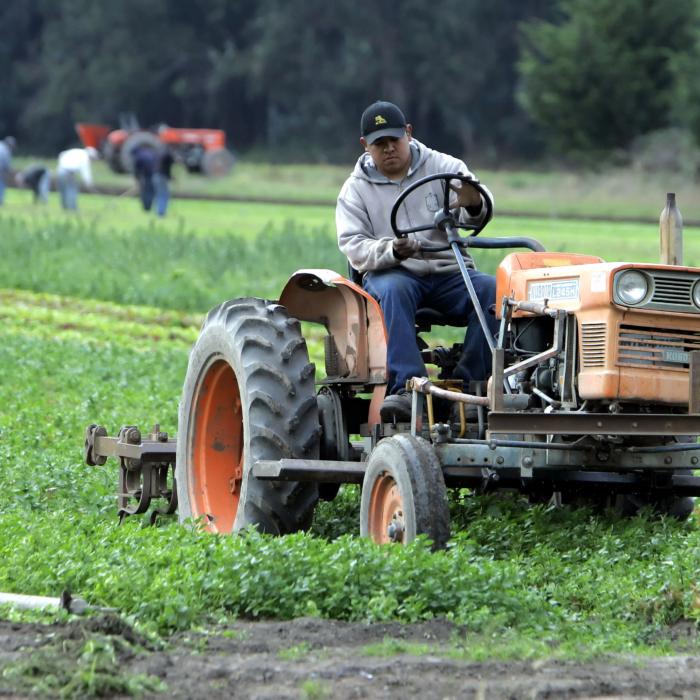
I tried to navigate the rules while running a real farm in the real world. The physical world doesn’t wait for permits. Crops keep growing. Tomatoes keep ripening. Animals still need shade. Fire season still comes. Businesses have to adapt, or they die.
Before I bought the ranch, I called the county and asked whether I could build additional homes on the property. I was told I could. After I closed, the answers changed. The county pointed to the water district. The water district pointed to the fire department. The fire department required 80,000 gallons of fire-water storage before approving additional homes. So I built it.
When farmers markets disappeared, and restaurant sales collapsed almost overnight, we had to pivot to delivering vegetable boxes directly to families. We needed a walk-in cooler immediately, so we converted a permitted shed into one. We needed somewhere to ripen tomatoes and other produce, so we set up racks, fans, and an air conditioner in another shed. We built an outdoor sink to wash vegetables because that’s what vegetable farms do. None of those projects existed when I bought the ranch. They existed because our business changed and we adapted.
The violations kept coming. The walk-in cooler was a violation. The ripening shed was a violation because it contained fans and an air conditioner. The outdoor vegetable wash station was a violation because the water irrigated nearby trees instead of going into the leach field.
Shade structures over compost needed engineering. Shade structures for livestock had to come down until they were engineered, even while animal welfare standards required us to provide shade. Costco pergolas became violations because of where they sat or because two were placed together over our vegetable packing area. Worker housing became a violation. The greenhouse height became a violation. Even our hop trellis became a violation until I ultimately prevailed under California’s Right to Farm protections.
One of the strangest examples involved the required fire water storage. I built a large concrete pond with the required volume, connected it to the irrigation system, and installed a fire hydrant. I’ll sheepishly admit something. I absolutely intended for my children to swim in it, too. Why shouldn’t something built to protect my ranch also be beautiful enough for my family to enjoy? It still functioned exactly as required for fire suppression. But because it looked like a swimming pool, the county decided it was one.
Then, my barn burned down. Replacing it should have been straightforward because it was a pre-engineered metal building. Instead, I spent roughly $70,000 on engineering, soil studies, and permitting. The county process took so long that my soil report expired, and I was required to purchase another one. I remember wondering how the geology of a flat field could possibly change while paperwork sat on someone’s desk.
Eventually, I left California. Not because I stopped loving it. I still miss that ranch. I trust God’s plan completely, and I believe He led us to Texas for a reason. But faith doesn’t require pretending there wasn’t loss.
What has surprised me is realizing this is no longer just a California story. My father eventually left California after years of regulatory battles, including repeated issues with his farm store and demands that large portions of his working farm be made ADA accessible for tours. Today, even in rural Idaho, he finds himself dealing with setbacks over where he placed a sauna.
Here in rural Texas, I recently met with an engineer about expanding our septic system. I pointed out that our existing leach field is only partially used because our restaurant is busy primarily on weekends. I thought actual data would matter. It didn’t. The formula mattered. Not measured use. Not real life. The formula.
That is what worries me most. We are creating a country where adapting has become suspicious. Farmers, ranchers, builders, and small business owners live in the physical world. We cannot pause harvest while paperwork catches up. We cannot ask vegetables to stop ripening because an inspection has been delayed.
I have always pushed the boundaries of what is possible. Entrepreneurs solve problems. Farmers adapt. Builders create. That willingness to improvise is one of the reasons this country became prosperous in the first place.
The greatest cost of bureaucracy isn’t the permit fees or the engineering bills. It’s the number of people who eventually stop trying to build anything at all. It is the young couple who never builds the treehouse, the family who never builds a home for aging parents on their own land, the farmer who never opens the farm store, and the entrepreneur who decides another idea simply isn’t worth the fight.
Civilizations are built by people willing to create in the physical world. If we continue to make it harder for ordinary Americans to build, adapt, improve, and steward their own property, we shouldn’t be surprised when fewer people choose to do so. Somewhere along the way, we’ve lost something human. My hope is that we find it again before we lose the builders too.