The world’s two largest economies are once again battling for dominance.
The Trump administration, however, has made clear it will not adjust its policies based on stock fluctuations, insisting negotiations will proceed only on terms that serve America’s economic interests.
Round 1 (February–April)
Trump opened his second term with aggressive tariffs, imposing a 10 percent duty on all Chinese imports in February, citing trade deficits and fentanyl concerns. By early April, he escalated further, announcing sweeping reciprocal tariffs that sent rates on Chinese goods soaring to 145 percent, effectively an embargo.Beijing countered with 125 percent tariffs on U.S. exports, targeting agricultural machinery, coal, and liquefied natural gas, while also launching an antitrust probe into Google, signaling its readiness to use regulatory power as a weapon.

Round 2 (May)
After months of bruising exchanges, both sides met in Geneva, Switzerland. On May 12, the White House announced a “historic trade win”: tariffs would be cut by 115 percent, leaving a 10 percent baseline during a 90-day truce. The effective U.S. tariff on Chinese goods fell from 145 percent to 30 percent, while China’s rate on U.S. goods dropped from 125 percent to 10 percent.In August, Trump approved Nvidia’s H20 chip sales to China in exchange for a 15 percent revenue cut. At around the same time, Washington expanded export restrictions, blacklisting thousands of Chinese companies.
Round 3 (Late September)
On Sept. 19, Trump and Xi spoke by phone, and Trump said they agreed to meet at the APEC summit in South Korea in October. Beijing has yet to confirm whether Xi will attend.Round 4 (Oct. 9)
Beijing retaliated by announcing sweeping export controls on rare earth elements, effective Dec. 1. The measures expanded licensing for 12 of the 17 rare earth metals and restricted the export of refining equipment and related technologies. Foreign companies would be required to obtain licenses for any product containing more than 0.1 percent Chinese rare earth content, with all military-related exports outright banned.Round 5 (Oct. 10)
Trump hit back within hours on Truth Social, announcing an additional 100 percent tariff on Chinese goods, effective Nov. 1, “over and above any Tariff that they are currently paying.” He also threatened export controls on “any and all critical software.”In the same post, he called the Chinese measures an “extraordinarily aggressive position on Trade” and “a moral disgrace in dealing with other Nations.”
Round 6 (Oct. 10)
Both nations quickly opened a new front at sea. China imposed “special port fees” on U.S.-built or operated ships, effective Oct. 14.Round 7 (Oct. 12–13)
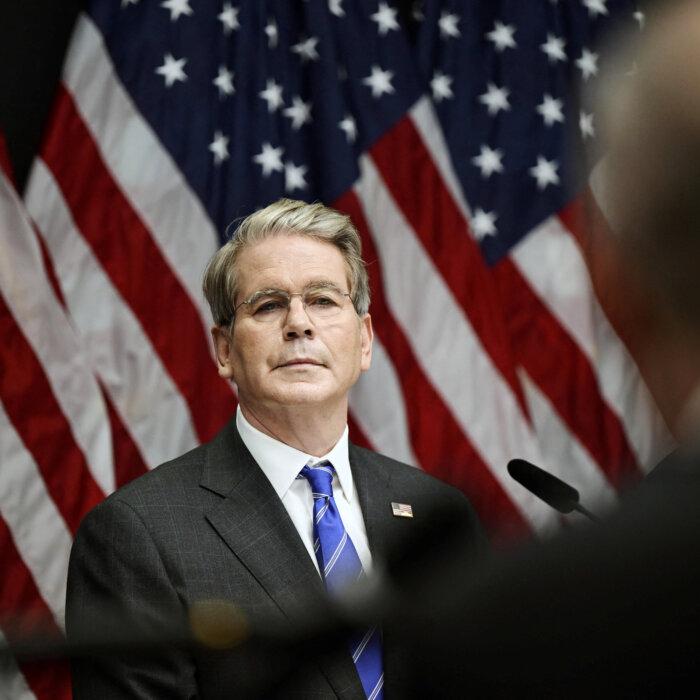
Verbal Sparring. As tensions escalated, Beijing defended its rare earth export controls as “legitimate” under international law, accusing Washington of having double standards and “abusing” export controls. A statement from China’s Commerce Ministry declared, “China’s position on the trade war is consistent: we do not want it, but we are not afraid of it.”U.S. Treasury Secretary Scott Bessent fired back, calling China’s actions provocative and warning, “They have pointed a bazooka at the supply chains and the industrial base of the entire free world.”
Round 8
Bessent confirmed that U.S.–China trade talks were still alive.Markets rebounded on hopes that the worst was over.
Trump and Xi are expected to meet at the APEC summit this week, and both have a habit of escalating tensions before negotiations, only to pull back at the last minute. The question now is whether they’ll do so again. It’s no longer a boxing match but a game of chicken, and whoever blinks first loses.