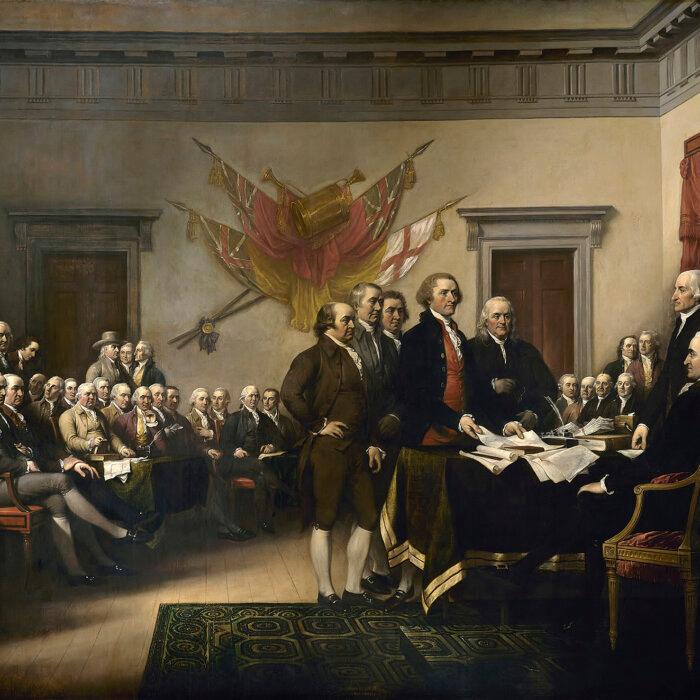
The first week of July 1776 was when argument became law. On July 1, the Continental Congress resumed debate on Richard Henry Lee’s resolution for independence. Armed with fresh instructions from colonies that had steadily moved toward separation throughout June, the Continental Congress was finally ready to vote.
On July 2, Congress adopted the independence portion of Lee’s resolution. John Adams believed that date, rather than July 4, would be the one forever celebrated. In strictly constitutional terms, he had a point: July 2 was the day Congress formally voted that the colonies were “free and independent states.” July 4 provided the language, but July 2 provided the decision.
What followed was not a ceremonial flourish but hard editorial labor. Congress spent July 3 and much of July 4 revising Jefferson’s draft, cutting passages, softening some accusations, and refining the structure of the case it intended to present to the world. On the afternoon of July 4, the Declaration of Independence was adopted. It was printed and distributed the same day.
This mattered not only because it announced separation but also because it transformed a vote into a public justification. The colonies were no longer merely acting apart from Britain. They were explaining, in universal and political terms, why they had done so. The Revolution acquired a text equal to its ambition.
The significance of July 1776 is clearer when set against July 1775. One year earlier, the Continental Congress had adopted the Olive Branch Petition. The petition was a final plea for reconciliation with George III. It asked the Crown to intervene to halt imperial coercion while preserving the constitutional relationship between Britain and the colonies.

The king’s refusal to receive the petition, followed by his treatment of the colonies as rebels, convinced many Americans that the path of petition had failed, and that independence was the only realistic course.
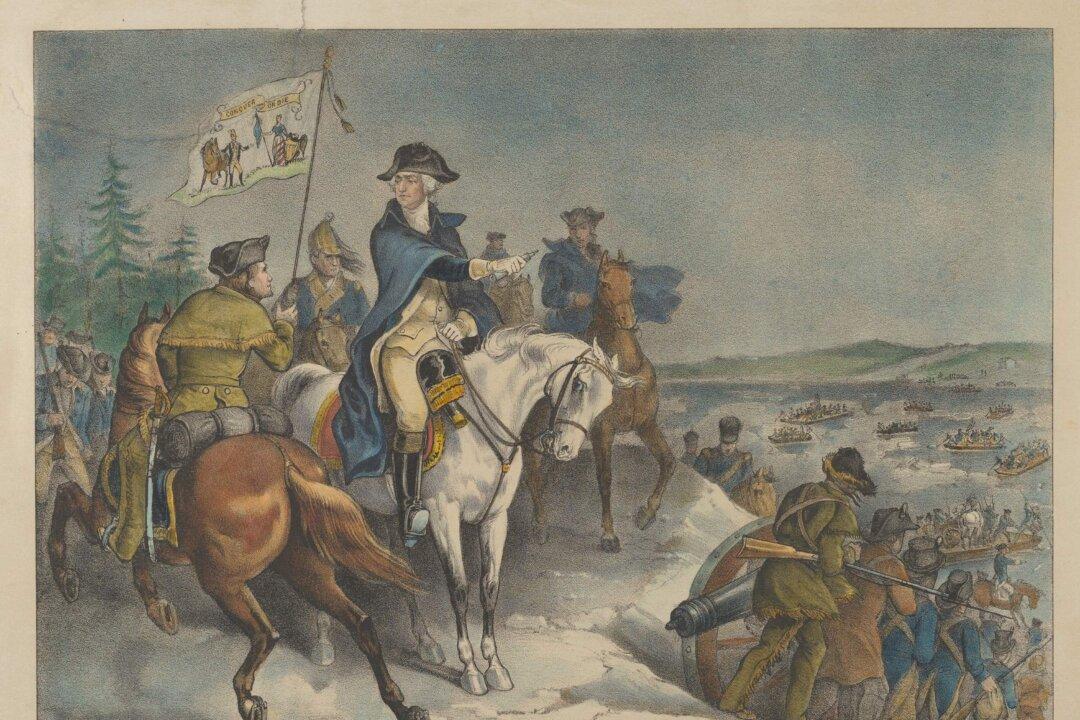
Militarily, however, the week was shadowed by danger. Even as Congress drafted a founding document in Philadelphia, the British were gathering offshore New York. The first ships of the British fleet had appeared off Staten Island at the end of June, and the concentration of naval forces in Lower New York Bay made it clear that the next major test of arms was imminent.
Washington was preparing to defend the city, but he did so knowing that British command of the sea gave the enemy enormous advantages in mobility and surprise.
Economically, the Declaration marked an escalation of risk as much as a statement of principle. The colonies had already opened their ports and moved toward foreign commerce. Still, formal independence made it clear that all future trade, credit, and diplomacy would proceed outside the protection of the British imperial system.
The first week of July, therefore, stands as a hinge in every sense: legal, political, military, and financial. By the time it ended, the Americans had ceased to be a rebellion seeking redress. They had declared themselves a nation at war.