Well, President Donald Trump did it. He scheduled a news conference on the science of autism, what we know and what we do not, and handled it masterfully. He is profoundly aware that as a parent and as the president of the United States, he can make points that his own science advisers cannot make for reasons political, sociological, and scientific.
However, Trump knows that expecting mothers and families still have to make decisions and that those decisions could affect the health and well-being of their children for the rest of their lives. Nothing is more important. Meanwhile, autism is an epidemic. Something is causing this.
There is no such thing as a genetic epidemic. Nor is this traceable to changed definitions of the term, else we would see a growing distribution among adults, too, which we do not. Food and Drug Administration head Marty Makary, normally very cautious and careful in his statements, said the straightforward thing that no one else has said as clearly: Autism is preventable.
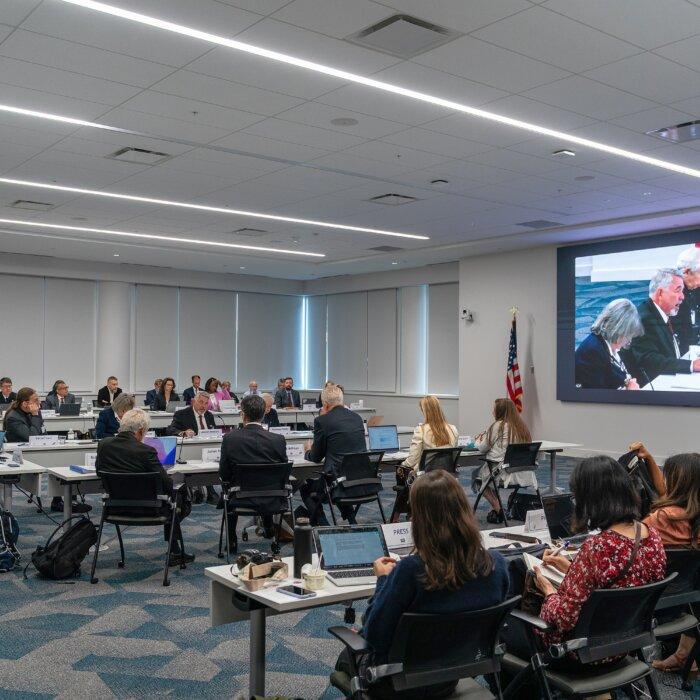
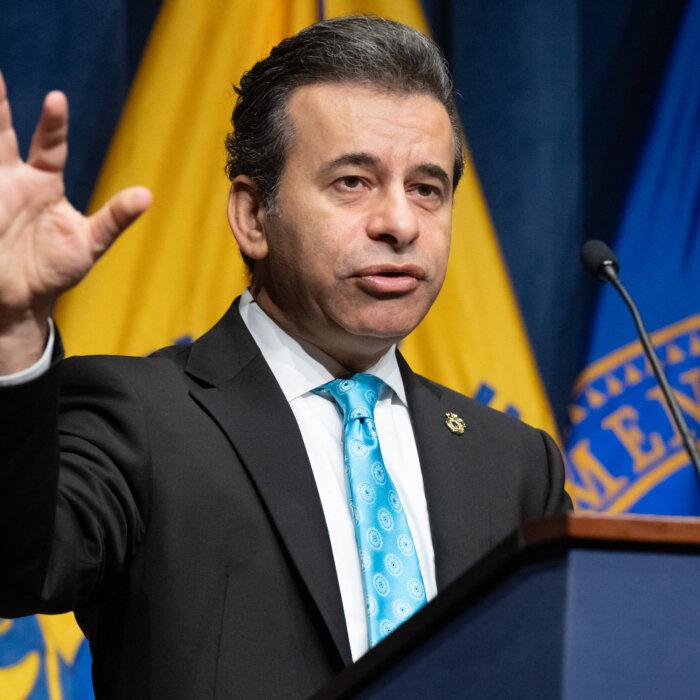
Although Health Secretary Robert F. Kennedy Jr., National Institutes of Health Director Jay Bhattacharya, and Centers for Medicare and Medicaid Services Administrator Mehmet Oz were there and speaking, it was Trump who bravely took the burden upon himself to say what vast numbers of parents and doctors suspect and know but that has heretofore occupied the realm of forbidden thought. He laid out two main culprits: Tylenol for birthing mothers and infants, and the packed vaccine schedule that hits tiny babies with a cocktail of shots that have never been studied in their combined effects.
Trump was extremely clear. Don’t take Tylenol. And the vaccination schedule should be changed so that each shot is a separate vaccine spaced out over years. Further, some shots, including the one for hepatitis B, should not be taken before age 12, if they are taken at all. This would mean no more three-in-one shot for measles, mumps, and rubella, much less a shot that adds chicken pox to the soup. It would mean one shot for measles, one for mumps, one for rubella, and so on.
The products do not currently exist in that form. The whole trajectory has been to batch them up. As this has happened, we have seen an explosion in autism cases. It is not a stretch at all to assume a connection. As Trump noted, so many U.S. mothers—more than half—report dramatic and immediate behavioral and cognitive changes in their children following a vaccine.
These people have been gaslighted for 40 years. They have been called all sorts of terrible names. The scientists who have taken up their case have been shut out of academia, professional societies, and journals. They have been declared nonpersons. But they have never relented. Trump has personally agreed with them for 20 years, a dating of his own. He and Kennedy have long had private discussions about it.
The entire field is a landmine filled with dangers both cultural and industrial. At some point, Trump realized that if anyone was going to break the logjam on this topic, it would need to be him. So he did it, and went much further than anyone—I mean anyone!—expected.
He noted the crazy additions to the schedule since 1980. These shots have been added since then: hepatitis B, Haemophilus influenzae type B, pneumococcal conjugate vaccine, rotavirus, hepatitis A, human papillomavirus, meningococcal ACWY, meningococcal B, and COVID-19. This takes the doses from 12 to 35 and the diseases from seven to 15. This is the gold rush kicked off by the liability shield put in place in 1986.
In the news conference, Trump referred to “certain groups that don’t take vaccines or pills and have no autism.” He then turned to Kennedy, who said quietly that some studies have concerned the Amish.
“Yes, the Amish,” Trump said. “They have essentially no autism.”
Watching this in real time was something of a mind-blowing experience. These are all matters discussed in small groups and organizations of parents of autistic children. They have fought the manufacturers, but with almost no success because of all the legal protections surrounding the companies.
From a broad perspective, the goal of vaccines is presumably to make us healthier. The opposite has happened. And that has given rise to a serious question about the complexities of human immunity. It’s fine to target a disease with an immunity inducement. We’ve been doing that for hundreds of years, with glorious successes surrounding smallpox in particular. But that success has also given rise to a reckless arrogance that imagines that the whole of the immune system could be replaced by laboratory gaming to outsmart the entire microbial kingdom.
The industry has become so large and powerful that it clearly exercises vast power over academia, scholarly publishing, government, and media through the power of advertising. The reach and influence of the vaccination industry became so vast that in March 2020 it had enough pull to push 195 governments of the world to shut down economic activity until an antidote for COVID-19 could be produced and distributed.
The problem should have been obvious to even a casual reader of the older literature. Immunity induction via a shot can have a sterilizing effect for stable pathogens such as smallpox and measles.
It is a different matter for respiratory viruses that are forever mutating and adapting and also possess a zoonotic reservoir. If any mammal can carry the new strain, vaccinating is going to be like a game of Whac-A-Mole that never ends. Meanwhile, the vaccination itself can rewire the immune system to resist a deprecated strain while opening itself up to new vulnerabilities from unexpected places.
All of this could be known in advance, and was known. They went ahead anyway. Then there is the problem of a new technology called modified messenger RNA delivered through nanoparticles that control neither dosing nor distribution. These shots have been associated with what many experts say is unprecedented injury and death, and yet the liability shields have prevented any litigation to collect damages.
When you look at this situation, it seems rather obvious that a time of truth-telling and accountability had to come one way or another. Trump remains very proud of Operation Warp Speed but deeply incredulous about the rest of the childhood schedule. His solution is in four points: 1) push hepatitis B to age 12; 2) vaccinate against one disease at a time; 3) schedule one shot per visit; and 4) include no mercury in shots. Toby Rogers, the leading scholar of vaccines and autism, said these steps would end the epidemic.
Let me end on a personal note, if I may. I have been writing on pandemic planning for 20 years. In all that time, I failed to see, much less understand, the role of the pharmaceutical industry as the hidden hand behind the scenes. When the COVID-19 shots were released, I never believed that they would work in any normal sense in which we use this term, but I had no awareness of the dangers to health. I had never heard the term “anti-vaxxer” until perhaps 2021, and I certainly could not articulate a rationale for the view.
I never could have imagined that I would be watching and cheering for a presidential news conference that essentially blew up the entire orthodoxy surrounding the childhood schedule. Clearly, the COVID-19 pandemic response of five years ago has opened up new ways of thinking. The mainstream media is already screaming like it is the end of the world. It is not. It is the beginning of the end of unquestioned pharmaceutical power.