Renting a car used to come with an element of fun. For a day or two, you could be the pretend owner of a new car. It could be the sports car you have always secretly wanted, maybe in bright red. It could be a mighty utility vehicle you need instead of your 4-door sedan.
In any case, it’s just interesting to experience a new and different car over a limited period, if only to mix things up a bit.
I have always enjoyed this, until now.
I innocently rented a new model SUV and hopped in not thinking much more about it. It had a control panel on two big screens with very few physical knobs, which means essentially learning to operate software. I should have pulled over and examined the thing carefully, maybe even read the user manual, but traditionally, cars explained themselves. Everything was obvious.
Not anymore.

The radio was stuck on a guy yammering about sports scores, so I thought I would change the station. I’m trying to drive at the same time and looking at the screen with peripheral vision. That’s when the car caught me: It sensed distraction.
Up popped a notification alongside five extremely annoying alarm beeps, with a blaring warning: “Consider taking a break” with a coffee cup emoji. That’s strange. I’m not tired. I just started. Why should I take a break?
My car was correcting me. Not only that, but it was diagnosing my biology. I was drifting and so clearly did not have enough caffeine in my system and needed more. So said my car.
Thus was my introduction to the new smart car, more monitor than helper, more surveillance than service, more sensate than safe.
I grabbed a tissue while searching for the off switch to the radio and up popped the same warning again. This was only a few minutes later. I wondered how long this would go on. I had 2 1/2 hours to drive. This could be miserable.
It was, in fact. My car monitored, hectored, and lectured me for my entire trip. It more closely tracked my venial sins than a Puritan preacher in 17th-century Plymouth Colony. At least in that world, privacy was possible. It is not possible in this new car. You are under the gun, tasked with impossible feats of digital management at which you are destined to fail.
The ever-pious, self-satisfied, and immaculately conceived robo-scold seems gleeful to call out every infraction, even when a gust of wind causes a two-inch draft. FAIL!
This car is rooting against its driver, like a horse not entirely broken in and trying to buck you off. But it’s more threatening than that. It’s watching you constantly, but you don’t know where its eyes are or why precisely it is making the judgments it is making.
While still fussing with the radio, a big message appeared on the screen, which I tried to read while driving. Another sin. As best I could make out, it said not to attempt this while driving because it is unsafe. And if I have read this message and understand the risk and accept the terms of the software app, I should click approve, which I did, while driving.
Like clockwork, up appeared the demand that I stop and drink another cup of coffee. If I had complied with the doctor/car physician’s demands, I would have had a gallon of coffee and been taken to the hospital for a caffeine overdose.
The roadside signs all say not to text and drive or otherwise look at your smartphone. But this entire car is far more distracting than my phone would otherwise be. I’m only mentioning a few of these notifications so far.
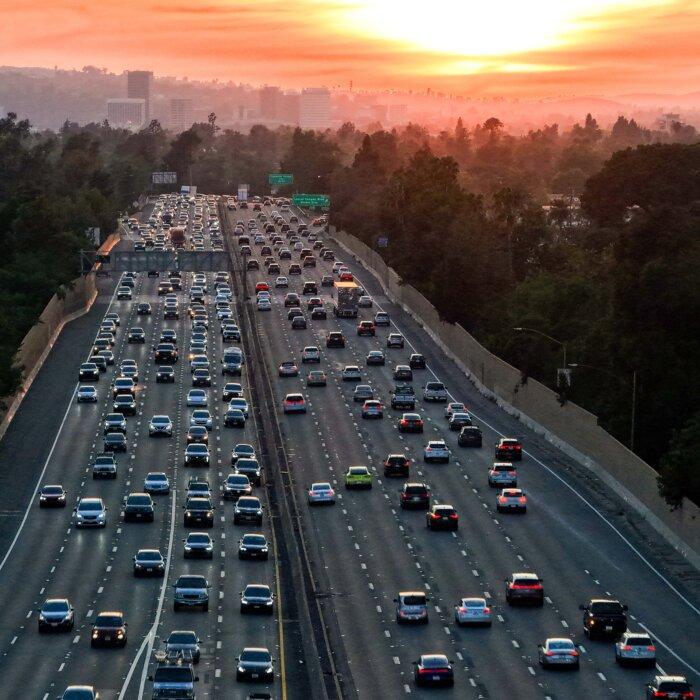
Once I got into traffic, on very fast Texas highways, there were cars following close behind and to the right and left. That involves tricky navigation, and it requires full attention. Mr. Car did not like this scene and began screaming at me as if I’m entirely unaware of what was happening around me. Of course I was aware, but now, with this squawking car, it was hard to focus.
The blaring, buzzing, and screeching of this disapproving digital schoolmarm—if the car had a name, it would be Karen—is more of a danger than the drivers around me in all directions.
You think a backseat driver is annoying? Try a dashboard with biometric monitoring skills and the ability to speak in bleeps, dings, and buzzes. It’s miserable and absolutely makes driving less safe and scarier all around.
The new car is a devouring mother, a helicopter parent, a digital warden, and a spying parole agent all in one. I’m getting Munchausen by proxy just by driving: This car keeps telling me I’m a terrible driver, so I’m becoming one.
It’s all quite amazing because it was only a few decades ago that driving on the open highway, listening to rock and roll, was the essence of the ideal of American freedom. In fact, in the postwar years, there was an explicit shift away from passenger trains to family and individual cars because they better embodied this American spirit.
Think about all the great American driving songs: “Born to Run.” “Take It Easy.” “Born to Be Wild.” “Route 66.” “Fast Car.” “On the Road Again.” “Mustang Sally.” “Little Red Corvette.”
All these songs celebrated the unity of freedom and driving.
Not so with these new models. They are the opposite. They have turned the freedom to drive into a panopticon of behavioral monitoring and correction. You are rats in this mobile laboratory, the pigeon in a Pavlovian cage variously poked, prodded, fed, and starved.
The experience creates in the driver the irrepressible dream of pulling over, grabbing your things, and hoofing it down the highway so at least you can be free.
It’s hard to know who could have invented these systems and why. Cars have been mainstream for a century, and somehow people have gotten by without these supposedly smart systems before. Indeed, people learned how to drive via experience and heightened human consciousness and intelligence.
These new systems disable all intelligence and experience and feed into the most paranoid suspicion that these machines are trying not to help us but replace us. Instead of flattering your mastery and volitional prowess, they condescend with the presumption that you are reckless and sinful and very likely a danger to yourself and others, desperately in need of being adulted by digital pedagogy.
There was another layer of despair that set in as I drove. My own car is 10 years old. I’m holding onto it for dear life, prolonging its health as long as possible, swearing never to give into this new world of deep-state passengerism. But we all know that this pose cannot last forever. At some point, I will have to give in.
Every old eventually gets too old and most things that are new will become the norm. Maybe a mass consumer revolt will stop this trajectory, but one wonders. The control grid makes advances by the day. We are surrounded by surveillance. I cannot even have a private conversation with my mother on a topic without its prompting email spam on the same subject.
Obviously, our phones are listening. Our cars are listening. Everything is listening. Not only that, but we are being tracked and judged. For all I know, the next time I rent a car, my profile will pop up revealing that I triggered 17 needs-coffee alerts.
As I dropped off the car, I complained bitterly and the nice man who welcomed me back felt bad. I felt bad. The manager offered me a discount on my next rental, which I refused because none of this was their fault. They are victims of this nonsense as much as I am. We all are.
Still, maybe my complaint was logged somewhere. If nothing else, my iPhone heard it. Which, now that I think about it, might not be good. In the future, this could get us debanked.
Under these conditions, we could end up like Cuba, where all cars are old cars because socialism doesn’t know how to make new ones. With the U.S. control grid, we will have to keep the old cars functional if we want to maintain our freedom and our sanity.
I might have to go searching for my 1963 VW Beetle and rebuild it yet again.