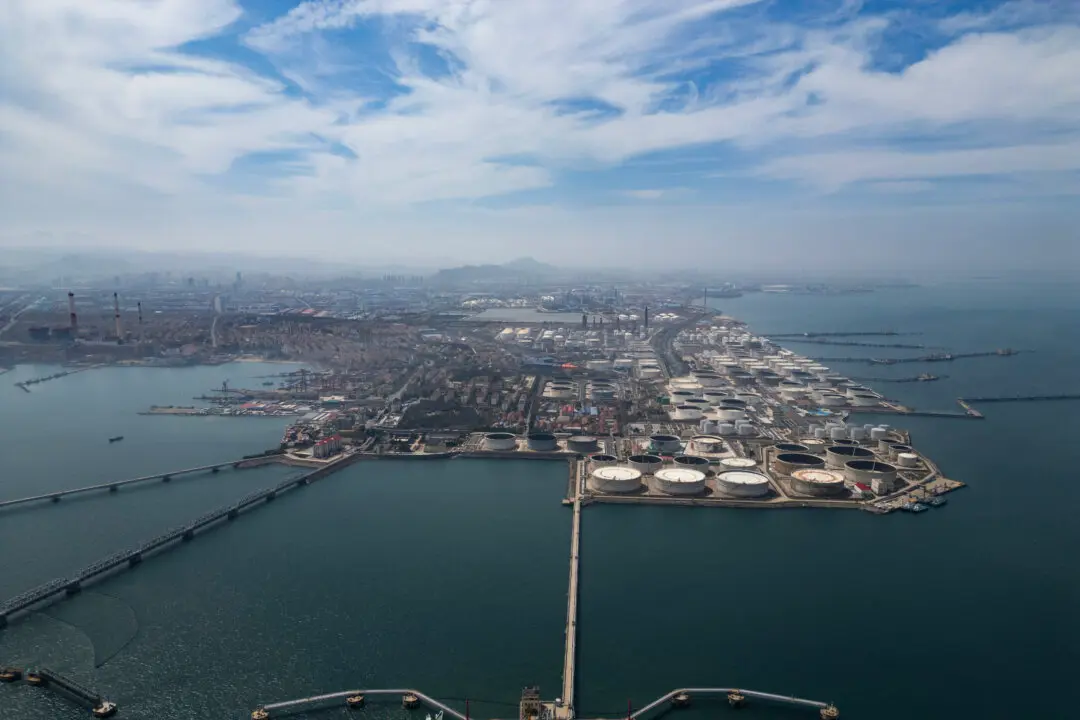
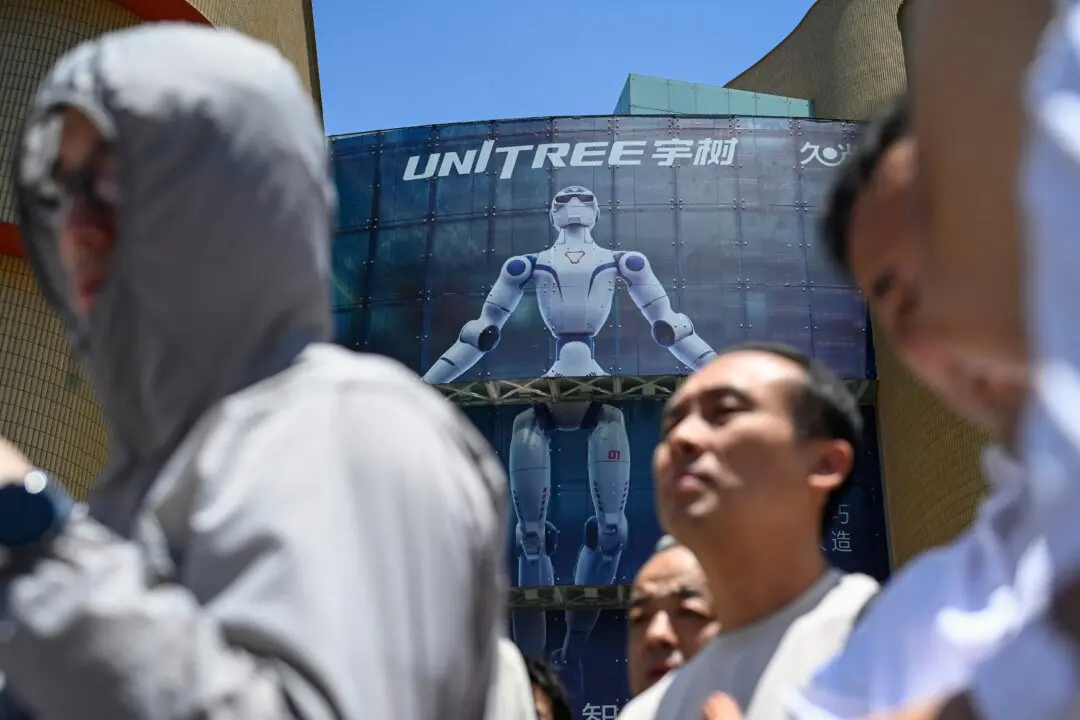
The tariffs worked to force some manufacturing out of China, the world’s most powerful authoritarian country, and into less threatening countries like Vietnam and Mexico. Much of this led to transshipment rather than actual shifts in supply chains, but at least it was in the right direction. Europe followed suit with its own tariffs against China.
The U.S. president ought to have broad latitude to rapidly impose tariffs on the most dangerous adversary countries to produce the economic leverage necessary to back them down. Economic leverage is a far less risky tool than military threats, and unfortunately, both are necessary to deter powerful adversaries like the CCP.
The next U.S.–China summit is planned to begin in Beijing on May 14. The leaders of the two countries are expected to at least appear to smooth over their trade and other conflicts. But the reality is that both sides are sharpening their economic swords and looking to increase their advantages against the other. They are using debilitating legal, technological, and resource controls, including over rare earths, semiconductors, and broader supply chains, as leverage to make strategic geopolitical gains.
Unrestricted free trade with China is an existential threat to the United States and democracy because the regime in Beijing is using its massive industrial supply chains and international trade surpluses to fund the People’s Liberation Army, which is getting so powerful as to threaten U.S. jet fighter and naval supremacy, and the ability of the U.S. military to forward-deploy to key bases in Japan, the Philippines, and Guam. Taiwan is at risk, and with it, democracy’s edge in semiconductors and artificial intelligence.
Due to the existential threat posed by the CCP, all tools at America’s disposal, including rapid-fire tariffs that impose maximum costs on China’s supply chains, should be wielded in our defense. The slower legislative process required for new statutory tariffs, and the procedural tariffs currently available to the president, give too much advance notice and allow Chinese companies to adapt their supply chains and export partners before they are imposed. This negates the effectiveness of tariffs as bargaining chips.
China’s global trade surplus was the world’s largest at almost $1.2 trillion in 2025 and $265 billion in the first quarter of this year. China’s substantial trade surplus with the United States continues despite years of U.S. tariffs. That surplus could increase more quickly under the current U.S. judicial rulings.
China’s trade surplus provides the regime with abundant quantities of U.S. dollars. Chinese companies controlled by the CCP use the dollars to buy strategic U.S. assets, including businesses in key sectors such as information, industrial, biological, pharmaceutical, financial, automotive, and energy technologies. China’s dominance of electric vehicle technologies, especially batteries, is helping it outperform in global exports as the price of gas rises. The U.S. trade deficit with China is understated as China also transships goods through many other economies, including Europe.
The CCP understands the power that its stranglehold over China’s economy and global trade provides, and in April, the regime imposed new regulations that punish foreign companies that attempt to shift their supply chains away from China, including through outright bans on such shifts, asset seizures, and exit bans on individuals seeking to move abroad. The regime can investigate and penalize not only individuals and companies, but also any government that it deems adversarial to its industrial and supply chain strengths.
Meanwhile, China’s citizens pay the price economically due to their low earnings relative to those in developed democracies, the collapse of the Chinese property sector, and the subsequent erosion of their net worth. This leaves Chinese consumers with lower purchasing power and more goods available for export to global markets.
To protect America’s remaining industrial might, U.S. sovereignty, the U.S.-led international system, and democracy generally, U.S. law must rapidly evolve to meet the CCP threat. America should maximize U.S. economic leverage over adversary countries like China through legal reform up to and including a constitutional amendment if necessary. The unacceptable alternative is to risk the freedoms for which the Constitution was designed to evolve and protect.