China is trying to outcompete the United States in artificial intelligence (AI) with a nearly $300 billion buildout of U.S. technology. China could win the race within the next two years if the United States fails to better control the semiconductor and large language model (LLM) tech used by AI.
Unless something is done, some of Beijing’s money, either from the $300 billion or from other funds devoted to AI, could be used to hire leading U.S. AI companies and researchers and to build AI data centers using stolen U.S. semiconductor tech. Simultaneously, Beijing is likely trying to stop AI in the United States by promoting U.S. public sentiment aimed at limiting AI development.
China’s tech theft, poaching, forced tech transfer of AI research, and distillation attacks are facilitated by both the cooperation of, and cyberespionage from, leading U.S. and international tech companies. Microsoft allegedly cooperates with China’s AI research. OpenAI and DeepMind have been the victims of China’s AI poaching.
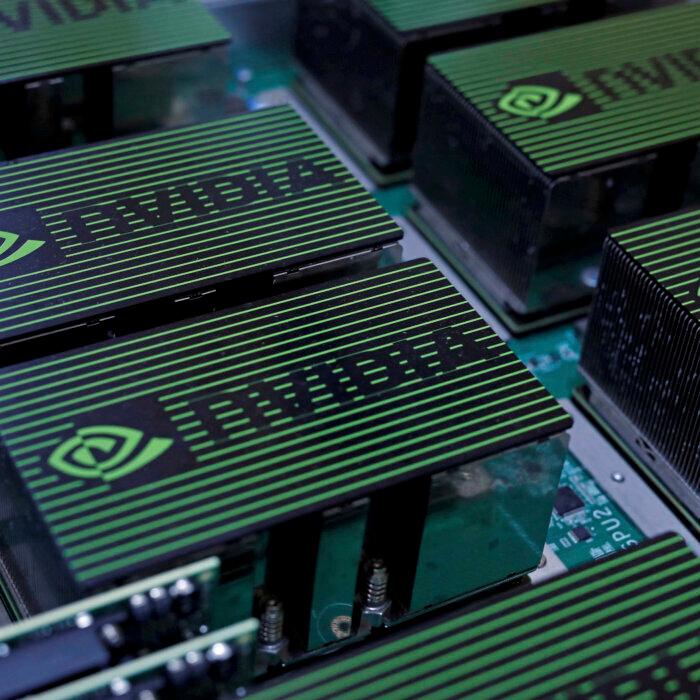
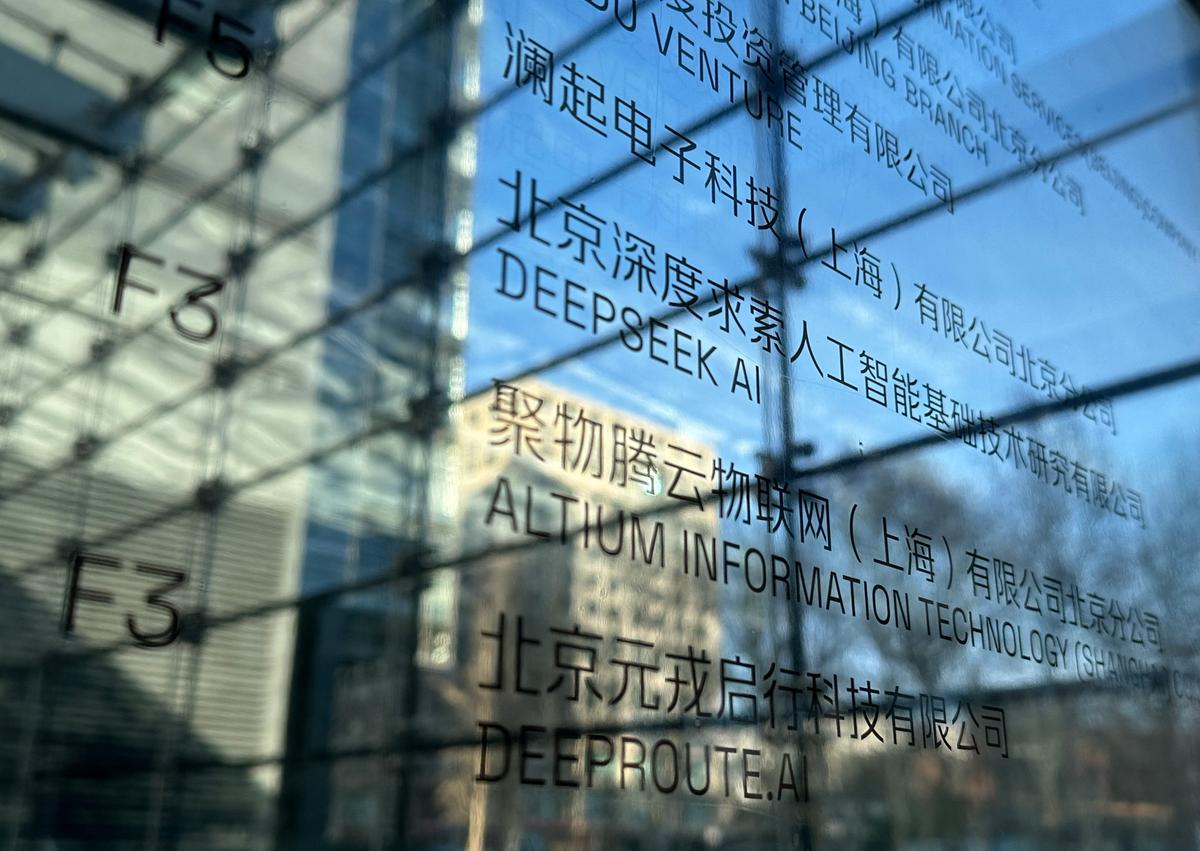
The thieving approach of the Chinese Communist Party (CCP) to AI tech acquisition follows a playbook similar to its theft of semiconductor tech from Taiwan Semiconductor Manufacturing Co. in Taiwan and ASML in the Netherlands. China also steals from the United States through AI distillation attacks that allegedly use a Chinese company such as DeepSeek to illegally distill the output of U.S. AI models.

Some AI companies are fighting back rather than trying to profit from China’s AI investments. Anthropic has warned of the dangers of China leading in AI by 2028. OpenAI has monitored China’s usage and closed accounts that allegedly use the company for malign influence campaigns in the United States.
Two campaigns were launched using OpenAI against U.S. data centers and tariffs meant to keep the United States as the global AI leader. Operatives, most likely Chinese government contractors according to OpenAI, used the service to produce comments and images, including comic strips.
The content promoted two ideas: “data center buildouts for AI were increasing electricity prices for average families” and criticism of “US tariffs as attempts to dominate technological competition.” The OpenAI-produced content was then posted on social media by batches of accounts posing as Americans, apparently to influence the United States to stop leading in AI and other tech. OpenAI banned the accounts, but this cannot stop Chinese operatives from repeating the tactic by opening new accounts.
The influence campaign amplified already-existing sentiment against data centers. Several states and municipalities have proposed legislation to freeze construction of the centers because of genuine public concerns. So a Chinese influence campaign could negatively affect U.S. AI competition, especially if it boosts anti-AI legislation at the national level.
Although the dangers of AI are real, including the danger of a superintelligent AI going rogue, CCP domination of AI could be just as bad. So the United States should consider tougher laws against China’s malign influence, including not only social media but also mainstream media it owns or funds with advertising dollars, as well as the influence it wields through U.S. corporate political campaign donations.
These laws should include punitive economic sanctions against China for attempting to influence U.S. politics and should prohibit researchers from providing China with technical expertise in AI. Very simply, leading AI researchers internationally should be barred by U.S. law from joining Chinese companies. Allowing China’s international AI poaching to continue is a threat to democracy and humanity more generally, as vast numbers of jobs will be lost if authoritarians are allowed to control AI.
More specifically, Beijing’s AI dominance could lead to what could be called “China Shock 3.0,” in which the United States’ intellectual economy is destroyed by CCP-controlled AI just as America’s industrial and manufacturing economy was hobbled starting in the late 1990s by China Shock 1.0.
Just as there are U.S. bans on providing China with technology that further enables it, such as semiconductor tech from the Netherlands and Taiwan, there can be an international ban, enforced by the United States, on providing the world’s most dangerous dictatorship with one of the world’s most dangerous technologies: AI.
Nobody should be allowed by the U.S. government to travel to adversarial countries to provide them with AI expertise. The CCP will claim that this violates China’s sovereignty and global free trade. But the CCP frequently does this to other countries, and because it is an adversarial dictatorship, the United States should give it no leeway. The United States is now interdicting Iranian oil exports to China, for example, and the United States can do the same for global AI researchers from anywhere who attempt to provide China with dangerous AI technology.
The choice is between getting far tougher on the CCP and risking a permanent end to democracy and to the American way of life. Beijing is trying to use AI to promote its global hegemonic aspirations, and the global response must not let the CCP use international law in an opportunistic manner to abrogate that law’s support for democracy and territorial integrity.
As long as China continues to be a dictatorship and attempts to destroy the territorial integrity of other nations and regions, such as in Taiwan and the South China Sea, it is normatively defensible if not required to ignore CCP claims to China’s own territorial integrity and sovereignty. If China does not democratize and continues on its hegemonic path, there is arguably a moral imperative to deny it the territorial integrity and sovereignty upon which the CCP depends.