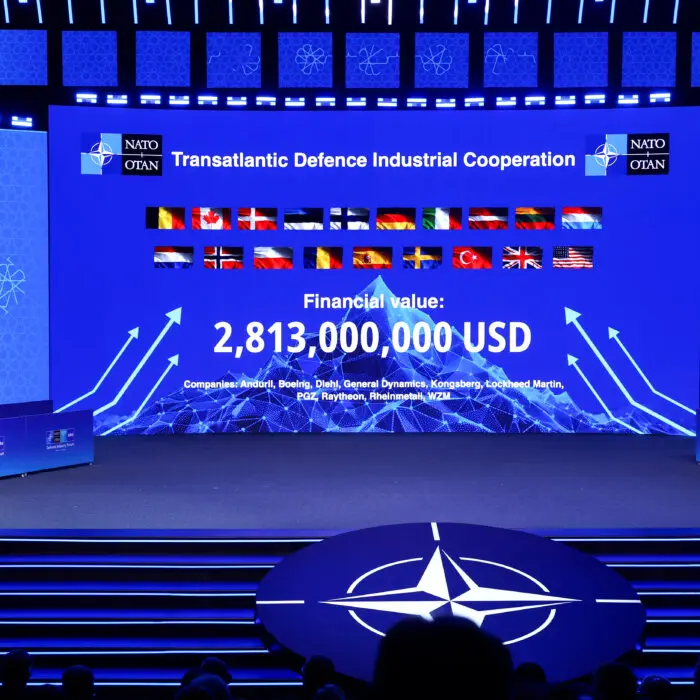
The “Trump Trillion” is the defense spending of Europe and Canada, arguably inspired by President Donald Trump’s statements and actions. Of about $1.2 trillion of extra spending since 2017, when Trump’s first administration began, $300 billion is on order from U.S. companies.
This has boosted U.S. hiring, supported about 200,000 U.S. jobs, and improved the U.S. defense industrial base, according to Mark Rutte, the head of NATO.
Rutte is trying to flatter Trump, but there’s a little truth in all effective flattery. At the latest NATO summit in Turkey from July 7 to July 8, Rutte announced another $54 billion in defense spending, much of which will go to the United States.
Trump responded positively to the latest summit, noting that there was tremendous “love” and unity in the room, supporting NATO’s Article 5 one-for-all and all-for-one defense agreement, and approving Ukraine in making its own Patriot missiles.
(The only risk to this last point is that Russia’s significant intelligence assets in Ukraine, or its capture of a factory, could help it acquire export-controlled Patriot missile technology, which could then be sold to China, North Korea, and Iran, for example. This would decrease the effectiveness of the U.S. military globally by revealing our software and seeker technologies to adversaries, allowing them to improve their own capabilities and more easily defeat ours. A better option would be to help Ukraine get its own nuclear deterrent and keep America’s most advanced military technologies for production in the United States, where they are less likely to be learned by our adversaries.)
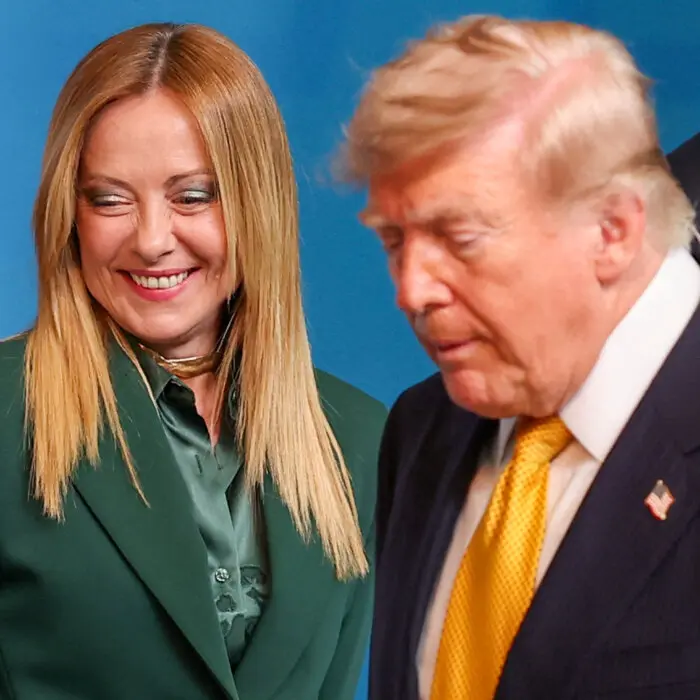
Europe’s more than $1 trillion in Trump-credited defense spending did not come easily. Trump had to make several strong demands to get European and Canadian capitals moving. This included unpopular ideas such as making Canada the 51st state and annexing Greenland, a territory of Denmark.
That understandably rubs our NATO allies the wrong way. But at least one effect was positive. It quickened their step toward increasing defense expenditures that will help deter Russia and free the United States to refocus on defending against China’s rapidly growing military.
The United States is pushing its European allies to take over their own conventional defense while leaving the U.S. nuclear “umbrella” in place as strategic deterrence. The UK and France also have nuclear weapons, and Poland indicated in March that it needs an independent nuclear deterrent. Germany is likely seeking more access to nuclear weapons through nuclear sharing with not only NATO, but also France.
The stronger America’s allies in Europe are, including through the acquisition of independent nuclear deterrence, the less burden there is on the United States of having troops in Europe and the less risk of another European war. After two world wars, the Cold War, and Russia’s war against Ukraine, American taxpayers are understandably interested in European taxpayers footing more of the bills and accepting more of the risk.
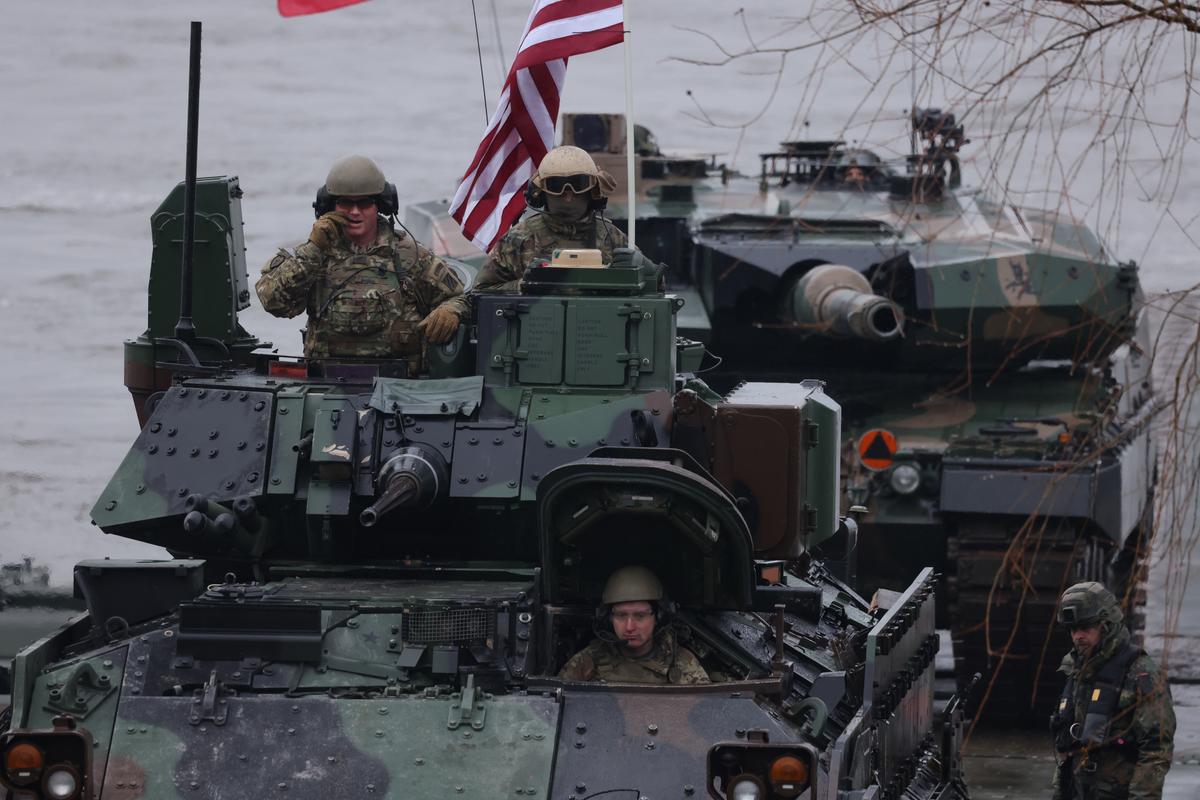
Some Americans want to bring home the approximately 76,000 troops stationed in Europe, a minimum mandated by Congress. This would further encourage Europeans to provide for their own defense. However, it would remove a U.S. tripwire that has a significant deterrent effect on Russia. Removal of that tripwire could provoke Russian President Vladimir Putin into an attack on a NATO member, which he is likely considering in any case.
A better option would be to ask for European countries with U.S. troop and nuclear weapons presence to pay for that presence. Trump has called this an insurance premium, which is a reasonable characterization. It could also be considered a security guard fee. Given that the U.S. national debt is increasing by as much as $8 billion per day, and the proposed U.S. defense budget for 2027 is $1.5 trillion, U.S. allies in places such as Europe, Japan, South Korea, Taiwan, and the Middle East should be asked to help pay for the privilege of being under this expensive U.S. umbrella.
At the summit, Trump ordered Secretary of the Treasury Scott Bessent to cut all trade with Spain, including visits, because of Spain’s refusal to agree to the 5 percent of gross domestic product defense agreement by NATO and its lack of support for U.S. flights related to the war with Iran. Despite most countries in NATO claiming that Iran should not have a nuclear weapon, few significantly assisted in the war that set back Tehran’s nuclear ambitions for years.
A trade embargo against Spain for its lack of support of the United States would affect about $48 billion of two-way trade and provide Madrid with the necessary incentive to live up to democracy’s joint defense requirements. The demand on Spain is being spun by some in the media against Trump, but the lack of repercussions for failing to meet the former 2 percent commitment is exactly what caused many European countries to shirk their duties in the past and some to pay just 1 percent or less.
A more graduated approach to economic repercussions against Spain would be to increase tariffs on Spanish imports rather than impose a total ban on trade, including U.S. exports. This would save U.S. jobs while providing as much, if not more, pressure on Madrid.
Rutte has noted that not all of Europe’s $1.2 trillion in increased defense commitments can be spent rapidly because of a lack of supply. The U.S., European, and allied defense industries are saturated with orders and can only supply some of the new demand.
Patriot missiles, for example, have been depleted in the Iran and Ukraine wars. Each country that bought Patriot missiles wants to keep them available, especially in the worst-case scenario of a missile attack on their own cities. Building Patriots takes years, and the back orders are being filled too slowly to keep pace with demand and with the missile-building by NATO adversaries.
European and U.S. factories should be built rapidly, including through defense subsidies if necessary. Without more defense industrial capacity, increased defense spending will chase the same amount of materiel, simply raising prices rather than delivering more defense.
Although some in NATO are using the lack of defense industrial capacity as an excuse not to spend the Trump Trillion, it can be used to build up that capacity. This includes building a diverse industrial ecosystem, rare-earth mineral refining capacity, and energy supplies that are not reliant on adversary countries such as China, Russia, and Iran.
Although the United States demands fair burden-sharing from our democratic allies and greater defense spending, and although stronger defense industrial ecosystems are a must in today’s dangerous world, no sovereign democracy can be expected to be “loyal” to any other people but its own. NATO is an alliance of democracies, not a strict hierarchy in which any one member, or the organization as a whole, can dictate loyalty to the others.
When NATO fights wars, as in Afghanistan, we must meaningfully consult our allies and seek their willing participation. Their lack of assistance could affect our level of commitment to them in the future, but this should not be considered a bid for their loyalty. Rather, it is an ask for their mutual friendship and commitment to the common cause of democracy. That is the source of America’s tough love at the NATO summit.