Commentary
The Pentagon released a new list of dozens of “Entities Identified as Chinese Military Companies Operating in the United States.” This new “CMC list” now includes 17 additional parent-level companies and 48 additional subsidiaries. Map data published alongside this article includes the estimated locations of 46 sites of parent and subsidiary companies.
The Department of Defense released the first full CMC list in June 2021, stating that “The Department is determined to highlight and counter the People’s Republic of China’s (PRC) Military-Civil Fusion development strategy, which supports the modernization goals of the People’s Liberation Army by ensuring its access to advanced technologies and expertise acquired and developed by even those PRC companies, universities, and research programs that appear to be civilian entities.”
Since then, the number of listed companies has grown.
Novogene and Complete Genomics (a subsidiary of BGI), two Chinese genetics companies, are now on the list. Complete Genomics is apparently being acquired by a Swiss company.
Some U.S. officials believe that China is harvesting genetic data globally that could be used for genetic targeting of biological weapons. These weapons could facilitate biological attacks on certain ethnicities or individuals while letting others live.
BGI, previously called the Beijing Genomics Institute, has several additional subsidiaries on the list: Forensic Genomics International, GBI Diagnostics, Innomics, and STOmics Americas.
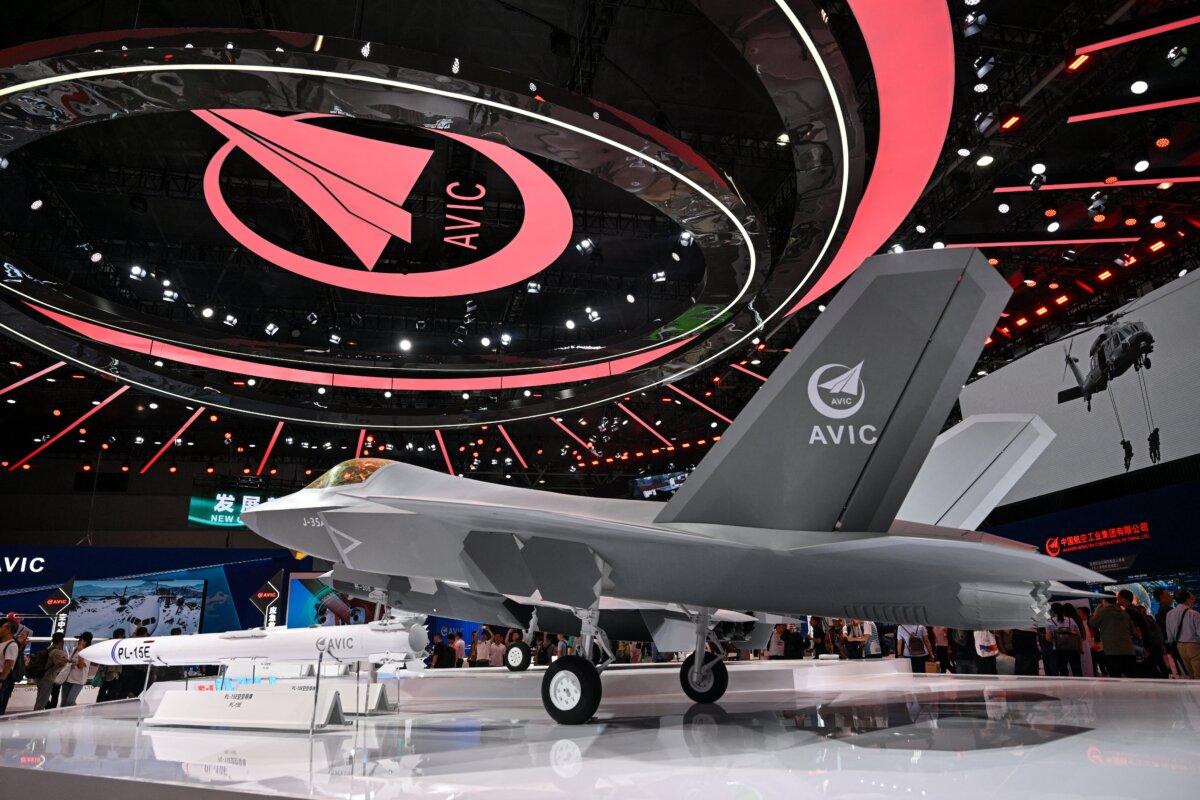
Aviation Industry Corporation of China (AVIC), a major Chinese defense contractor, was added to the first list and is on the current list. Several of its subsidiaries are also listed, including Align Aerospace, Avicopter, Changhe Aircraft Industries, Cirrus Design Corporation, Continental Aerospace Technologies, Jiangxi Hongdu Aviation, and the Shenyang Aircraft Design Institute.
These companies may provide AVIC with more pathways than it would otherwise have into sensitive areas of the U.S. economy, scientific research, and industrial design. After AVIC bought Cirrus in 2011, Cirrus gained access to Oak Ridge National Laboratory. One U.S. official who approved the sale was later linked to hundreds of millions of dollars worth of business in China.
The Pentagon added four major companies to the new list, including BYD, which produces electric buses in California; NIO, the automaker; and Baidu and Alibaba, the Chinese tech giants. Baidu is a major player in China’s artificial intelligence space. Many of the companies on the list have denied being a Chinese military company.
The new list also includes two of China’s leading memory chipmakers, YMTC and CXMT, along with the biotech company WuXi AppTec. New AI and Robotics are also included, such as the AI-robotics company RoboSense and Unitree, which is China’s top manufacturer of quadruped and humanoid robots.
Robots developed under military-civil fusion programs in China have been taught fighting skills and used to mount assault rifles and patrol China’s border.
China BlueChemical is a newly listed subsidiary of China National Offshore Oil Corporation (CNOOC). The parent company is active in the South China Sea. According to the list, CNOOC is “directly owned and controlled” by the State-Owned Assets Supervision and Administration Commission of the State Council (SASAC). SASAC is a key element of the regime that controls China’s economy.
As indicated by the map data, the largest geographic concentrations of the alleged CMCs are in northern and southern California and in the U.S. coastal and Great Lakes regions. The Northern California companies tend to operate in the technology innovation areas, while Southern California companies operate in manufacturing. Cosco, the Chinese shipping giant, reportedly operates in ports across the country. AVIC and its subsidiaries have multiple offices across the country in the design and aviation fields.
A U.S. law will soon make it illegal for the Department of Defense to contract directly with companies on the list. Next year, the Pentagon will be banned from purchasing from the companies indirectly through third-party entities. The U.S. government as a whole should follow suit.
There is no good reason that U.S. taxpayers should fund companies listed by the Pentagon as part of the Chinese military. That it has taken so long for the government to more thoroughly limit the access of Chinese military companies to U.S. soil, commerce, and contracts is concerning and warrants further research.