A dear friend of mine died recently from breast cancer.
The night we learned she was entering hospice, my husband, our four children, and I were piled into bed watching a movie together. A text message came through letting us know there was not much time left.
I felt my throat tighten as I read it aloud. My husband immediately paused the movie, and we prayed for her.
Then my 11-year-old son spoke up.
“Oh no,” he said. “Those kids are going to need a mother to balance out their dad.”

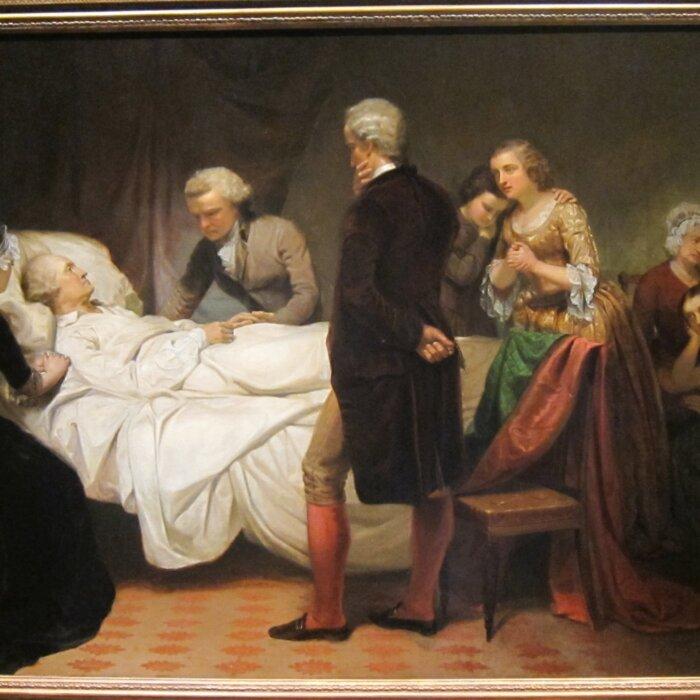
He knew their father. He remembered him as strict. In a simple way, children often see things clearly; he understood something many adults have forgotten. Children need both a mother and a father. They need different things from each. They need nurture and discipline, comfort and challenge, tenderness and accountability.
Over the following days, I found myself thinking about those children.
Not because they had been left with a father.
Because they had been left without a mother.
As mothers, we often assume we are the irreplaceable parent. We carry our children. We birth them. We nurse them. We stay awake through fevers. We know their favorite foods and the names of their imaginary friends. We are told from the moment we become pregnant that we are everything.
But we are not everything.
One day, my husband said something that stopped me in my tracks:
“You are looking at the boy you gave birth to and treating him that way. I am looking at the man he will become and treating him that way.”
I did not entirely like hearing it.
There are moments when I think he expects more from our children than they are ready to give. There are moments when I want to protect, while he wants to push. I am often thinking about today’s feelings. He is often thinking about tomorrow’s responsibilities.
Over the years, I have come to realize that neither perspective is sufficient on its own.
Children need both.
The strengths of one parent help balance the weaknesses of the other. The gifts that make mothers exceptional are not the same gifts that make fathers exceptional. That is not a flaw in the design. It is the design.
Because I am a mother, one statistic has always been difficult for me to sit with. While children overwhelmingly do best when raised by both parents, some research has found that children raised by single fathers often achieve outcomes equal to or better than children raised by single mothers.
Researchers debate the reasons. Some point to differences in income. Others point to discipline, structure, or the kinds of fathers who end up becoming primary caregivers. Whatever the explanation, the finding challenges many of our assumptions.
Rather than diminishing mothers, I think it should elevate our appreciation for fathers.
Their role is not optional.
It is essential.
For decades, America has been willing to talk about the importance of mothers while quietly downplaying the importance of fathers. Yet fatherlessness is associated with higher rates of poverty, incarceration, substance abuse, educational struggles, and behavioral problems.
The evidence is overwhelming that fathers matter.
And yet our culture often behaves as though they do not.
When was the last time you saw a competent, loving, respected father portrayed in a sitcom?
How often do we celebrate family formation compared with individual self-expression?
How much time do young people spend learning about avoiding pregnancy compared with learning how to build healthy marriages?
The messages are subtle, but they are everywhere.
At the same time, marriage rates continue to fall, divorce remains common, and millions of children spend significant portions of their childhoods in single-parent homes.
Many single parents perform acts of heroism every day. Raising children alone is extraordinarily difficult. A single-parent household is infinitely better than abortion. Every child deserves the chance to live, regardless of the circumstances into which they are born.
But we should not confuse surviving with thriving.
The nuclear family remains one of the most successful institutions ever created for raising children, transferring values, creating stability, and preparing the next generation for adulthood.
Perhaps that is why it is under attack from so many directions.
Several months after my friend passed away, her husband and children joined us for New Year’s Eve.
As the evening unfolded, I found myself watching him.
The man I had always known as firm, disciplined, and demanding was still there. But there was something else too.
A softness.
After they left, my 11-year-old son pointed it out.
“He seems gentler now,” he said.
All of us had noticed it.
Losing his wife had placed him in an impossible position. He was still carrying the responsibilities of a father, but now he was also trying to fill the space left by a mother. No one can truly do both jobs. Yet necessity had drawn something new out of him.
That observation brought me back to the lesson I have been wrestling with ever since my friend’s death.
Children need mothers.
Children need fathers.
Not because mothers and fathers are irreplaceable, but because they are not.
Nothing about the research changes the reality that those children lost something irreplaceable when they lost their mother. No statistic can erase that loss.
But neither should we overlook what remained.
They were left with a father who loves them.
In a culture that increasingly treats fathers as optional, that truth matters more than we are willing to admit.