An artistic experience is normally something we have to seek out. We make a point of visiting a gallery, attending a concert, or watching a play. Nowadays art plays almost no part in our everyday lives. Architecture, however, stands out as a notable exception.
We cannot escape the buildings we are surrounded by. Private and public building makes a difference to all of us, forming a part of our daily experience of the neighborhoods we live in, the public spaces we share, and the houses in which we worship.
It is a good rule of thumb, therefore, for architects and craftsmen to think like a good neighbor would and avoid building anything that strays too far from what is already there. All of the great styles of architecture recognized the importance of thinking like a neighbor when building homes, libraries, temples, or churches. This was as much true for ancient Greece and Rome as it was for medieval and Renaissance Europe.
Then something changed.
In the 17th century a style of building that came to be known as “Baroque” took the world by storm. If you have done any travel in Europe, you will have encountered this style of building, whether in one of the great English country homes, like Blenheim Palace, where Winston Churchill was born, the Sun King’s perch in Versailles, the site of so much world history, or in St. Peter’s square in Rome, designed by the greatest Baroque architecht, Gian Lorenzo Bernini (1598–1680).
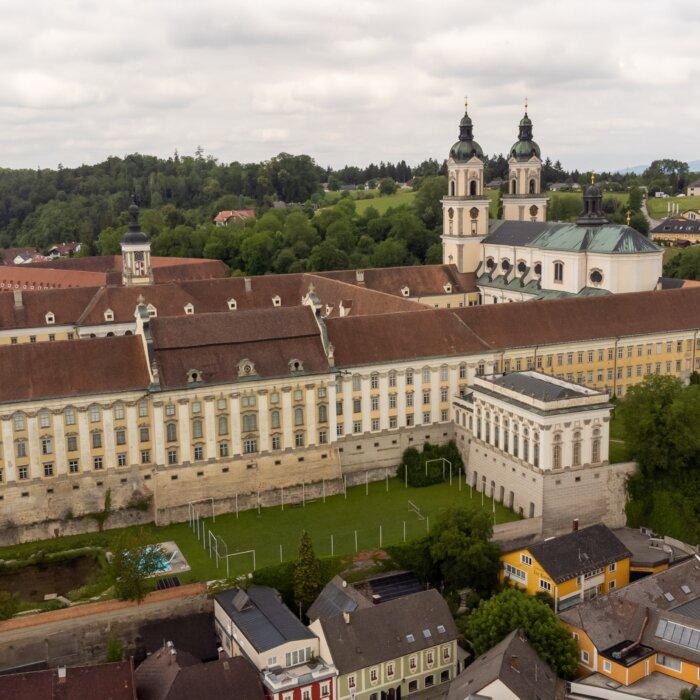
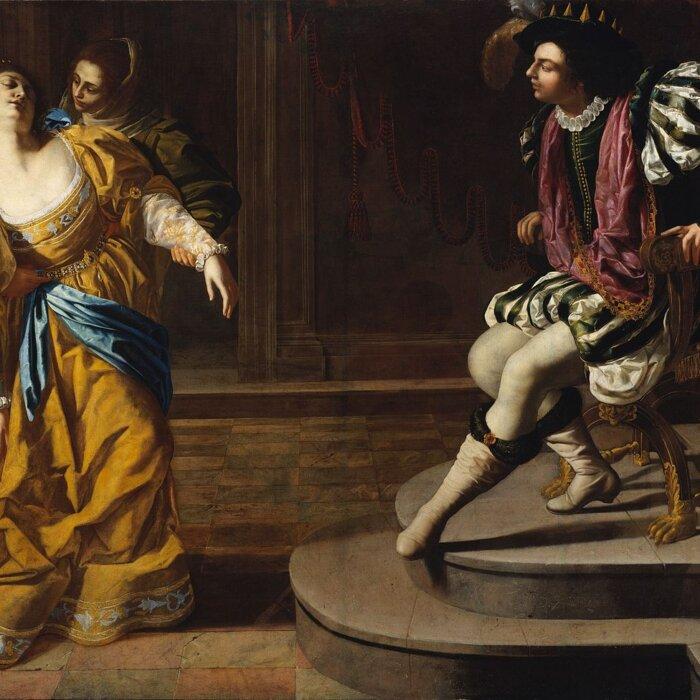
The Baroque style of building is anything but neighborly. It goes out of its way to stand out from its surroundings. It will not be ignored, but instead insists on drawing you into something like a great drama. Far from acting as a humble neighbor, the baroque intrudes on your ordinary life and insists upon your undivided attention.
What could possibly justify this seeming break from the tradition of neighborly building?
I would like to suggest that the Baroque revolution gives us fresh insight into the nature of beauty and even reality itself.
First, a bit of historical context is in order. The Baroque style flourished especially in southern Catholic regions of Europe during the Counter-Reformation, embraced as a response to the great preaching spaces that Protestants built in the 16th and 17th centuries. While Protestants emphasized the spoken word, Catholics sought to appeal to the senses of the faithful, alongside the work of teaching and preaching. The arms race for Christian hearts and minds was moving at top speed, when Christian armies were not at one another’s throats.
A calling implies the possibility of movement: a call wants to be answered. A Baroque building invites you to move into and through it. Normally the façade is quite elegant and will often eschew straight lines for the undulating affect generated by the interplay of the concave and convex. Once inside, the real work begins. The baroque seeks to overwhelm your senses, sometimes to the point of actively deceiving them, an affect known as the trompe-l’oeil. This may cause the viewer to become uneasy, even confused. But perhaps also intrigued.
It is the sacred space of the church that gives the fullest sense of what the Baroque is attempting to show. The Baroque treats beauty as an apocalypse, something sudden, overwhelming, and dramatic. A church in the Baroque style does this by treating the space like a theater. Often you will see curtains opening on a sacred image above an altar, usually featuring a patron saint, whether Mary and Child, St. Michael the Archangel, or St. Peter. Or perhaps a church patron, observing a portrayal of some great religious drama from a balcony on the edge of his seat, as the Cornaro family does Bernini’s ecstasy of St. Theresa in Santa Maria della Vittoria in Rome.
Goethe compared architecture to “frozen music.” He must have had the Baroque in mind. Not only does the Baroque overwhelm the senses through its rich decorations, but it creates a sense of movement––a sense of drama and spectacle––by trading Renaissance circles for ovals, installing false columns on corners to smooth edges, allowing the eye to move more freely. Statues are everywhere and seem to float, even dance. Figures in ceiling paintings appear to break out from their two-dimensional moorings. Often these are angels depicted as children with wings. It is all so playful. A veritable symphony for the senses.
As much as the Baroque reveals, it also likes to hide. It is often difficult to discern the source of light in a Baroque space, adding to the sense of mystery and heightening the drama. During a service or concert, actual music flies around the room as your eyes do, creating a spectacular acoustic. We feel ourselves catching a glimpse of the invisible things not normally available to us.
Richard Wagner calls this fusion of the arts a “Gesamtkunstwerk,” or total work of art. In his late operas, Wagner attempted to recapture self-consciously what Baroque architects had already achieved spontaneously two centuries earlier in cooperation with the Catholic mass and composers of sacred music like Mozart.
The Baroque teaches something essential about the nature of beauty. Beauty seeks to delight the mind and senses, but it would not have us rest there. Beauty instills in us a longing to know its source. This disruptive style of building called Baroque excuses itself from a tradition of neighborly building, because it acts as a vessel of revelation. The Baroque is an attempt by beauty herself, as it were, to uncover invisible realities through sensible experience: to offer a premonition in the here and now of the heavenly life of the mind and spirit to come.