The name Odysseus has once again been made world famous; this time not by a blind Greek poet, but by a Hollywood blockbuster. Christopher Nolan’s “The Odyssey” has not only attracted and wowed massive audiences, but critics predict it will capture the lion’s share of prizes when award season comes around, too.
The story of Odysseus is at the origins of Western culture. Nolan’s adaptation of the Homeric myth paints the eponymous hero as a guilt-ridden man on a journey of atonement and redemption. Many classicists have been pulling out their hair in frustration over Nolan’s portrayal of the Greek hero.
To the scholar of Homer, Odysseus is better known for his scheming and powers of persuasion, for which the hero makes no apologies. He was the brains behind the Trojan horse operation and proud of it. In the famous Cyclops episode, Odysseus cannot resist letting the foiled giant know his name.
For a Homeric hero, great deeds serve no purpose if no one knows about them, victims included.
Later in antiquity, “The Odyssey” is read by both pagans and Christians as an allegory for the soul’s spiritual journey and its ultimate desire to return to its divine home. In a sense, this is faithful to Homer himself, who is telling a story about a man’s longing for home, not in the hereafter with the immortals, mind you, but for his ancestral home of blood and soil.
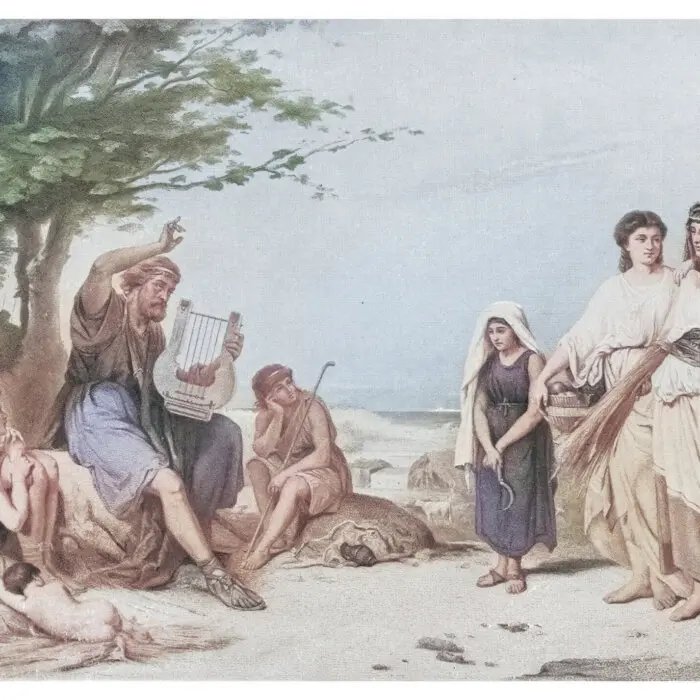
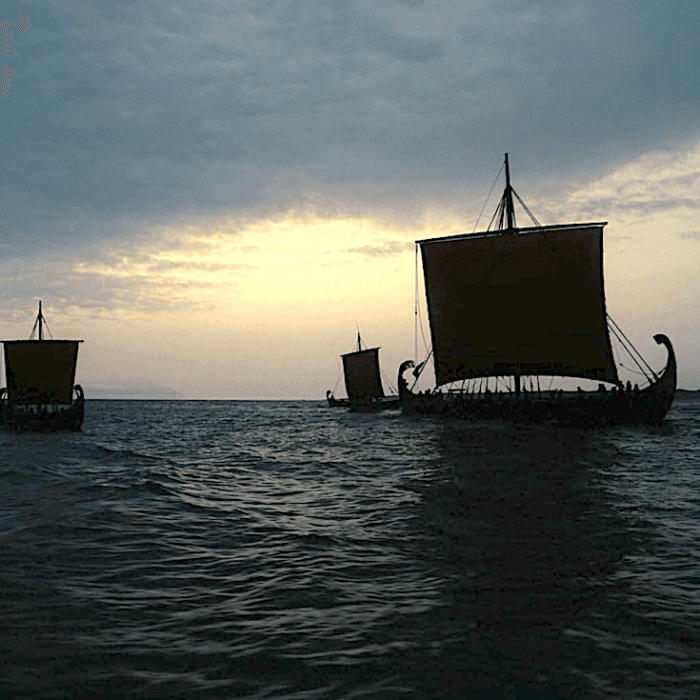
In the ancient world, the fascination with Odysseus was connected to the love of home: the Greek word for this is “nostos,” a longing for home, related to our word “nostalgia.” As the English word implies, for Homer’s Greeks there was something unnatural about going too far or spending too much time away from home.
But not everyone has been so kind to the clever Greek captain. Dante famously places Odysseus, called by his Latin name “Ulysses,” in the depths of Hell, close to the bottom of the infernal pit in the circle of the fraudulent, among the sinners called “evil counselors.”
What explains this shift from the relatively positive interpretation of Homer in the ancient world to what would appear to be Dante’s outright hostility in 14th-century Italy?
It will not do to say that Dante was a Christian condemning a pagan story. Christians in antiquity, like Clement of Alexandria, were very happy to read Odysseus’s story in a positive light. Dante himself is far less hostile to other major figures of pagan mythology and history in his own epic work, “The Divine Comedy”; in fact, he takes one for his guide to the afterlife in the Roman poet Virgil.
For the same reason, it will not suffice to say that Dante simply did not read Greek or know Homer directly via translation, since he took a sympathetic view of other pagans, real and imagined, of whom he had no or little direct knowledge, like the philosopher Plato and, indeed, Homer himself.
No, Dante’s reasons for casting Odysseus into the depths of Hell are better understood as connected to what he regards as something corrupt in his essential nature: he is a man who longs for experience for its own sake.
Dante posits a sequel to “The Odyssey”—Nolan, take note!—in which he gets the band back together for one final voyage to sail beyond the boundaries of the known world of the Mediterranean basin into the open ocean of the Atlantic. Dante regards this final mission as a betrayal of Odysseus’s proper obligations to hearth and home, to say nothing of his men whom he leads to a watery death.
In what sense does this make Odysseus an “evil counselor”?
Dante has Ulysses himself explain his hellish predicament. He boasts to Dante the pilgrim how easily he was able to persuade his comrades to join his doomed voyage, almost as if he was possessed of powers to cast a spell on them with his easy words. “So eager did I render my companions/ With this brief exhortation, for the voyage/ That then I hardly could have held them back.”
We discover that his destination was Mount Purgatory, where all sinners will be prepared for an eternal life in the presence of God. What could be wrong with this?
Ulysses has counseled evil because this passage across the sea is a shortcut. Dante teaches that there is no way to arrive at the mountain of purgation except by tunneling through Hell, an allegory for the need to confront your own sins before you may purge them.
For Ulysses, there is no sin, only experience; no need to face the darkness of the soul, a mere illusion of the superstitious and ignorant. Ulysses believes himself the author of his own salvation, and he will prove it with an audience in tow.
Dante’s target, we discover, is not Homer. Like any great poet, Dante both transcends his own time and is indelibly shaped by it. Christian virtue, Dante laments, is on the wane. The minds of men are no longer concentrated on what they should be: love of God, country, friends, and family.
Experience has become an end in itself, for which no further explanation is required, nor thought given to those who may be harmed or left behind in its pursuit. Those who seek experience in the world for its own sake cannot be trusted—they will say anything to get others to come along for the ride.
Dante, we might say, is a prophet of what will become the essential vice (or virtue, depending on your point of view) of the modern world.
Homer would not have recognized Nolan’s Odysseus, nor would Dante. But neither poet would be surprised that the archetype of Odysseus still offers the modern man a way of passing judgment on the limits and virtues of his own culture.