Viewpoints
Opinion

Tariffs Helped Save America’s Credit Rating

Tariffs Helped Save America’s Credit Rating
President Donald Trump holds a chart as he delivers remarks on reciprocal tariffs at the White House in Washington on April 2, 2025. Brendan Smialowski/AFP via Getty Images
|Updated:
0:00
Commentary

Tariffs are going up, and internal taxes are coming down in the United States. That makes sense to S&P, which held the U.S. credit rating at AA+/A-1+, with a stable outlook for the coming years.

Tariffs, a stable economy, and credible and effective monetary policy were clinchers that undergird the strong U.S. rating.

“The stable outlook indicates our expectation that although fiscal deficit outcomes won’t meaningfully improve, we don’t project a persistent deterioration over the next several years,” the ratings company stated in its most recent report on the United States.

“This incorporates our view that changes under way in domestic and international policies won’t weigh on the resilience and diversity of the U.S. economy. And, in turn, broad revenue buoyancy, including robust tariff income, will offset any fiscal slippage from tax cuts and spending increases.”

Tariffs will help hold government revenues at about the same level despite lower internal taxes on individuals and corporations. Tariffs, a form of external tax on imports, encourage companies to reshore at least some of the manufacturing that they previously exported to other countries. Tariffs will provide approximately $300 billion annually in government revenue, arguably along with more U.S. jobs in the long run. They have not led to the massive predicted increase in inflation because of inexpensive supply chain shifts.
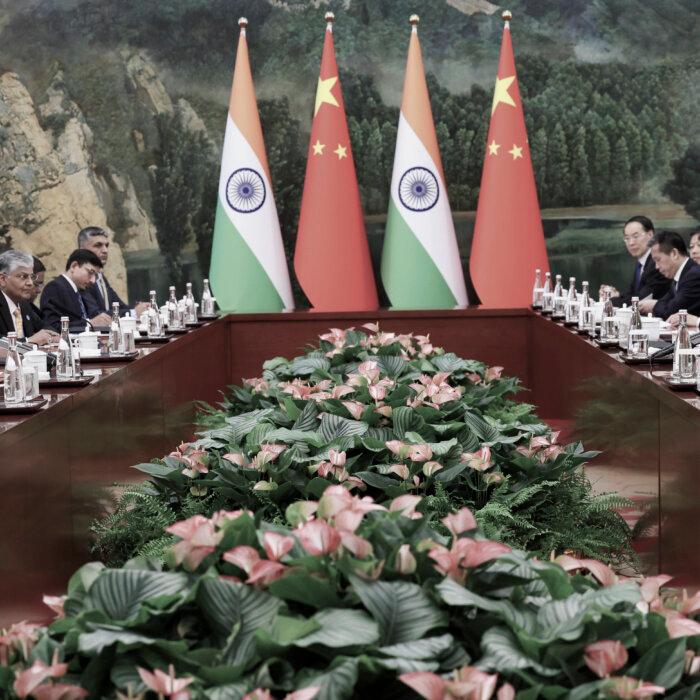
Tariffs give the U.S. government bargaining leverage with foreign governments on a broad range of issues, from trade and Israel to fentanyl smuggling and illegal immigration. This is a source of influence that the United States formerly denied itself because of the ideology of complete free trade that gave authoritarian countries such as China and Russia a free pass to the lucrative U.S. market. As the United States is one of the world’s top importers, the U.S. government’s ability to impose tariffs can disincentivize these and other countries from adopting anti-U.S. policies, including anti-U.S. economic alliances such as BRICS (Brazil, Russia, India, China, and South Africa).
Two of the most important trade issues that the United States has used tariffs to influence are bringing rare-earth element (REE) and pharmaceutical manufacturing back home to the United States. Both could be used for leverage against the United States in case of war with China, as the United States is dependent on them for our economic and human health. Automobile assembly lines and patients who require antibiotics, for example, currently depend on REE and pharmaceutical imports from China.

Import reliance on China is the most obvious strategic vulnerability that can be corrected through tariffs against the authoritarian country.

S&P recognizes that the fiscal impact of the tax and tariff changes cancel each other out and holds the U.S. rating of AA+/A-1+ as a result. The United States has held this rating since 2011. The United States used to have an even better rating of AAA. If the rating drops again, it could put further pressure on the U.S. dollar as a global currency and make U.S. federal debt even more expensive than it already is to the U.S. taxpayer.

Other fiscal and geopolitical risks remain. Increased U.S. government spending will be facilitated by the recent $5 trillion debt limit increase, which brings the limit to $41 trillion. U.S. deficit spending is now at 6.2 percent of gross domestic product. Servicing the debt will only be more difficult by 2030, when it’s expected to reach a historic record. Moody’s stripped the United States of its triple-A rating in May. Fitch has also downgraded the United States from its triple-A rating. Moody’s and Fitch are also credit rating agencies.

Anti-tariff business sentiment thinks that tariffs will put downward pressure on U.S. business confidence, economic growth, and jobs while increasing inflation. But high inflation has not materialized because of shifts in supply chains away from high-tariff countries—such as China and Brazil, whose effective tariffs are both about 30 percent—and toward the United States and lower-tariffed major trade partners such as Mexico, Canada, Japan, and the European Union. Africa, Southeast Asia, other Five Eyes countries (the United States, the UK, Canada, Australia, and New Zealand), and Latin America (excluding Brazil) also benefit from lower tariffs than China and Brazil, making them possible trade beneficiaries from the high tariffs on U.S. adversaries.

Tariffs do put downward pressure on total foreign trade, upon which they depend for revenue, ultimately threatening to dry up this particular government revenue source. They could put transaction costs on U.S. businesses that depend on imports of intermediate goods for the production of their own manufactured goods. Without these cheap imports, their exports could be uncompetitive on global markets, leading to U.S. job losses. However, domestic manufacturing can adapt and increase to fill the gaps left by these imports, which would create jobs and increase internal tax revenues to replace lost tariff revenue.

Another risk is that tariffs may alienate the United States’ closest allies, including in Europe, Canada, and Japan, which could cause an anti-U.S. economic alliance in a new G6, G7, or G8 configuration without the United States. This G-group could include the world’s most economically powerful democracies—which are Germany, Japan, India, the UK, France, Italy, Canada, and Brazil—jointly bargaining against the United States on trade issues. While it makes sense to tariff democracies such as India and Brazil that do too much trade with U.S. adversaries such as China and Russia, it makes less sense to tariff democracies that are close allies, especially those as geographically and politically near as Canada.

While risks and problems remain, U.S. tariffs are a net positive from a fiscal perspective and are being improved daily.


Views expressed in this article are opinions of the author and do not necessarily reflect the views of The Epoch Times.
Google LogoMark Us Preferred on Google
Anders Corr
Anders Corr
Author
Anders Corr has a bachelor’s/master’s in political science from Yale University (2001) and a doctorate in government from Harvard University (2008). He is a principal at Corr Analytics Inc. and publisher of the Journal of Political Risk, and has conducted extensive research in North America, Europe, and Asia. His latest books are “The Concentration of Power: Institutionalization, Hierarchy, and Hegemony” (2021) and “Great Powers, Grand Strategies: the New Game in the South China Sea” (2018).
twitter