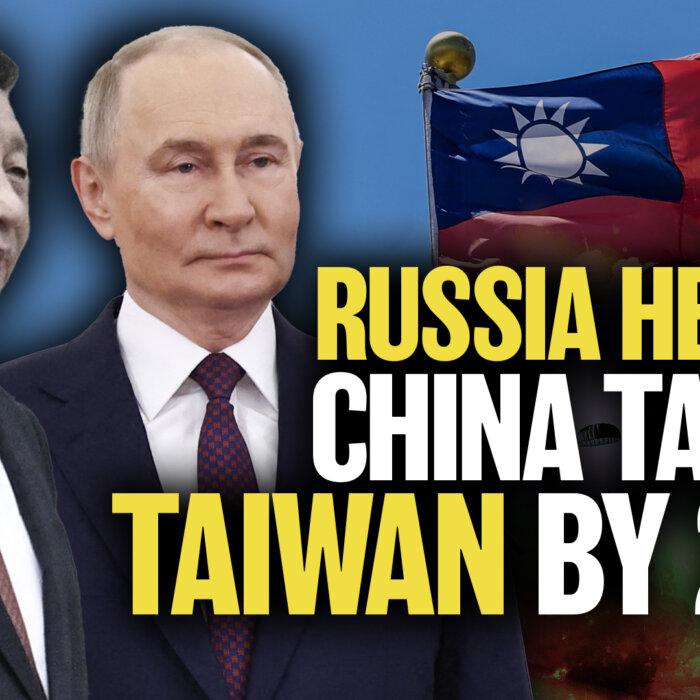
With Chinese leader Xi Jinping directing the Chinese military to be ready to invade Taiwan by 2027, a potential invasion of Taiwan is on the minds of many world leaders.
And with China’s 1.4 billion people greatly eclipsing Taiwan’s 23 million—and the Chinese regime’s 2 million active-duty military personnel and $290 billion annual defense budget dwarfing Taiwan’s 169,000 active-duty troops and $19 billion annual defense budget—many presume that China would steamroll Taiwan.
“A military campaign to conquer Taiwan would be the largest, most complex military operation in history,” the Stimson Center report reads. “Modern military capabilities would make such an operation more complex than the 1944 D-Day landings.”
First, the Taiwan Strait’s formidable 100-mile-wide waters thwart easy crossings, and Taiwan’s jagged coastline repels landings. Regarding water barriers, the Russia–Ukraine war confirms what all of recorded history has shown us: that even relatively narrow barriers, such as rivers, pose major obstacles to offensive operations. A 100-mile strait poses even more of an obstacle.
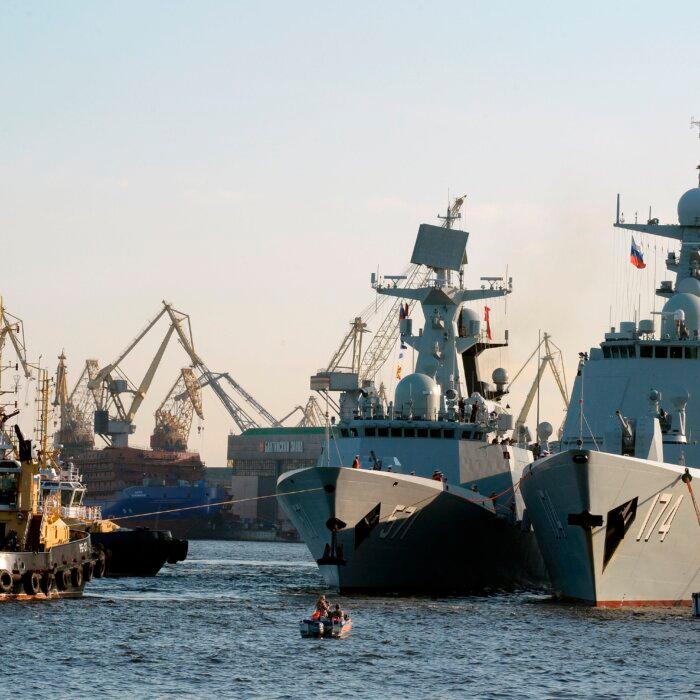
However, even with all of Taiwan’s natural defensive advantages, China still has a huge advantage in population, military industrial capacity, airpower, and naval power. And it seems likely that Taiwan’s navy and air force, at best, will only be able to play a limited role in its defense.
“However, the same is not true of Taiwan’s ground forces, which become critical to the outcome of the operation,” the paper states.
Taiwan’s mountainous terrain, covering more than 70 percent of the island, and its extensive bunker and tunnel networks create formidable obstacles for a rapid Chinese invasion. Rugged peaks, dense forests, and urban chokepoints will enable Taiwan’s 169,000 active-duty forces and 760,000 trained reservists to delay or even push back People’s Liberation Army units.
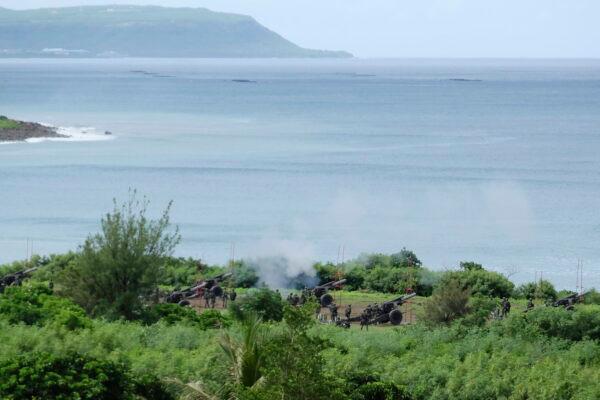
Even maintaining beachheads will be an ongoing struggle for China. Another, perhaps insurmountable, struggle would be keeping enough boats and ships alive to ferry the millions of tons of supplies and equipment necessary to support the hundreds of thousands or even millions of troops involved.
Recent experiences in the Ukraine–Russia war, combined with the fact that Taiwan’s natural defenses are vastly superior to any on the Ukrainian battlefield, suggest that China could suffer hundreds of thousands of casualties, perhaps even many hundreds of thousands, in trying to overcome a determined defense by a mobilized Taiwanese people.
Taiwan also maintains a total reserve force of approximately 1.66 million, although not all would be activated at once. An estimated 760,000 reservists have recent active-duty experience and could be mobilized quickly, while the remaining 900,000 or so would be called up in stages as needed.
These forces, already stationed on the island, can be supplied far more easily than an invading Chinese force dependent on vulnerable maritime logistics. And while the full reserve mobilization would take time, Taiwan’s standing forces—supported by hardened infrastructure and local terrain—would bear the brunt of the initial defense.
This mobilization process will not immediately yield crack troops, but, as the Ukraine–Russia war has demonstrated, even lightly trained forces manning heavily fortified defensive positions, supported by a determined civilian population, can mount a formidable defense. And Taiwan will be able to provide significant artillery and drone support to its troops, and even tanks, as the situation dictates.
This all adds up to Taiwan being able to leverage some of the most formidable natural defenses in the world, which, in combination with networks of tunnels and bunkers, could turn an invasion by the Chinese regime into a nightmare. Nevertheless, given China’s size and defense industrial capacity, there is little doubt that if Chinese Communist Party officials were willing to pay a considerable price, the regime could eventually take Taiwan.
But in the end, the Chinese regime could end up with very little to reward its efforts, as much of Taiwan would be devastated. There is a very good chance that Taiwanese patriots, facing imminent defeat, would conduct scorched-earth operations to destroy Taiwan’s many multibillion-dollar fabrication facilities that provide the vast majority of the world’s advanced semiconductors. In other words, when you count up the political costs, both at home and in the world, the economic costs of sanctions, massive casualties, and the prospect that much of what is most valuable in Taiwan to China could be destroyed, such an invasion seems very unlikely.