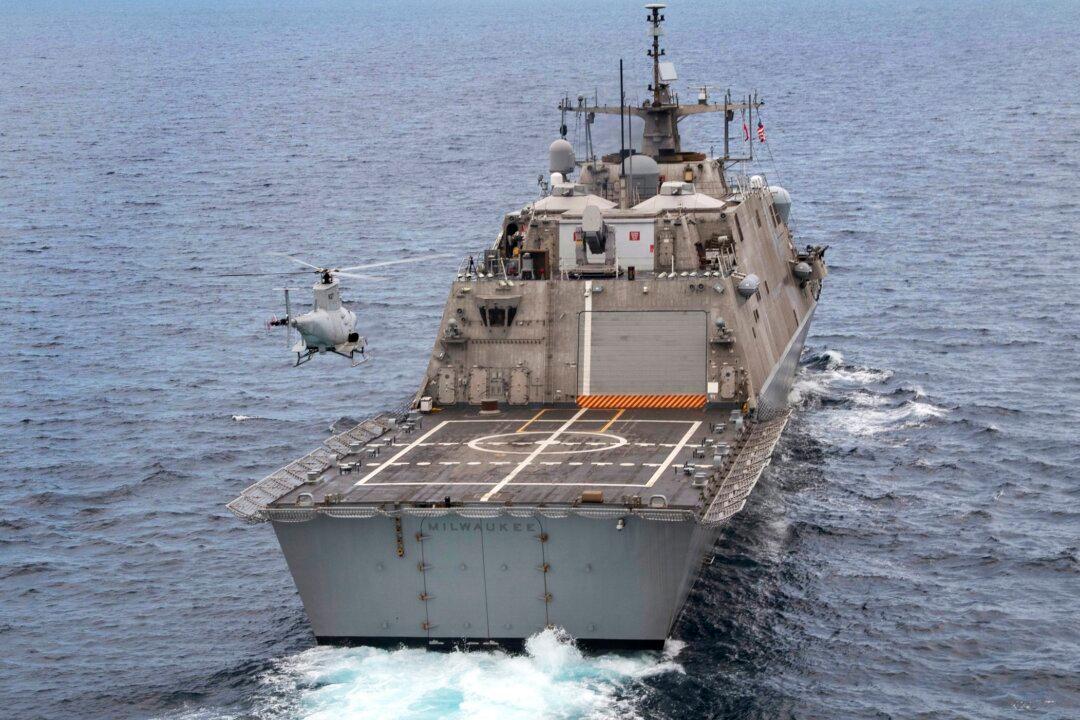
Along with recognizing a transitional government in exile, Hanson believes in keeping the pressure on the current regime and weakening it via ongoing economic sanctions and military strikes while partnering with the navies of those countries most dependent on Strait of Hormuz oil to keep the Strait open. Hanson says, “I don’t think we need to talk to them [Iran’s current regime] anymore. It’s completely futile.”
I fully concur with Hanson on this assessment; Iran’s leaders see the negotiation as a way to damage President Trump, and have little interest in signing an agreement that hands Trump a perceived win that could help Republicans in the upcoming midterm elections.
This approach is practical, low-cost, advances American interests, has the benefit of continually highlighting that Iran’s government is illegitimate, that it rules by the brutal, ruthless application of force, and does not have the consent of the governed.
History reveals a pattern of Iran agreeing to limited concessions under pressure, followed by incremental violations once the pressure eases. A case in point is the 2015 Joint Comprehensive Plan of Action (JCPOA). Immediately after signing, Iran worked to ensure the deal was rendered impotent by declaring military sites off-limits and exploiting the agreement’s convoluted notice requirements to stall inspections.
By aggressively blocking access to key facilities, they eliminated the international community’s ability to verify compliance. Yet, they reaped all the upfront benefits of the accord—including $1.8 billion in cash delivered on pallets—until President Trump canceled it in 2018.
This proves the regime treats agreements not as binding treaties, but as tools to buy time and humiliate adversaries.
Consequently, continuing to treat Tehran as a normal negotiating partner wastes political capital on a regime that has shown it only sees the negotiating process as a way to damage President Trump and ensure that the Republicans lose the House in November. Shifting recognition and resources to an alternative exile government ends what has been, and will continue to be, a fruitless cycle of trying to negotiate with Iran.
Another benefit to recognizing a transitional government in exile is that doing so undercuts the residual legitimacy some American commentators still grant the regime. When voices frame the Islamic Republic primarily as a victim of external pressure, Jewish influence, or treat engagement as an automatic good, they rely on the false assumptions that the current rulers are legitimate and have any interest in negotiating in good faith.
Official U.S. recognition of an alternative Iranian government would continually highlight the clear contrast between a transitional group truly representing the majority of Iranian people and a cabal sustained by coercion and violence.
Perhaps most important, recognizing a government in exile is something positive that can be achieved that does not rely on Iran’s current rulers.
The United States already holds substantial frozen Iranian assets. Channeling a portion of those funds toward media, organization, and diplomacy for a transitional body requires no large new appropriations and no American combat deployments.
Ironically, recognizing a government in exile would be very similar to Khomeini presenting himself as the head of the legitimate Iranian government in exile as part of his successful strategy to overthrow the Shah of Iran and install himself as Iran’s supreme leader/dictator.
Using the same method against the system he created is both feasible and low-risk. An exile government does not need immediate territorial control; it simply needs to serve as a focal point for internal defections, diaspora efforts, and sustained external pressure.
That no single exile commands universal support by the 80 to 90 percent of Iranians who oppose the current regime is not a show-stopper, as from the outset its mission will be to bring about an election in which the majority can choose whom they want to lead them. So, it could actually include several prominent exiles, whose only commonality is getting rid of the current regime.
Moving forward is relatively simple: announce non-recognition of the current leadership, designate a transitional council drawn from credible figures committed to free elections within a defined period, transfer selected frozen assets under accountability rules, and instruct American diplomats to deal exclusively with that body on matters of Iran’s future.
Existing sanctions, interdiction of proxy networks, and support for information access inside Iran would continue in parallel.
The message would be unambiguous: the United States no longer equates the Iranian people with their rulers.
Hanson’s suggestion is realistic rather than radical. It matches Iranian public opinion, the long record of Khomeinist minority rule enforced by violence, the regime’s demonstrated unreliability, and the practical tools already available.
Prolonged engagement with a coercive minority dictatorship has delivered neither stability nor compliance. Recognizing an alternative government-in-exile makes sense—and better serves American interests. And it doesn’t preclude future military actions, but it will serve as a constant reminder that the regime provoking future military actions is not legitimate.