This Fourth of July felt different. There were still flags flying, children chasing sparklers, and fireworks lighting up the Texas sky. We celebrated 250 years of the American experiment, just as we should. But here in Kerr County there was also a quietness. Not because we aren’t patriotic, but because it has now been one year since the flood.
When more than one hundred people are lost in a county this small, everyone knows someone whose life was forever changed. Even if you didn’t lose a family member, you know someone who did. You know someone who searched. Someone who rescued. Someone who spent days waiting for news. The grief didn’t disappear when the river receded. It simply became part of our community.
In the days after the flood, one question echoed throughout the county: “How can I help?” Our family answered by feeding the people doing the recovery work. With support from nonprofits, neighbors, friends, and people across the country who simply followed our ranch online, nearly 4,800 meals were prepared and delivered to the men and women working along the Guadalupe River. Four cows, five goats, two sheep, and four pigs from our ranch became meals for the search teams, law enforcement officers, heavy equipment operators, volunteers, and coordinators working from before sunrise until long after dark.
Three times a day, meals went wherever they were needed. Sometimes the destination was a school, a fire station, or another community hub where volunteers gathered between shifts. Other times the GPS pin led directly to the river. Team leaders would text a location and a headcount, and meals would be delivered beside excavators, search dogs, and piles of debris before those crews headed back into the water. Several times each week the route led through the checkpoints to Camp Mystic, passing memorials covered with flowers, photographs, and handwritten notes before arriving at a campus where hundreds of people were trying to bring order to unimaginable chaos. On another delivery, at a different location, the work had just stopped because another victim had been found. No one needed to explain what had happened. The silence said enough. A few moments later, everyone quietly returned to the work that still remained.
Before last July, I had never experienced a mass casualty event. I had never seen destruction on that scale. What struck me most was not only the devastation but the realization that nobody had it handled. We like to imagine that somewhere there is a government agency, a department, or an organization with a plan for everything. Surely someone is in charge. But when tragedy on that scale strikes, everyone is overwhelmed. The sheriff needed help. The fire department needed help. Law enforcement needed help. Search and rescue teams needed help. Volunteers needed help. Families needed help. Nobody had it handled, so everybody helped.
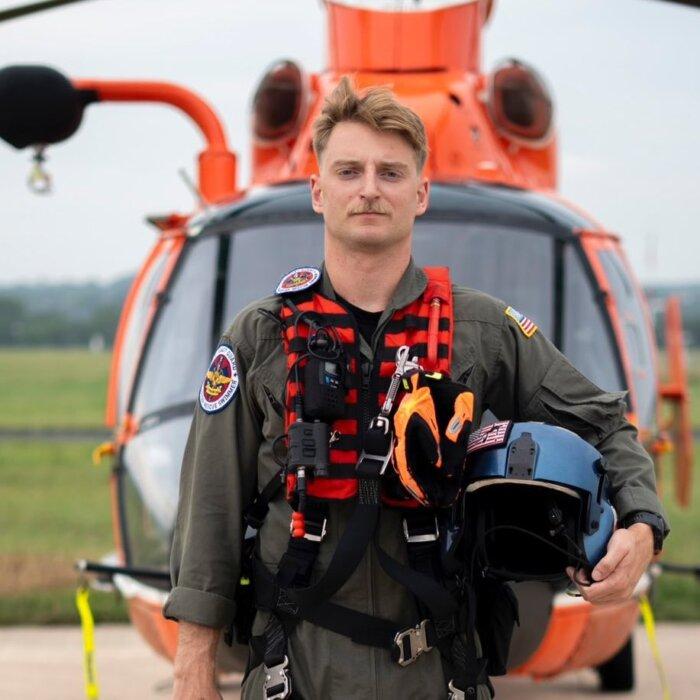
There was something profoundly moving about watching people leave their ordinary lives behind. Heavy equipment operators worked beside ranchers, electricians, contractors, mechanics, pastors, tech CEOs, and fathers. Many had never met before. Within hours they formed makeshift teams, accepted an assigned stretch of river, and searched day after day for people they had never known. There was no glory waiting for them. No paycheck. Most people will never know their names. They searched because somewhere a family was waiting for an answer, and because every one of them could imagine, with terrifying clarity, “What if that were my child?” They refused to stop searching because every family deserved every effort that could possibly be given.
They were never alone. Women became the connective tissue holding everything together. They coordinated volunteers, answered phones, organized donations, prepared meals, comforted grieving families, walked into homes forever changed by loss, prayed with strangers, and carried emotional burdens that no excavator or chainsaw ever could. Everyone found something they could carry.
Over the past year, one memory has returned again and again. One afternoon, while meals were being delivered to a home along the river, The New York Times was photographing the devastation and interviewing families. A young girl, maybe thirteen or fourteen years old, walked up and asked, “How many meals are you making?”
“Several hundred every day,” she was told.
She paused for only a moment before asking, “Can I donate some of my 4-H beef?”
The next day, she returned carrying a cooler filled with beef from the steer she had raised herself. As she handed it over, she smiled and said, “I’m just so happy I had something I could give.”
I’ve thought about her often over the past year because I think she represents the very best of what emerged from those terrible weeks. She wasn’t old enough to search the river or operate heavy equipment. She couldn’t write a large check. But she had something she had worked for, and she wanted it to help someone else. Children become what they see. She had watched adults stop asking whose responsibility the flood was and start asking what they could do. Maybe that is how communities survive. Not because everyone can do everything, but because everyone does something.
The friendships forged during those weeks will last a lifetime. Strangers became teammates. Neighbors became family. People discovered strengths they never knew they had. In a world that often feels increasingly isolated, the flood reminded us that community is not an idea. It is people showing up with whatever they have to offer. Sometimes that is an excavator. Sometimes it is a home-cooked meal. Sometimes it is a prayer, a hug, or simply sitting beside someone whose world has fallen apart. Sometimes it is a cooler filled with beef from a thirteen-year-old girl’s 4-H project.
That is why this Independence Day felt quieter. There was still celebration, but there was also reverence. Gratitude for those who searched with everything they had, carrying hope for as long as hope remained and compassion long after it was gone. Gratitude for those who organized, cooked, donated, comforted, prayed, and quietly carried one another through the darkest days. The flood revealed terrible loss, but it also revealed something beautiful about the people who call this place home.
When nobody had it handled, everybody helped.