An Advanced Western Economy
China has used New Zealand—an advanced Western economy—as a convenient gateway into the Western economic system. The Chinese Ministry of Commerce touts four “firsts” with New Zealand: It is the first country to finish World Trade Organization bilateral negotiations with China, the first to recognize China as a full market economy, the first to enter bilateral free trade agreement negotiations with China, and the first to sign and implement a free trade agreement.However, Beijing’s ambitions in New Zealand go well beyond trade and economic ties.
- It has high-tech companies and world-class scientists.
- It is a member of the Five Eyes intelligence alliance and a NATO partner.
- It is close to Antarctica and runs advanced polar research programs.
A Key Player in the Western Military and Political System
New Zealand is not just any ordinary Western country—it sits at the core of several important alliances.It is a member of the Five Eyes intelligence-sharing network (along with the United States, the UK, Canada, and Australia), a tightly knit group based on Anglo-Saxon values that even major European allies such as Germany and France aren’t fully part of.



New Zealand also has close military ties with the United States, especially with the U.S. Space Force. It hosts a U.S.-funded space surveillance center in Auckland that tracks rocket launches and debris. Its geographic location in the Southern Hemisphere gives it natural advantages for certain satellite launches and space operations.
Furthermore, New Zealand is moving closer to joining AUKUS Pillar Two (the advanced technology-sharing component covering artificial intelligence, quantum, hypersonics, cyber, and underwater systems). It has also become one of NATO’s four Asia-Pacific partners, alongside Japan, South Korea, and Australia, and has signed an updated partnership program—the Individually Tailored Partnership Program—with NATO, running through 2027.
A Leading Power in the South Pacific
New Zealand (together with Australia) sees itself as a natural leader in the South Pacific region, which includes 14 small island nations. This area sits at a critical strategic location—part of the second and third island chains in the U.S. defense architecture against potential adversaries.According to a research report by Jung-Ming Chang, as assistant research fellow at Taiwan’s Institute for National Defense and Security Research, the second island chain is made up of Japan, the Ogasawara Islands, the Mariana Islands, Guam, Palau, and Indonesia; Alaska, the Aleutian Islands, Midway Atoll, Hawaii, the Line Islands (partly controlled by Kiribati), and New Zealand form the third island chain that constitutes the last line of defense that deters adversarial forces from reaching the U.S. continent.
New Zealand Is Shifting Its China Policy
For a long time, New Zealand took a very liberal and accommodating approach toward China. But that has changed significantly in recent years because of Beijing’s aggressive “wolf warrior” diplomacy, foreign interference, and cyberactivities.In 2023, Wellington’s first-ever National Security Strategy and its Security Intelligence Service both publicly identified the Chinese regime as a major source of security challenges that “undermine" New Zealand’s security and as the “most active” foreign interferer in the country.
In April 2025, the government announced a major defense upgrade plan worth NZ$12 billion (about US$7.05 billion) over four years, with defense spending set to nearly double, rising to more than 2 percent of gross domestic product from about 1 percent. New Zealand Prime Minister Christopher Luxon called it “the floor, not the ceiling.”
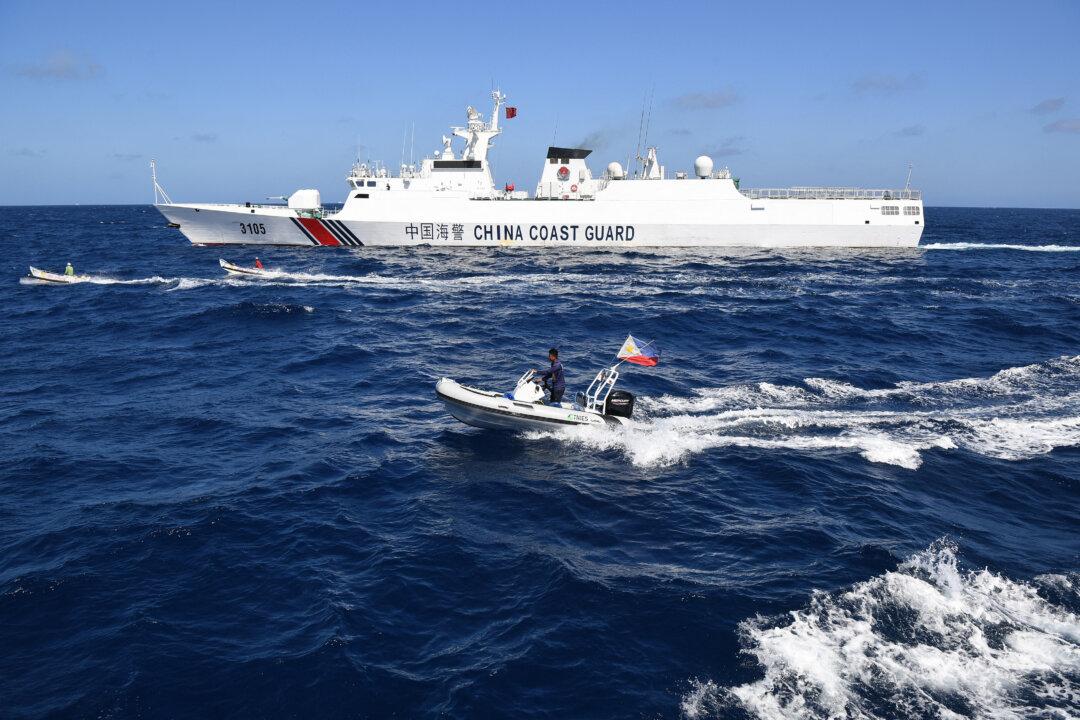
New Zealand has also pushed back hard against Chinese moves in its backyard. In 2025, after the Cook Islands signed secret deals with China without consulting Wellington, New Zealand temporarily cut aid and later signed a new Defense and Security Declaration with the Cook Islands, clearly designating New Zealand as its primary security partner—effectively neutralizing Beijing’s gains.
Recent incidents indicate growing friction.
For example, in April, Beijing accused a P-8A Poseidon maritime patrol aircraft operated by the New Zealand Defense Force of conducting close-range “reconnaissance and harassment” activities in the Yellow Sea and East China Sea.
Concluding Thoughts
China remains New Zealand’s largest trading partner and a major source of tourists and exports. However, Beijing’s global ambitions and heavy-handed conduct in the Pacific are steadily pushing Wellington closer to Washington and its traditional allies.Although New Zealand will try to manage its economic dependence on China, its policy will increasingly focus on strategic balancing against Beijing, strengthening alliances, and diversifying its economy to reduce reliance on the Chinese market.