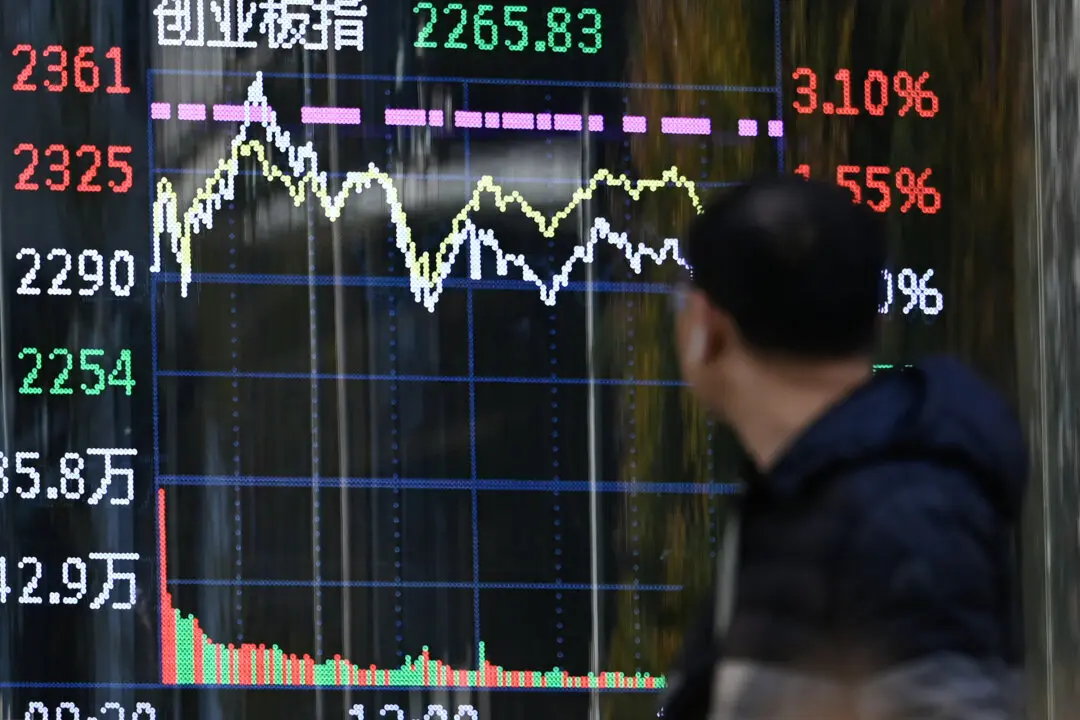
China has recently released a series of economic indicators for May. The data reveal that the “strong start” to 2026 touted by the Chinese Communist Party at the beginning of the year has largely fizzled out.
Fixed Asset Investment
From January to May, national fixed asset investment totaled 1.79 trillion yuan (about $263.5 billion), down by 4.1 percent year on year.In 2025, China’s fixed asset investment fell by 3.8 percent from the previous year. This marked the first annual decline since statistics were first recorded, indicating that the traditional investment-driven growth model had become increasingly unsustainable and that the old playbook of infrastructure-led stimulus was losing effectiveness.
However, at the end of 2025, the Central Economic Work Conference set the tone that investment growth had to “turn from negative to positive.” Because 2026 marked the first year of the 15th Five-Year Plan, achieving a “strong start” held significant political importance.
After entering 2026, government bond issuance accelerated in both volume and timing, with a greater share occurring in the early months of the year.
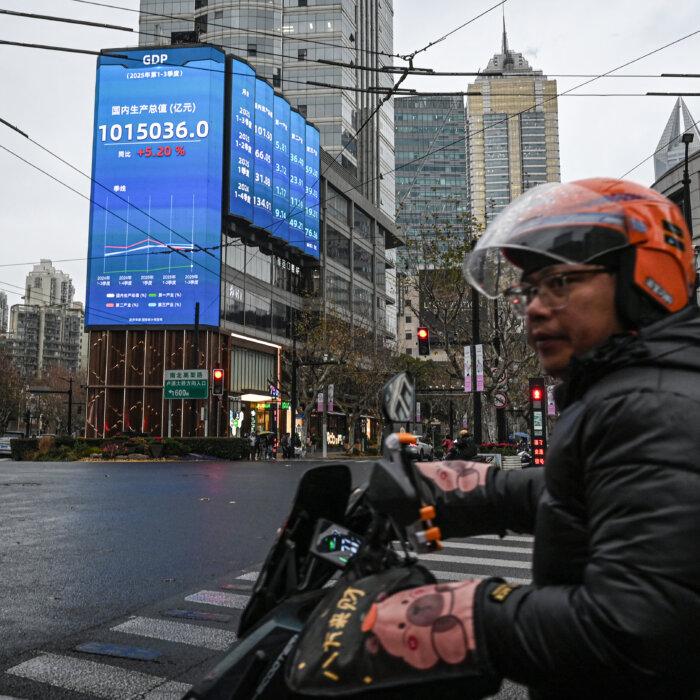
According to Enterprise Early Warning Tong data, new special local government bonds issued in the first quarter totaled 1.16 trillion yuan, a 20.8 percent year-on-year increase. With this strong stimulus, national fixed asset investment reached 10.27 trillion yuan in the first quarter, rising by 1.7 percent year over year and achieving the politically desired reversal from decline to growth.
However, this type of “shot of adrenaline” stimulus could not last. By April, the situation had already reversed. From January to April, national fixed asset investment totaled 1.41 trillion yuan, down by 1.6 percent year on year.
Some might argue that investment excluding real estate development remained positive during the first four months, increasing by 1.3 percent. However, by May, this explanation was no longer valid. From January to May, fixed asset investment excluding real estate development fell by 1.2 percent year over year.
Notably, private fixed asset investment, which had already declined by 6.4 percent in 2025, fell by an additional 7.1 percent year over year during the first five months of 2026.
The Ongoing Real Estate Downturn
After several years of continuous decline, China’s real estate sector remained under severe pressure in the first five months of 2026. Real estate development investment fell by 16.2 percent year on year to 303.56 billion yuan. The sales area of new commercial housing declined by 10.8 percent to 313.2 million square meters (about 3.37 billion square feet), and sales revenue fell by 13.5 percent to 293.66 billion yuan.Following the housing bubble burst in 2021, the authorities initially ignored the problem. They intervened only when the downturn began dragging the economy toward a cliff.
Beginning in 2024, Beijing introduced “white-list” financing for approved real estate projects. By the end of 2024, approved lending under the program totaled 503 billion yuan, rising to 750 billion yuan by the end of 2025.
In early 2026, new supporting policies significantly extended repayment periods, with some loans eligible for extensions of up to five years.
However, from January 2026 to May 2026, completed housing floor area fell by 23.4 percent year on year to 140.87 million square meters.
Why has housing completion continued to plunge despite 750 billion yuan in “white-list” loans? Why has the open wound in the sector still not been closed?
There are two possible explanations. One is that approved loans have not actually been fully disbursed: Banks may appear to comply while prioritizing their own interests, leaving policies ineffective in practice. The other possibility is that the hole left by the property crisis is simply too large, making 750 billion yuan little more than a drop in the ocean.
Weak Consumption
In May, total retail sales of consumer goods were 410.9 billion yuan, down by 0.6 percent year on year. This marked the first negative growth since China ended its nearly three-year “dynamic zero-COVID” controls in December 2022.Taken together with recent trends, the data indicate that weak consumption has become a long-term issue.
For many years, China’s growth in total retail sales of consumer goods exceeded gross domestic product (GDP) growth. From 2012 to 2019, real growth in retail sales consistently and steadily outpaced real GDP growth. However, since 2020, after the shock of the COVID-19 pandemic, this relationship has become unstable, with GDP growth often exceeding consumption growth.
Looking at 2026, from January to May, retail sales of consumer goods totaled 2.06 trillion yuan, up by only 1.4 percent year over year. In contrast, first-quarter GDP was preliminarily calculated at 3.34 trillion yuan, growing by 5 percent year over year at constant prices. GDP growth far exceeded retail sales growth.
The contribution of final consumption to GDP growth also reveals a clear shift. Compared with the five-year period from 2016 to 2020, the contribution rate of final consumption between 2021 and 2025 declined noticeably.
| Year | Nominal Growth Rate of Retail Sales of Consumer Goods | Nominal GDP Growth Rate |
| 2020 | -3.9% | 2.5% |
| 2021 | 12.5% | 13.2% |
| 2022 | -0.2% | 4.8% |
| 2023 | 7.2% | 4.2% |
| 2024 | 3.5% | 4.1% |
| 2025 | 3.7% | 4.0% |
Based on these figures, one can conclude that “retail sales lagging behind GDP” has become the new normal. This implies several structural problems.
First, wealth distribution has shifted toward the production side rather than household consumption.
Second, a strong production sector combined with weak domestic demand has created a structural imbalance, forcing China to rely on international markets to absorb excess capacity.
Third, falling household consumption rates reflect a defensive savings strategy among consumers, while the disappearance of the real estate wealth effect, market saturation, and shifts in consumption patterns have further weakened demand.
Conclusion
The weaker China’s economy becomes, the more aggressively the authorities promote the narrative of a “bright future” for the Chinese economy. When discussing first-quarter official figures—regardless of their accuracy—official commentary once claimed that “China’s economy delivered a strong first-quarter report, with resilience and vitality further demonstrated.”But now that the first half of the year is nearly over, how can authorities continue to maintain that narrative in the face of cold economic data?